
Can I Rent Out a Restaurant for a Party? Las Vegas Guide
Can I Rent Out a Restaurant for a Party? Las Vegas Guide
Renting out a restaurant for a party in Las Vegas means reserving a dedicated dining space, whether a private room, semi-private area, or the entire venue, exclusively or partially for your group, typically under a contract that includes food and beverage minimums, a deposit, and defined cancellation terms.
This guide covers rental formats and capacity options, venue selection, pricing, booking policies, amenities and legal requirements, how to create a memorable event, and how Stubborn Seed Las Vegas handles private dining.
Las Vegas restaurants offer several ways to host a private group. Private dining rooms seat as few as 12 guests while full venue buyouts can accommodate hundreds, and the format you choose directly shapes both cost and exclusivity.
Selecting the right venue involves matching cuisine, ambiance, location, and service style to your event's tone, then asking the right contract questions before signing.
Pricing varies from modest per-person minimums to five-figure food and beverage commitments at fine dining venues, with taxes, gratuity, and add-on fees layering onto every base rate.
Booking policies, deposits, and cancellation structures follow recognizable patterns, but lead time matters: most planners recommend starting at least three months out, and certain alcohol permit applications have hard government deadlines.
Las Vegas private events also carry legal dimensions, including curfew rules, alcohol licensing requirements, and live entertainment permit obligations that apply regardless of venue tier.
At the fine dining end of the market, Stubborn Seed Las Vegas at Resorts World offers a private dining program with tiered reception packages, hosted beverage options, and a structured tasting menu experience built around Chef Jeremy Ford's precision-driven culinary approach.
What types of restaurant rental options are available for parties in Las Vegas?
The types of restaurant rental options available for parties in Las Vegas include private dining rooms, semi-private spaces, partial buyouts, and full venue buyouts. Capacities and spending requirements vary significantly across these formats, as covered in the sections below.
How do full buyouts differ from private dining room rentals?
Full buyouts and private dining room rentals differ primarily in exclusivity and capacity. A private dining room gives your group a dedicated space while the restaurant continues serving other guests. A full buyout reserves the entire venue exclusively for your event.
To illustrate the scale difference: Carmine's Las Vegas offers a private Piccolo room for 30 seated guests, a Ritrivo Room for 260 seated, and a full restaurant buyout for 700 seated or 1,000 standing. The Bellagio's group-dining guide benchmarks Michael Mina at a private room for 30, scaling to a standing buyout for 200 guests at a $125 starting price per person, with beverages, taxes, gratuity, and a food-and-beverage minimum as additional requirements.
In practice, full buyouts deliver complete control over ambiance, timing, and the guest experience, making them worth the premium for milestone celebrations where exclusivity matters.
What are semi-private event spaces and are they suitable for parties?
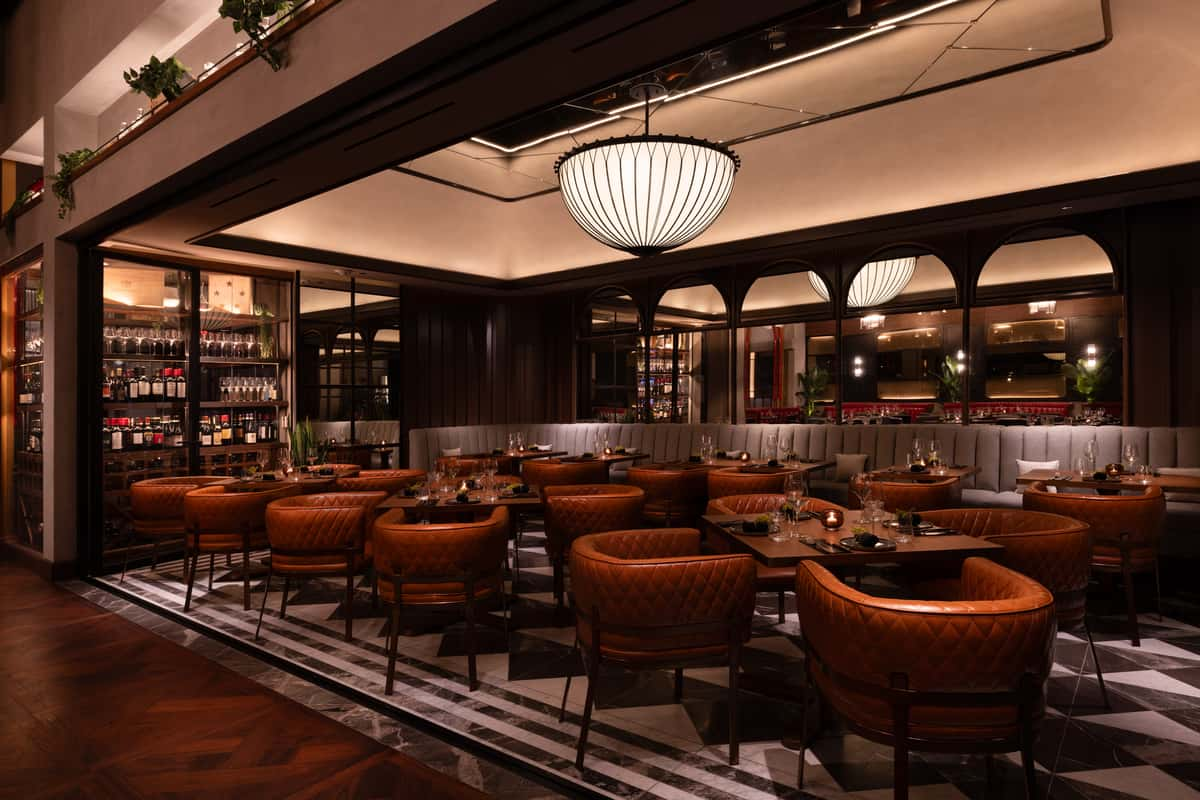
Semi-private event spaces are partially separated dining areas that offer more seclusion than a standard dining room while keeping costs lower than a dedicated private room. They are suitable for parties where budget or group size does not justify a full private room, such as milestone dinners for 15 to 40 guests, rehearsal dinners, or casual corporate gatherings.
Semi-private areas typically use partitions, elevated platforms, or architectural separation rather than enclosed walls. They allow an ambient restaurant atmosphere to carry through, which some groups find appealing rather than limiting.
Are there minimum guest counts or spending requirements for rentals?
Most Las Vegas restaurant rentals carry food-and-beverage minimums, deposits, and sometimes minimum guest counts. Requirements vary by space, date, and venue tier.
As a published benchmark, Partage Las Vegas requires a minimum spend of $200 per person (or $1,700 total, whichever is greater) for one room, and $220 per person (or $3,000 total) for its Grand Cru room, plus taxes and gratuity. Deposits of $100 per person or $850 per party apply, whichever is greater.
Cvent's private-event guidance reinforces this: "Early in the booking process, relay all private event requirements, such as minimum guest count, gratuity fees, setup, and teardown policies."
Because minimums are space-specific and time-sensitive, always request a written proposal for your exact date and guest count before committing.
How do you choose the right Las Vegas restaurant venue for your party?
Choosing the right Las Vegas restaurant venue requires matching cuisine style, location, and contract terms to your group's needs. The sections below cover ambiance and service considerations, how location shapes your event experience, and the key questions to ask before signing.
What should you consider in terms of cuisine, ambiance, and service style?
The right venue aligns cuisine type, room atmosphere, and service format with your event's tone. A formal plated dinner calls for a different setting than a cocktail-style reception, so identify your preferred service style first.
Consider these factors when evaluating cuisine and ambiance:
- Cuisine fit: Does the menu reflect your guests' preferences, including dietary needs such as vegetarian, vegan, or gluten-free options?
- Room atmosphere: Does the space feel appropriate for the occasion, whether celebratory, corporate, or intimate?
- Service style: Will the event use plated courses, passed selections, staffed stations, or a reception format?
- Menu flexibility: Can the kitchen accommodate a pre-set group menu, or are guests ordering à la carte?
Venues that invest in purpose-built private spaces tend to deliver smoother service than those treating group dining as an afterthought.
How does the restaurant's location in Las Vegas affect your party experience?
A restaurant's location in Las Vegas directly affects guest arrival, transportation logistics, and overall atmosphere. Strip-adjacent restaurants benefit from foot traffic and hotel proximity, while off-Strip venues often offer more relaxed parking and pricing.
According to the 2024 Travel Nevada Las Vegas Visitor Profile, the average travel party size is 2.8 guests and the average trip is 4.1 nights, with total per-visitor expenditure at $855. Groups staying on the Strip typically prefer venues within walking distance of their hotel to minimize coordination. Off-Strip locations may require ride-share planning but can provide a quieter, more exclusive feel.
Key location factors to weigh include:
- Proximity to guest accommodations: Reduces transportation friction for out-of-town attendees.
- Parking availability: Critical for locally based guests driving to the event.
- Neighborhood character: Resort corridor venues carry a different energy than neighborhood restaurants.
- Accessibility: Confirm the space meets ADA requirements for all attendees.
What questions should you ask the venue before booking?
The essential questions to ask a venue before booking cover capacity, minimums, deposits, cancellation terms, and outside vendor policies. According to Cvent, relaying minimum guest count, gratuity fees, setup, and teardown policies early in the booking process is a best practice, alongside a clear written contract covering deposits and cancellation terms.
The 2025 Las Vegas Convention and Visitors Authority Visitor Profile Study found that 81% of visitors book accommodations via website or app, and 56% book more than one month before their trip, illustrating advance accommodation-planning habits among Las Vegas hotel guests.
Ask these questions before committing:
- What is the food and beverage minimum for the specific space on my date?
- What deposit is required, and what are the cancellation terms?
- Is a set menu required, and can dietary restrictions be accommodated?
- Are outside vendors, décor, or entertainment permitted, and are there associated fees?
- What taxes, service charges, and gratuity are added to the final bill?
Getting written answers to each question before signing protects your event budget and avoids surprises on the day.
What is the typical price range to rent out a restaurant for a party in Las Vegas?
The typical price range to rent out a restaurant for a party in Las Vegas varies widely, from casual group minimums under $100 per person to luxury fine dining buyouts requiring thousands in food and beverage spend. Costs depend on venue tier, space type, guest count, menu selection, and add-ons like beverages and décor.
What factors influence the total cost of renting a restaurant for an event?
The factors that influence the total cost of renting a restaurant for an event include venue tier, space type, guest count, menu format, beverage packages, day of week, and season. Strip-adjacent fine dining venues command higher per-person minimums than neighborhood restaurants. A private dining room for 24 guests carries a very different cost structure than a full buyout for 150. Food and beverage minimums establish spending requirements, while taxes, gratuity, and applicable supplemental fees may increase the final bill beyond the quoted per-person price.
Are food and drink packages usually included in rental pricing?
Food and drink packages are not usually included automatically in rental pricing. Most Las Vegas restaurants structure private events around separate food and beverage components, each priced independently. According to the Las Vegas Convention and Visitors Authority's 2025 Las Vegas Visitor Profile Study, spending visitors averaged $589.36 on food and drink per trip, illustrating how significant dining costs are in this market. Typically, hosts choose a food experience tier and then layer on a beverage package at an additional per-person rate. Taxes and gratuity are added on top of both components, so reviewing each line item before signing is essential.
Are there additional fees for staffing, décor, or entertainment?
Additional fees for staffing, décor, or entertainment are common at Las Vegas restaurant rentals and can meaningfully raise the total cost. Venues frequently charge separately for items such as:
- AV equipment and screens (one Las Vegas benchmark documents a $250 fee for a 65-inch screen with HDMI and Wi-Fi)
- Outside dessert vendors, typically charged per guest
- Corkage fees for outside wine, often per bottle with a maximum bottle limit
- Administrative or service fees added to the subtotal before gratuity
- Clark County's 8.375% sales tax, which applies to taxable prepared food and beverage purchases
Entertainment adds another layer. Nevada's Live Entertainment Tax applies at 9% of admission at facilities with maximum occupancy of 200 or more, per the Nevada Department of Taxation. Outside décor vendors, confetti policies, and staffing for extended events may also carry additional charges. The safest approach is requesting a fully itemized written proposal before committing to any venue.
What are the reservation and booking policies for renting a restaurant in Las Vegas?
Reservation and booking policies for renting a restaurant in Las Vegas vary by venue but follow predictable patterns around lead times, deposits, and cancellation terms. The sections below cover when to book, what deposit and cancellation structures to expect, and whether venue tours are available.
How far in advance should you book a restaurant for your event?
You should start searching for a restaurant for your event at least three months before the date. Tagvenue recommends starting the search at that threshold, noting that last-minute booking leaves fewer venue options. For events involving alcohol service in unincorporated Clark County, timing is especially critical: according to the Clark County Department of Business License, liquor-caterer permit applications should be submitted at least 10 calendar days before the event, and applications filed fewer than 10 calendar days in advance are charged double the standard fee of $10 per liquor service station. Booking early protects both your date and your compliance timeline.
What are the deposit and cancellation policies for restaurant rentals?
Deposit and cancellation policies for restaurant rentals vary by venue and event date. Common structures across Las Vegas restaurants include the following:
- Deposit requirement: A per-person or per-party deposit is typically collected at signing to secure the date.
- Non-refundable threshold: Partage Las Vegas specifies that the deposit becomes non-refundable if the event is canceled fewer than 96 hours before it takes place.
- Graduated cancellation fees: Some venues charge a percentage of the food-and-beverage minimum based on how close to the event date the cancellation occurs.
- Final payment deadline: Wynn Las Vegas requires final payment at least 14 days before the event.
Always request a written contract that clearly states deposit amounts, refund conditions, and cancellation deadlines before confirming any booking.
Can you tour the venue before confirming your reservation?
Yes, you can tour the venue before confirming your reservation at most Las Vegas restaurants. Venue tours are a standard part of the private-event inquiry process, allowing hosts to assess room size, layout, and ambiance before signing a contract. Requesting a walkthrough also gives you the opportunity to ask about setup and teardown windows, AV capabilities, and any restrictions on outside vendors. Most venues schedule tours by appointment through their events or sales team. Contacting the restaurant directly to arrange a visit before committing to a deposit is a practical step that experienced event planners consistently recommend.
What are common amenities and services offered when renting restaurants for parties?
Common amenities offered when renting restaurants for parties include audio/visual equipment, custom menus, dietary accommodations, and policies governing outside entertainment or decorations. The sections below cover each of these features in detail.
Is audio/visual equipment available for events and parties?
Audio/visual equipment is available at many Las Vegas restaurant venues, though it is often an add-on rather than a standard inclusion. As a benchmark, Honey Salt charges a $250 fee for a 65-inch private-room screen with HDMI and Wi-Fi. Some venues go further: Eater Vegas reports that Partage's private room supports video-mapped custom imagery, while Flanker offers private rooms equipped with TVs. Always confirm what is included versus billed separately before signing any contract.
Do restaurants offer custom menus or special accommodations for dietary needs?
Restaurants commonly offer custom menus and dietary accommodations for private events, such as vegan, vegetarian, and gluten-free options. The Venetian confirms that many of its restaurants provide custom menus, personalized cocktails, and wine service for group dining. Golden Nugget Las Vegas also lists accommodation of vegetarian, vegan, gluten-free, and allergen-sensitive requests as part of its private dining offerings. Custom menus are one of the strongest reasons to book a dedicated private space rather than a semi-private area.
Can you bring outside entertainment or decorations?
Outside entertainment and decorations are permitted at some venues but subject to restrictions. Honey Salt allows outside décor vendors when scheduled in advance, prohibits confetti, permits outside wine at a $25-per-bottle corkage fee with a ten-bottle maximum, and does not allow outside beer or liquor. Confirm the venue's specific outside-vendor policy, décor rules, and any associated fees in writing before your event.
What are legal or licensing considerations when hosting a party at a Las Vegas restaurant?
Legal and licensing considerations when hosting a party at a Las Vegas restaurant span age and curfew rules, alcohol service requirements, and entertainment permits. The sections below cover each area in specific detail.
Are there age restrictions or curfew requirements for private parties?
Age restrictions and curfew requirements for private parties in Las Vegas follow Clark County juvenile curfew law. Unaccompanied minors under 18 may not be on public streets between 10:00 PM and 5:00 AM on Sunday through Thursday, or between midnight and 5:00 AM on Friday and Saturday on non-school days. On the Strip, the Friday and Saturday curfew tightens to 9:00 PM. Violations can result in fines up to $300 or detention until a parent is contacted. Private indoor restaurant events are not public streets, but if guests travel to or from the venue after curfew hours, minors must be accompanied. Plan end times accordingly when minors are on the guest list.
What are the rules about serving alcohol at private events in restaurants?
The rules about serving alcohol at private events in restaurants depend on the venue's existing license and the event's structure. Under the Las Vegas Unified Development Code, a banquet facility's ancillary beer, wine, and cooler service is permitted only during private events and only for on-premises consumption; broader alcohol sales require a separate special-use-permit approval.
In unincorporated Clark County, a liquor caterer must obtain an event permit before dispensing, serving, or selling alcohol. According to Clark County's Department of Business License, liquor-caterer permit applications should be submitted at least 10 calendar days before the event to avoid late fees, and the permit must be approved before alcohol service. Nevada law also requires that alcohol-service staff complete a curriculum covering at least two hours of instruction, including identifying intoxicated persons and preventing minors from obtaining alcohol.
In practice, booking a licensed restaurant that already holds an appropriate Nevada liquor license is the simplest path. The venue's existing permit covers service; your responsibility is confirming that coverage with the venue coordinator before signing a contract.
Do you need special permits for live entertainment or music?
Special permits for live entertainment or music at a Las Vegas restaurant event are likely required depending on the type of entertainment and venue location. Clark County states that a temporary event involving live music, admission charges, additional vendors, alcohol, or more than 5,000 attendees will most likely trigger multiple special-event permits.
Clark County's Title 30 Unified Development Code further restricts amplified sound to daytime hours unless the event is associated with a resort hotel, and prohibits amplified entertainment within 500 feet of any residentially adjacent area. Additionally, according to the Nevada Department of Taxation, a 9% Live Entertainment Tax generally applies to taxable admission charges for qualifying live entertainment at venues with a maximum occupancy of 200 or more; the tax does not apply to ordinary events without live entertainment.
Confirm with your venue whether entertainment permits fall under the restaurant's existing approvals or require a separate application before your event date.
How can you ensure your restaurant party is a memorable experience in Las Vegas?
A memorable Las Vegas restaurant party combines the right format, personalized details, and experienced coordination. The sections below cover guest experience tips, menu and décor customization, and the value of working with an in-house event planner.
What tips help create a seamless guest experience at a restaurant event?
The tips that most reliably create a seamless guest experience are early communication, format planning, and experience-focused venue selection. Las Vegas dining culture rewards ambition: according to Travel Nevada's 2024 Visitor Profile, dining and restaurants ranked as the top Nevada activity at 62.0%, while family and friends events or reunions reached 20.4%. Choosing a venue that matches your group's energy, confirming logistics in writing, and designating a point of contact on the day all reduce friction significantly. Formats that go beyond standard seated dining, such as dance-party conversions or themed private rooms, consistently generate stronger guest reactions than a conventional dinner setup.
How does customizing the menu or décor enhance your event?
Customizing the menu or décor enhances your event by creating a tailored sensory experience guests associate with the occasion rather than a standard night out. At fine dining venues, hosts can layer upgrades onto a core tasting experience: at Stubborn Seed Las Vegas, the tasting menu offers seasonal enhancement options that elevate the core dining experience. Personalized décor reinforces the occasion's identity visually, while curated menu additions signal intentionality to guests. Together, these choices shift the event from a dining reservation into a deliberate, designed experience.
Can partnering with the restaurant's event planner help with logistics?
Yes, partnering with the restaurant's event planner can help with logistics significantly, particularly for managing minimums, compliance, and vendor coordination. Las Vegas private events involve layered requirements: Nevada law prohibits serving alcohol without a valid license or permit under Chapter 369, and for-profit organizers serving alcohol independently must obtain both an Off-Premise Liquor Permit and an Alcoholic Liquor License per Clark County regulations. An in-house planner navigates these requirements on your behalf and helps structure the event contract to reflect minimums, cancellation terms, and timing. Marketplace data from Tagvenue reported an average $3,000 minimum spend for Las Vegas dinner-party venues, with a published range of $2,000 to $7,500, highlighting the importance of reviewing spending commitments in a clear written contract. Experienced planners also coordinate décor vendors, AV setup, and staffing within the venue's policies, which is often where self-planned events encounter unexpected friction.
How does Stubborn Seed Las Vegas handle private events and restaurant rentals?
Stubborn Seed Las Vegas handles private events through a dedicated group and private dining program at Resorts World Las Vegas, offering tiered menu packages, reception pricing, and hosted beverage options across multiple space configurations.
Can Stubborn Seed's fine dining and multi-course tasting menus be customized for parties?
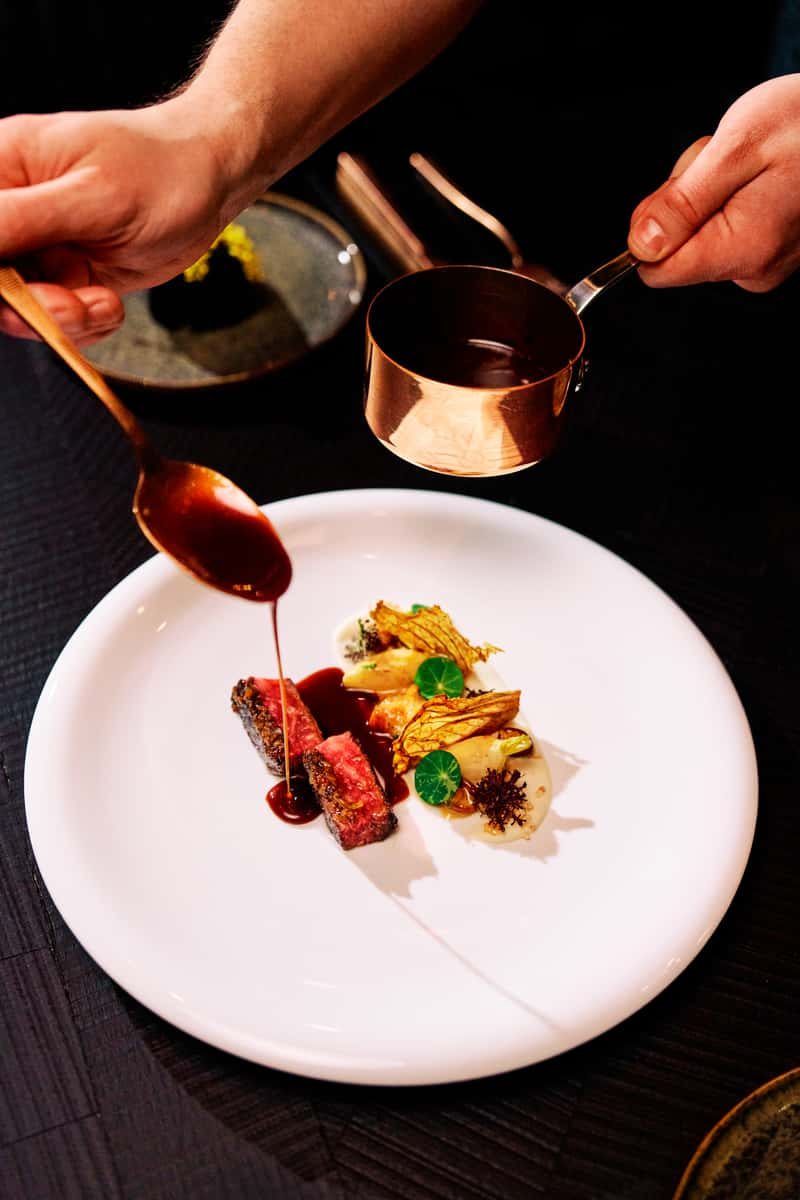
Stubborn Seed's regular fine dining tasting menu does not allow individual menu substitutions, while its private dining program offers host-selected menu options. The official tasting menu page states that Chef Jeremy Ford kindly declines any menu substitutions, full table participation is required, and a 20% gratuity applies to parties of six or more. Each course uses seasonal ingredients and modern culinary techniques, with a strong emphasis on balance in flavor and presentation.
For private events, the host pre-selects the menu from available tiers rather than customizing individual courses. This approach preserves the integrity of the culinary experience while still giving groups a structured, elevated dining format.
What are the key takeaways about renting out a restaurant for a party in Las Vegas?
The key takeaways about renting out a restaurant for a party in Las Vegas are:
- Request written proposals. Published pricing covers menu tiers and beverage packages, but buyout minimums, deposits, and cancellation terms require direct inquiry.
- Understand what is published versus what requires negotiation. Stubborn Seed's official private-dining materials list capacities, reception pricing, and bar packages, but do not disclose a buyout minimum, deposit schedule, or all-in total.
- Budget beyond per-person menu prices. Nevada sales tax, gratuity, service charges, and additional-hour beverage costs add meaningfully to base package rates.
- Book early. Premium venues at major Las Vegas resorts fill quickly, and lead time affects both availability and contract terms.
Stubborn Seed Las Vegas offers a combination of acclaimed fine dining cuisine and a structured private dining program, making it one of the most distinctive venues to consider for a high-end Las Vegas event.