
How Michelin Stars Elevate Miami Tourism & Dining Scene
How Michelin Stars Elevate Miami Tourism & Dining Scene
Michelin stars are internationally recognized culinary distinctions awarded through anonymous, criteria-based inspections that evaluate restaurants on ingredient quality, technique mastery, chef personality, flavor harmony, and consistency. In Miami, these stars have transformed the city from a regional dining hub into an international gastronomic destination since the guide's inaugural Florida edition launched in 2022.
We cover how Michelin stars are earned and what they mean for restaurant prestige, the timeline and cultural impact of Michelin's arrival in Miami, the measurable tourism and economic benefits, the diversity of cuisines and local ingredients that define the city's starred restaurants, the challenges and investments required to pursue and maintain recognition, and how diner expectations are evolving alongside this growth.
Miami now holds 16 Michelin-starred restaurants, evaluated by the same universal criteria applied in Paris or Tokyo. A one-star, two-star, and three-star system classifies escalating levels of excellence, and earning any designation shifts a restaurant from local reputation to global benchmark.
The guide's 2022 debut marked a turning point for the city's dining culture, raising standards around service, creativity, and guest experience. Starred restaurants span Colombian, Japanese, Mexican, Korean, and contemporary American kitchens, reflecting Miami's identity as a cultural crossroads.
Record-breaking tourism numbers reinforce the economic case: Miami-Dade County welcomed 28.3 million visitors in 2025, with food and beverage spending contributing roughly $4.88 billion annually. Local businesses surrounding starred restaurants benefit from elevated foot traffic and spending that extends well beyond the dining room.
Sustaining Michelin-level quality demands significant investment in ingredients, kitchen infrastructure, and skilled labor. Chefs balance creative evolution against the consistency inspectors require, while diners increasingly treat starred meals as milestone occasions rather than routine outings.
What Is a Michelin Star and How Does It Influence Restaurant Prestige in Miami?
A Michelin star is an internationally recognized culinary distinction awarded through anonymous, criteria-based inspections. In Miami, this recognition elevates restaurants to global prestige. The following sections explain how stars are awarded, what inspectors evaluate, and how earning a star reshapes a restaurant's reputation.
How Are Michelin Stars Awarded to Restaurants?
Michelin stars are awarded to restaurants through a rigorous, anonymous evaluation conducted by full-time Michelin Guide Inspectors. These former hospitality professionals visit restaurants multiple times across different seasons, days, and meal services before making a determination. According to the Michelin Guide (2025), inspectors assess every restaurant against five universal criteria, ensuring a star earned in Miami carries the same weight as one in Paris or Tokyo.
The five criteria inspectors evaluate are:
- Quality of ingredients used in each dish
- Mastery of flavor and cooking techniques
- The chef's personality expressed through the cuisine
- Harmony and balance of flavors across the menu
- Consistency maintained over multiple visits
This standardized process is what separates Michelin recognition from subjective review platforms. Because the methodology is identical worldwide, a single star in Miami signals the same caliber of excellence found in any starred restaurant globally.
What Criteria Do Inspectors Use to Evaluate Miami Restaurants?
Inspectors use criteria focused exclusively on the food itself. According to the Michelin Guide (2025), decor, service style, and restaurant formality have no bearing on star designations. Only what appears on the plate determines whether a restaurant earns recognition.
This food-only focus carries important implications for Miami's diverse dining scene. A casual neighborhood spot and a formal dining room compete on equal footing, provided the cooking meets Michelin's standards. Inspectors confirm consistency by dining during both lunch and dinner, on varying days, and across different seasons. For a city where culinary styles range from Latin fusion to contemporary American, this approach rewards genuine cooking skill over atmosphere or price point.
How Does Achieving a Michelin Star Affect a Restaurant's Reputation?
Achieving a Michelin star transforms a restaurant's reputation from locally respected to internationally recognized. The Michelin Guide uses a three-tier system to classify culinary excellence:
- One Star indicates high-quality cooking with distinct flavors and consistent standards.
- Two Stars signifies excellent cooking where the chef's personality shines through refined, inspired dishes.
- Three Stars represents exceptional cuisine at the pinnacle of the culinary craft.
As of the 2025 Guide, Miami holds 16 Michelin-starred restaurants, placing the city among roughly 235 starred establishments across the United States. This concentration reflects Miami's emergence as a serious culinary destination. For restaurants that earn recognition, the reputational shift is profound; they transition from competing locally to being benchmarked against the world's finest kitchens, attracting both international diners and heightened media attention.
Understanding how stars are awarded and what they signify reveals why earning one fundamentally changes a restaurant's trajectory, from revenue growth to reservation demand.
How Has the Arrival of Michelin Recognition Impacted Miami's Culinary Landscape?
Michelin recognition transformed Miami from a regional dining hub into an international gastronomic destination. The sections below cover when ratings began, which restaurants earned stars, and how the city's dining culture evolved.
When Did Miami Begin Receiving Michelin Ratings?
Miami began receiving Michelin ratings in 2022. On November 1, 2021, Michelin announced that the inaugural edition of The MICHELIN Guide Miami, Orlando, and Tampa would be revealed the following year, according to an official Michelin Guide news release. The guide was officially released on June 9, 2022, awarding 14 one-star designations across the covered cities. Miami secured a significant portion of those accolades, instantly placing the city on the global fine dining map. The program's scope has continued to expand since that initial launch; the 2026 edition is slated to become a statewide selection, extending coverage well beyond Miami, Orlando, and Tampa to encompass all of Florida.
Which Miami Restaurants Have Received Michelin Stars?
Miami restaurants that have received Michelin stars span 16 establishments as of the 2025 Guide, according to the official Michelin Guide Miami restaurant listings. L'Atelier de Joël Robuchon Miami, located in the Miami Design District, holds the city's sole two-star designation for its modern French cuisine. The remaining 15 one-star restaurants reflect Miami's cultural diversity:
- Asian and Japanese: Hiden, Ogawa, Kaori
- Contemporary American: Boia De, Michael's Genuine, Stubborn Seed
- Latin and Caribbean fusion: Elcielo Miami (Colombian), Los Félix (Mexican)
- European and Mediterranean: Le Jardinier Miami (French), Mandolin Aegean Bistro
- Specialty: Cote Miami (Korean steakhouse)
This range signals that Michelin inspectors value Miami's multicultural culinary identity, not a single dominant style.
How Has This Recognition Changed the City's Dining Culture?
This recognition has changed the city's dining culture by raising expectations around service, creativity, and the overall guest experience. Michelin validation encouraged chefs to treat dining as an immersive event rather than a simple meal. Chef Jeremy Ford of Stubborn Seed captures this shift: "Fine dining means we're going into this space or establishment not only for a meal, but to experience flavors, laughter, and exploration. I love the level of attention, service, care, love, and passion that is given throughout the experience," as he shared with Fine Dining Lovers in 2025. Many starred restaurants now include an 18% to 20% service charge, ensuring the entire team shares in the elevated standard guests have come to expect.
Understanding this cultural shift sets the stage for examining the concrete tourism benefits Michelin stars generate for Miami's economy.
What Are the Tourism Benefits When Miami Restaurants Earn Michelin Stars?
The tourism benefits when Miami restaurants earn Michelin stars include attracting international visitors, generating billions in culinary spending, and creating economic ripple effects for surrounding local businesses.
How Do Michelin-Starred Restaurants Attract International Visitors?
Michelin-starred restaurants attract international visitors by serving as globally recognized benchmarks of culinary excellence. The Michelin Guide operates as a trusted rating system across dozens of countries, so travelers already familiar with starred dining in Paris or Tokyo seek the same caliber of experience in Miami. As reported by Robb Report in 2021, Florida's tourism board invested $150,000 to bring Michelin coverage to the state, a strategic move designed to position Miami on the international gastronomic map. Once listed, starred restaurants become destination anchors that draw food-focused travelers who plan entire trips around dining reservations. For a city already rich in cultural appeal, Michelin recognition adds a layer of credibility that converts casual interest into booked flights. Stubborn Seed in Miami exemplifies this shift, welcoming both international travelers and locals seeking world-class culinary experiences rooted in Florida's seasonal ingredients. Reservations can be made through their website at stubbornseednorth.com.
What Economic Impact Do Michelin Stars Have on Miami Tourism?
Michelin stars have a substantial economic impact on Miami tourism, driving both visitor volume and spending to record levels. According to the Greater Miami Convention & Visitors Bureau's 2025 State of the Travel + Tourism Industry Report, Miami-Dade County welcomed a record 28.3 million visitors in 2025, with total visitor spending reaching $22.7 billion.
The culinary sector captures a significant share of that revenue:
- Food and beverage expenditures contribute approximately $4.88 billion annually to Miami's economy.
- Roughly one in every three tourism dollars spent in Miami goes toward dining.
- Tourism overall generates 9% of Miami-Dade County's total GDP and supports over 209,000 jobs.
The competitive significance of Michelin coverage is not lost on other regions; tourism boards in Texas recently invested $2.7 million to bring the guide to six cities. Miami's head start, combined with its unique cultural fusion, gives the city a distinct advantage in this race for culinary tourism dollars.
How Do Local Businesses Benefit from Increased Culinary Tourism?
Local businesses benefit from increased culinary tourism through a multiplier effect that extends well beyond the starred restaurants themselves. When visitors travel to Miami specifically for dining experiences, their spending flows into hotels, rideshare services, retail shops, and entertainment venues surrounding those restaurants. Neighborhoods anchored by Michelin-recognized establishments see elevated foot traffic, which supports smaller cafes, bars, and boutiques nearby. This halo effect transforms individual restaurant accolades into district-wide economic gains, making the case that a single Michelin star rarely benefits just one kitchen.
With tourism economics firmly tied to culinary prestige, the diversity of Miami's food scene plays an equally important role in sustaining visitor interest.
How Does the Presence of Michelin-Starred Dining Affect Miami's Food Scene Diversity?
The presence of Michelin-starred dining affects Miami's food scene diversity by validating a wide range of global cuisines, empowering local chefs to innovate, and spotlighting the region's unique ingredients. The following sections explore emerging cuisine representation, the role of local chefs, and signature Miami flavors.
How Are Emerging Cuisines Represented Among Miami's Michelin Recipients?
Emerging cuisines are represented among Miami's Michelin recipients through starred restaurants spanning Asian, Latin, Caribbean, and Mediterranean traditions. Rather than concentrating recognition on a single culinary style, the guide has honored Colombian, Mexican, Korean, Japanese, and Cuban-influenced kitchens alongside contemporary American concepts.
This breadth reflects Miami's identity as a cultural crossroads. The Michelin one-star designation recognizes restaurants that use top-quality ingredients to prepare dishes with distinct flavors to a consistently high standard, regardless of cuisine type. That standard applies equally to a Japanese omakase and a Latin fusion tasting menu, which means emerging and non-European cuisines compete on level footing. For a city built on immigration and cultural exchange, this inclusivity signals that culinary excellence has no single origin.
What Role Do Local Chefs Play in Shaping Miami's Fine Dining Identity?
Local chefs play a central role in shaping Miami's fine dining identity by fusing global techniques with the city's multicultural palate. These chefs translate personal heritage and regional ingredients into menus that could not exist anywhere else.
Maintaining that creative vision demands significant financial commitment. Industry standards recommend a 15% to 20% contingency fund for the commercial kitchen renovations required to support advanced cooking techniques. Fine dining food costs typically target a 28% to 30% ratio, yet the premium nature of locally sourced, high-quality ingredients can push those margins higher.
Despite these pressures, local chefs create experiences that resonate far beyond a single meal. Research from Oxford University found that multisensory engagement in fine dining can enhance flavor perception by up to 60%, forming powerful emotional memories. That ability to transform a dinner into a lasting milestone is what distinguishes chef-driven restaurants from ordinary high-end venues.
Are There Unique Miami Flavors or Ingredients Highlighted by Michelin-Starred Restaurants?
Yes, there are unique Miami flavors and ingredients highlighted by Michelin-starred restaurants. These kitchens leverage the region's agricultural and coastal bounty to create flavor profiles impossible to replicate in other cities.
Key local ingredients include:
- Florida stone crabs, available during a regulated season from October through May.
- Tropical fruits such as mango, passion fruit, and guava, grown year-round in South Florida's climate.
- Microgreens, edible flowers, and heirloom tomatoes sourced from nearby organic farms.
The integration of these local ingredients with international techniques is a hallmark of the city's culinary identity. Chefs pair Caribbean heat with Japanese precision or layer tropical acidity against rich proteins, producing dishes that carry a distinctly Miami signature. This ingredient-driven approach is central to the tasting menu experience at Stubborn Seed, where seasonal Florida produce shapes each course. The restaurant holds both a Michelin Star and Michelin Green Star for its sustainability commitment. This ingredient-driven creativity is arguably the strongest differentiator Miami holds against older Michelin markets like New York or San Francisco.
With Miami's unique flavors now validated on a global stage, the next question becomes how restaurants sustain this standard while navigating the challenges of Michelin recognition.
What Challenges and Opportunities Come With Pursuing Michelin Recognition in Miami?
Pursuing Michelin recognition in Miami requires significant financial investment, operational upgrades, and sustained excellence under public scrutiny. The subsections below explore the specific costs restaurants absorb, how staff training evolves post-star, and the pressures chefs face maintaining Michelin status.
What Investments Do Restaurants Make to Achieve Michelin Standards?
Restaurants make investments spanning premium ingredients, kitchen infrastructure, and state-level coordination to achieve Michelin standards. Florida's path to Michelin coverage itself required financial commitment; Visit Florida, the state's tourism board, subsidized the Michelin Guide with a $150,000 investment to initiate coverage, according to a 2021 Robb Report article. Beyond that public expenditure, individual restaurants must source top-tier seasonal products. Florida stone crabs, with a strict harvesting season from October 15 to May 1, exemplify the premium, regulated ingredients that Michelin-level kitchens depend on. Miami's tropical climate also enables year-round access to fresh mango, passion fruit, and guava, giving chefs distinctive flavor profiles that set their menus apart.
How Do Staff Training and Service Evolve After Earning a Michelin Star?
Staff training and service evolve dramatically after earning a Michelin star, driven by heightened guest expectations and the revenue at stake. Research from Bloomberg Business indicates that one-star restaurants typically experience a 20% increase in customer traffic and median annual revenue gains of 15% to 25%. Meeting that surge requires front-of-house teams trained in precise timing, wine pairing, and guest communication at a level far above casual dining norms. In Florida, the 2026 base minimum wage sits at $10.98 per hour, yet fine dining establishments pay well above that floor to retain skilled sommeliers and kitchen staff capable of executing Michelin-caliber service consistently. For most starred restaurants, the investment in human capital ultimately determines whether they keep or lose their designation.
What Pressures Do Miami Chefs and Restaurateurs Face After Achieving Michelin Status?
The pressures Miami chefs and restaurateurs face after achieving Michelin status center on consistency, cost management, and public expectation. Every plate must meet the standard that earned the star, across every service and every season. Ingredient costs compound that challenge; sourcing high-quality local produce while targeting the industry benchmark of 28% to 30% food cost ratios strains margins considerably. The psychological weight is equally real, as chefs balance creative evolution against the risk of deviating from what inspectors originally recognized. This relentless demand for perfection, paired with Miami's competitive dining landscape, makes retaining a star as difficult as earning one.
Understanding these pressures clarifies how Michelin recognition reshapes what diners expect from Miami restaurants.
How Are Miami Diners' Expectations Changing With the Rise of Michelin-Starred Options?
Miami diners' expectations are shifting toward more intentional, occasion-driven dining as Michelin-starred options reshape what guests anticipate from a meal. The sections below explore how reservations, dress codes, and pricing have evolved, and how local dining habits continue to adapt.
Are Reservations, Dress Codes, and Pricing Affected by Michelin Recognition?
Reservations, dress codes, and pricing are all affected by Michelin recognition, though each shifts in different ways. Securing a table now requires more advance planning, as starred restaurants fill quickly during peak winter months. Guests also tend to approach these meals with greater intentionality, often dressing more thoughtfully even when no formal code is enforced. Pricing naturally reflects the elevated ingredient quality, skilled labor, and meticulous execution that Michelin-level dining demands. For most diners, this combination of planning, presentation, and investment signals that the meal is an event rather than a routine outing. That shift in mindset is perhaps the most meaningful change Michelin recognition brings to a city's dining culture.
How Does Michelin Recognition Influence Local Dining Habits?
Michelin recognition influences local dining habits by reshaping both who dines and why they dine. According to a 2023 study by Castillo-Manzano published in ScienceDirect, Michelin recognition often alters a restaurant's clientele, skewing demographics toward international tourists rather than local regulars. Yet starred restaurants simultaneously become the premier destinations for celebrating life's significant moments, from birthdays to engagements. For longtime Miami residents, this creates a dual dynamic: familiar neighborhood spots may feel different as global attention grows, while the same recognition gives locals world-class options for milestone occasions without leaving the city.
Understanding how diner expectations evolve helps frame what sets individual Michelin-starred restaurants apart in this competitive landscape.
How Does Stubborn Seed Reflect the Impact of Michelin Stars Within Miami's Dining and Tourism Scene?
Stubborn Seed reflects the impact of Michelin stars within Miami's dining and tourism scene by embodying the culinary innovation, sustainability, and global recognition that define the city's rise as a top gastronomic destination. The following sections explore how the tasting menu experience elevates Miami's prestige and summarize the key takeaways covered throughout this article.
How Does Stubborn Seed's Tasting Menu Experience Contribute to Miami's Culinary Prestige?
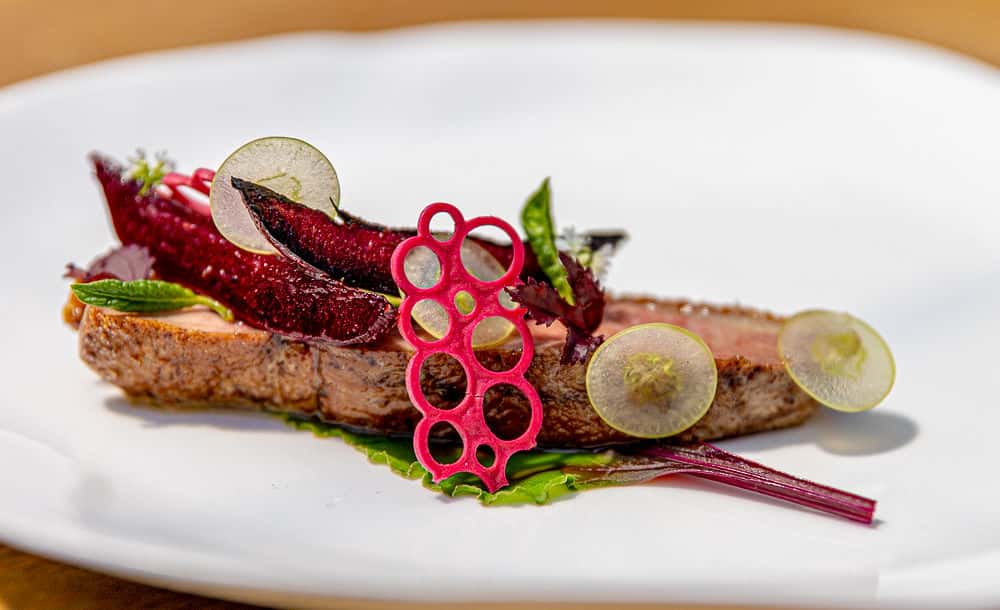
Stubborn Seed's tasting menu experience contributes to Miami's culinary prestige by showcasing Chef Jeremy Ford's fusion of global techniques with locally sourced ingredients at a Michelin-recognized level. Stubborn Seed offers both a 6-course and a 9-course tasting menu, each designed to highlight seasonal produce from a local organic farm operation in South Florida. This farm-to-table commitment reflects Stubborn Seed's recognition for both culinary excellence and sustainability practices. By pairing culinary artistry with environmental responsibility, the restaurant demonstrates that Michelin-level dining in Miami extends beyond exceptional flavor into meaningful, values-driven hospitality.
What Are the Key Takeaways About How Michelin Stars Elevate Miami Tourism & Dining Scene We Covered?
The key takeaways about how Michelin stars elevate Miami's tourism and dining scene are rooted in economic growth, culinary validation, and evolving diner expectations. Since the inaugural Michelin Guide Florida edition released on June 9, 2022, which awarded 14 One-Star designations across covered cities, Miami has cemented its status among the world's premier dining destinations. Michelin recognition has shifted diner behavior, elevated chef-driven innovation, and attracted international visitors seeking world-class culinary experiences. The guide's continued expansion, with the 2026 edition slated to become a statewide selection, signals sustained momentum. For those ready to experience this transformation firsthand, Stubborn Seed invites guests to reserve a table and discover why Miami's constellation of Michelin stars continues to grow brighter.