
How Restaurant Steak Tricks Your Tastebuds
How Restaurant Steak Tricks Your Tastebuds
Restaurant steak tastes better than home-cooked steak because professional kitchens apply layered, science-backed techniques that manipulate flavor chemistry, sensory perception, and psychology simultaneously.
This guide covers the cooking and preparation techniques that build flavor from the inside out, how visual and aromatic cues prime your brain before the first bite, why specific cuts and aging methods produce dramatically different results, how seasoning and marinades alter texture and taste at a molecular level, the role cooking methods play in shaping what your palate detects, how the restaurant environment itself rewires your taste experience, and what a venue like Stubborn Seed in Las Vegas reveals about these principles in practice.
The foundational techniques, including the Maillard reaction, butter basting, and controlled resting, each target a distinct layer of flavor. Browning chemistry at surface temperatures between 140 and 165°C generates hundreds of aromatic compounds and umami peptides; fat-soluble basting carries those compounds directly to the palate; and proper resting allows internal juices to redistribute rather than escape.
Sensory psychology and environment account for a surprising share of perceived flavor. Plating color, sizzling sounds, ambient lighting, and background music all produce measurable shifts in taste expectation before a single bite is taken.
Cut selection and aging amplify baseline quality. Prime marbling, USDA grading, and dry-aging around 21 days concentrate flavor in ways no seasoning technique can replicate.
Seasoning timing and marinade chemistry round out the picture, with early salting and enzyme-based tenderization building flavor and texture at the structural level before heat is ever applied.
What Techniques Do Restaurants Use to Enhance the Flavor of Steak?
The techniques restaurants use to enhance the flavor of steak include the Maillard reaction, butter basting, and controlled resting. Each method targets a distinct layer of flavor, from the crust to the juices locked inside.
How Does the Maillard Reaction Affect the Taste of Steak?
The Maillard reaction affects the taste of steak by generating hundreds of aromatic compounds that create the characteristic crust, color, and savory depth diners associate with restaurant-quality beef. According to Frontiers in Nutrition, the reaction proceeds rapidly at surface temperatures between 140 and 165°C (280 to 330°F), where the carbonyl group of reducing sugars reacts with amino acids to produce heterocyclic compounds containing nitrogen, oxygen, and sulfur atoms. Glutamates produced during this process contribute directly to the umami taste profile, while lipids supply the fatty acid precursors that further develop flavor compounds under heat. Over 100 umami peptides (with 2 to 11 amino acids) have been identified as responsible for the umami and kokumi taste sensations that make a properly seared steak taste deeply satisfying. Butter basting amplifies this effect because Maillard-derived aromatic compounds are fat-soluble, allowing the fat to carry flavor more efficiently to the palate.
Why Do Some Steakhouses Use Butter or Secret Sauces?
Steakhouses use butter and proprietary sauces to extend and amplify the flavors generated during cooking. Butter serves a dual function: it continuously bastes the surface of the steak, preventing moisture loss while dissolving fat-soluble aromatic compounds and delivering them in concentrated form with every bite. Many finishing sauces, such as compound butters or pan reductions built from fond, incorporate glutamate-rich ingredients like anchovies, Worcestershire, or aged cheese, which layer additional umami onto the base flavor of the beef. These additions are not simply cosmetic; they chemically interact with the steak's surface proteins to deepen the overall flavor profile. From an expert standpoint, butter basting is one of the highest-return techniques a kitchen can use, requiring minimal cost while producing a measurable and immediate improvement in perceived richness.
How Does Resting Steak After Cooking Change Its Flavor?
Resting steak after cooking changes its flavor by allowing internal juices to redistribute throughout the muscle fibers rather than escaping onto the cutting board when sliced. Research published in Meat Science (Elsevier) found that allowing meat to rest before slicing results in significantly lower total moisture losses compared to immediate slicing. A wire rack rest, rather than a flat plate, prevents pooling and ensures even myoglobin redistribution across the cut. Salting the steak at least 40 minutes before cooking compounds this benefit: salt draws out surface moisture through osmosis, dissolves into a brine, and is then reabsorbed into the meat, seasoning it from within and denaturing surface proteins to support better crust formation. Together, pre-salting and proper resting represent the two most underutilized home-cook variables that consistently separate restaurant results from everything else.
How Do Visual and Aromatic Cues Influence Your Perception of Steak?
Visual and aromatic cues influence steak perception by shaping taste expectations before a single bite is taken. The following sections cover how plating and presentation prime your appetite, and how sizzling sounds and aromas amplify flavor anticipation.
What Role Does Presentation Play in Making Steak More Appealing?
Presentation plays a role in steak appeal by setting taste expectations through color, composition, and contrast on the plate. According to research published in Flavour (Springer Nature), color is the single most important product-intrinsic sensory cue for setting taste expectations, with red, yellow, and blue plating colors each producing distinct emotional responses and flavor associations.
Chefs at fine dining restaurants use this science deliberately, pairing a seared steak's deep brown crust against vibrant garnishes to prime diners for richness and depth. Plate geometry, sauce placement, and garnish height all contribute to the visual narrative before aroma or taste enters the equation. A well-composed plate does not just look elegant; it actively conditions the brain to perceive the food as more flavorful.

How Do Sizzling Plates and Aromas Impact Your Taste Expectations?
Sizzling plates and aromas impact taste expectations by triggering anticipatory flavor responses through auditory and olfactory cues. A University of Arkansas study found that participants exposed to a bacon sizzling sound rated bacon intensity and flavor significantly higher than those exposed to a clucking sound, demonstrating that matching sounds amplify expected flavor intensity.
Aromas compound this effect. Fat-soluble Maillard reaction compounds volatilize as a steak hits a hot plate, releasing the distinctive roasted, savory scent that signals richness to the brain before tasting begins. Restaurants use cast iron and pre-heated platters specifically to sustain that sizzle through table delivery, ensuring the multisensory signal remains active when the dish arrives. Sound and scent together create a flavor expectation the palate is primed to confirm.
Why Do Certain Cuts of Steak Taste Better in Restaurants?
Certain cuts taste better in restaurants because steakhouses select for specific fat distribution, muscle use, and tenderness profiles that home cooks rarely access. The sections below cover how common cuts differ and how aging amplifies flavor at the molecular level.
What Are the Differences Between Common Cuts Served in Steakhouses?
The differences between common cuts served in steakhouses come down to marbling, muscle activity, and connective tissue content. Ribeye carries dense intramuscular fat that bastes the meat from within during cooking, producing rich, buttery flavor. Filet mignon comes from the tenderloin, a low-activity muscle, making it exceptionally tender but milder in taste. The New York strip balances moderate marbling with firmer texture, offering a more pronounced beefy chew. T-bone and porterhouse cuts combine both strip and tenderloin in a single portion. USDA grading plays a direct role here: Prime beef contains the most abundant marbling, Choice has less, and Select is the leanest of the three commercial grades. In high-end steakhouses, Prime is the standard, not the exception.
How Do Aging Processes Like Dry-Aging Change Steak Flavor?
Dry-aging changes steak flavor by concentrating taste compounds through moisture evaporation and enzymatic breakdown of muscle proteins. According to a study published in the Journal of Food Science, dry-aging beef between 14 and 40 days is effective for flavor development, with 21 days considered the optimal period for producing a concentrated, safe, and reproducible product. Separately, free amino acids in beef increase at roughly 3 μmol per gram of meat per day during wet aging, steadily building the flavor precursors that make aged steak taste more complex. Dry-aging goes further by also reducing water weight, intensifying the remaining flavor compounds per bite. This combination of enzymatic and dehydration effects is why a properly aged steakhouse cut tastes nothing like a supermarket steak cooked the same way.
How Do Steakhouses Use Seasoning and Marinades to Affect Your Tastebuds?
Steakhouses use seasoning and marinades to manipulate flavor, texture, and moisture at a chemical level. The sections below cover high-end salting techniques and how acidic or enzymatic marinades change what you taste.
What Are the Most Common Seasoning Techniques Used by High-End Restaurants?
The most common seasoning techniques used by high-end restaurants include early dry-brining with coarse salt, compound butter finishing, and layered spice application timed to the cook.
Early salting is the most impactful step. According to Science Focus, salting a steak at least 40 minutes before cooking draws moisture out through osmosis, allows the salt to dissolve into a brine, and then pulls that brine back into the muscle, seasoning the meat internally while denaturing surface proteins for better crust formation.
Finishing with compound butters adds a second flavor layer, since fat-soluble aromatic compounds produced during cooking bind to lipids and are delivered more effectively to the palate.
How Do Marinades Affect Tenderness and Flavor in Steak?
Marinades affect tenderness and flavor in steak by using acids, enzymes, or both to break down muscle fiber proteins before heat is applied.
Plant-based proteases are particularly effective. Research published in PubMed Central found that zingibain, a protease derived from ginger, reaches maximum enzyme activity for meat tenderization at 60°C and pH 7.0, remaining stable across 40 to 65°C, meaning it continues working through the early stages of cooking. Acidic marinades using citrus or vinegar similarly denature surface proteins, while also carrying fat-soluble flavor compounds deeper into the meat.
The best marinades do both jobs at once: structural softening and flavor penetration. Relying on acid alone without timing control often produces a mushy exterior rather than genuine tenderness throughout.
Does the Cooking Method Change How Steak Tricks Your Tastebuds?
Yes, the cooking method changes how steak tricks your tastebuds by altering the surface chemistry, moisture retention, and aromatic compounds your senses detect. The sections below cover how grilling, broiling, and sous vide each shape flavor, and why restaurant steaks often taste smokier or juicier than home-cooked versions.
How Do Grilling, Broiling, and Sous Vide Methods Affect Flavor?
Grilling, broiling, and sous vide affect flavor through fundamentally different heat transfer mechanisms. Grilling exposes meat to direct radiant heat and combustion gases, generating surface char and smoky aromatic compounds. Broiling uses top-down radiant heat to produce a similar crust without open-flame smoke. Sous vide, by contrast, cooks the steak in a sealed bag at a precise low temperature, producing uniform internal doneness but no Maillard crust unless the exterior is seared afterward. Each method activates flavor chemistry at different intensities: high-heat methods accelerate browning compounds, while sous vide preserves moisture and natural meat juices. Chefs typically combine methods, finishing a sous vide steak in a screaming-hot pan to capture both textural precision and surface flavor.
Why Do Some Steaks Taste Smokier or Juicier in Restaurants?
Restaurant steaks taste smokier or juicier because of deliberate fat-basting techniques and high-BTU equipment unavailable in most home kitchens. Butter basting amplifies perceived juiciness because many aromatic Maillard compounds are fat-soluble, meaning the fat carries flavor directly to the palate. Commercial broilers and wood-fired grills also reach temperatures far exceeding standard home ranges, creating faster, deeper crust formation with greater smoke compound penetration. Restaurant kitchens also manage carry-over cooking and resting protocols precisely, ensuring internal juices redistribute before the steak is plated.
Is Your Brain Tricked by the Restaurant Steak Experience?
Yes, your brain is tricked by the restaurant steak experience, and the science behind it spans psychology, neuroscience, and sensory design. The following sections cover how ambience and expectation shape taste, and how music and lighting actively alter flavor perception.
How Do Ambience and Expectation Alter the Taste of Steak?
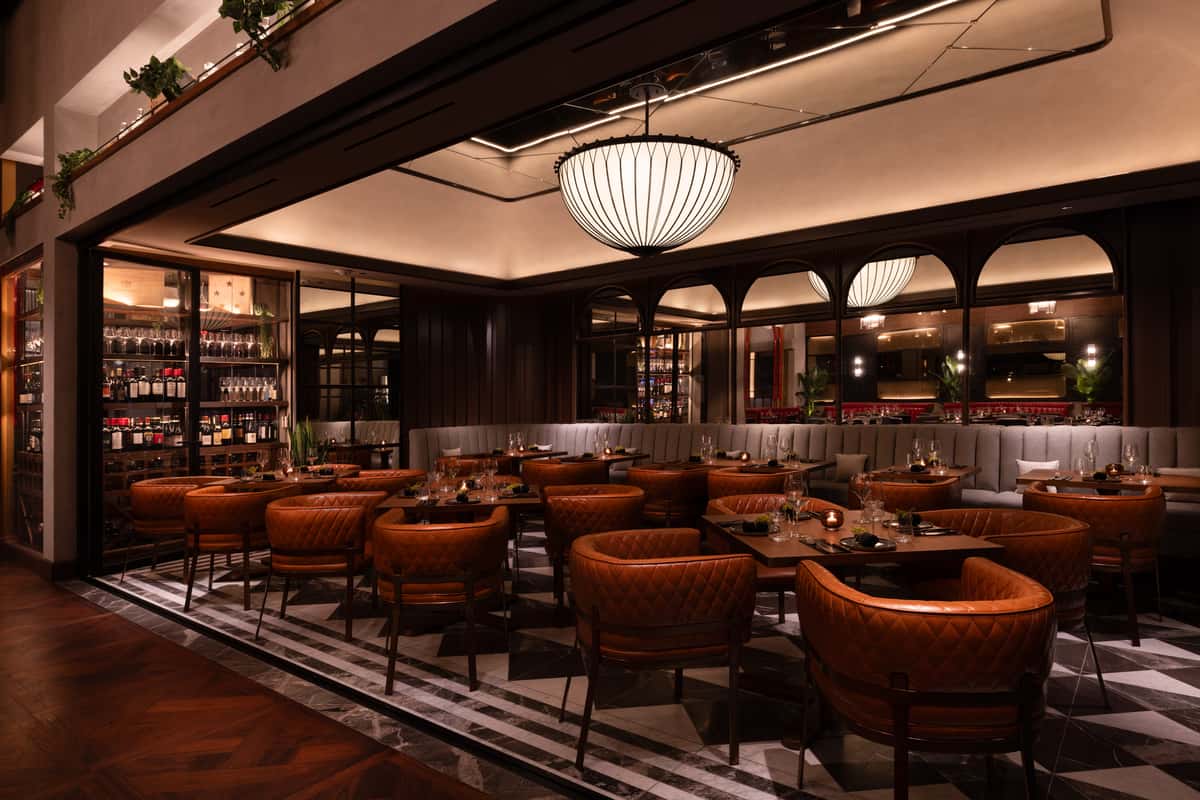
Ambience and expectation alter the taste of steak by priming the brain before a single bite is taken. When diners enter a high-end restaurant, visual cues like candlelight, elegant plating, and formal service signal quality, which elevates perceived flavor before any food arrives.
Price perception amplifies this effect significantly. A 2008 study published in the Proceedings of the National Academy of Sciences found that increasing the perceived price of wine from $10 to $90 not only increased reported flavor pleasantness but also modulated activity in the medial orbitofrontal cortex, the brain region associated with reward. The same cognitive mechanism applies to steak: when diners expect premium quality, they experience it more intensely. This is not a placebo in the trivial sense; it is a measurable neurological response that fine dining environments are, whether deliberately or not, engineered to trigger.
Can Background Music and Lighting Really Influence Flavor Perception?
Background music and lighting can genuinely influence flavor perception through documented sensory crossover effects. A University of Arkansas study found that participants rated bacon intensity and flavor significantly higher when exposed to a sizzling bacon sound compared to a clucking sound, demonstrating that auditory cues directly shape taste judgments.
Research on ambient lighting also shows that warmer light (lower Kelvin temperatures) signals a higher-end restaurant image and increases diner comfort, potentially extending how long guests linger and engage with their meal. Slower-tempo music adds another layer, with research in Appetite finding that slow-tempo music led diners to spend more time at the table in a more relaxed state. Together, these environmental signals condition the brain to interpret flavors more favorably, making the steak taste better because the entire sensory context says it should.
How Should You Approach Restaurant Steak Experiences at Stubborn Seed in Las Vegas?
Approaching restaurant steak experiences at Stubborn Seed means engaging with a menu designed around flavor science, premium sourcing, and sensory intentionality. The following covers how Stubborn Seed's tasting menu format reveals authentic flavors, and the core lessons from how restaurants manipulate taste perception.
Can Stubborn Seed's Tasting Menu Help You Discover Authentic Steak Flavors?
Yes, Stubborn Seed's tasting menu can help you discover authentic steak flavors by structuring each course to build flavor awareness progressively. Stubborn Seed at Resorts World Las Vegas earned both a Michelin star and a green Michelin star for sustainability in 2025, signaling rigorous standards in sourcing and preparation. Chef Jeremy Ford, winner of Top Chef Season 13 and trained under Christophe Eme and Joachim Splichal, shaped a modern American culinary philosophy where every ingredient serves a purpose. Stubborn Seed offers tasting menu formats in short and long formats, moving through courses that engage seasoning, texture, and aroma in sequence. This progressive structure is one of the most effective ways to experience how professional kitchens build flavor, making it an ideal environment to taste the difference between technique-driven cooking and ordinary preparation.
What Are the Key Takeaways About How Restaurant Steak Tricks Your Tastebuds We Covered?
The key takeaways about how restaurant steak tricks your tastebuds center on science, psychology, and sourcing working together. The following points summarize the core mechanisms covered:
- The Maillard reaction produces hundreds of aromatic compounds at surface temperatures of 140 to 165°C, creating the crust and flavor complexity that home cooks rarely replicate.
- Resting allows myoglobin and internal juices to redistribute, preventing moisture loss that would otherwise dull flavor and texture.
- USDA grading determines baseline quality, with Prime beef carrying the most abundant marbling for superior flavor, per the U.S. Department of Agriculture.
- Dry aging for around 21 days concentrates flavor through moisture loss and enzymatic activity, producing the intensified taste diners associate with premium steakhouses.
- Sensory cues including plating color, ambient lighting, and background music measurably shift taste perception before the first bite arrives.
- Seasoning timing affects flavor depth, as salt applied at least 40 minutes before cooking seasons the meat internally through osmosis and protein denaturation.
Understanding these mechanisms transforms how you eat at any serious steakhouse. At Stubborn Seed Las Vegas, these principles are not incidental but foundational to every course served.