
How to Choose a Private Dining Room: Your Ultimate Guide
How to Choose a Private Dining Room: Your Ultimate Guide
Choosing a private dining room is the process of matching an occasion, guest count, privacy level, service model, acoustics, accessibility, menu structure, and fully loaded contract price to a specific venue and space.
This guide covers the key selection factors, event-to-venue matching, the booking process, guest review interpretation, and how upscale chef-driven restaurants like Stubborn Seed in Las Vegas approach private events.
Group size, location, ambiance, amenities, menu customization, service quality, and pricing each carry distinct weight in the decision. A Cornell study found that respondents strongly objected to closely spaced tables, and cited earlier research suggesting that larger groups tend to require more personal space per person. Location attributes in Las Vegas add another layer: Strip venues offer hotel and convention adjacency, but show nights, race weeks, and valet queues can affect arrival. Ambiance can be evaluated through five practical considerations: privacy, conversation quality, comfort, service model, and venue identity, which together can influence the guest experience.
Different occasions demand different configurations. Birthdays and milestone dinners call for enclosed rooms with celebratory atmosphere; corporate dinners require controlled acoustics and paced service; networking receptions need standing capacity and clear circulation. Budget clarity depends on requesting a single written estimate that itemizes every cost, because a headline per-person price rarely reflects service charges, taxes, room fees, and cancellation terms.
Booking seamlessly requires preparing event basics, dietary needs, accessibility requirements, and budget parameters before the first contact, then securing a Banquet Event Order before any deposit clears. Guest reviews, read for group size and service detail rather than star rating alone, reveal patterns no venue brochure will volunteer.
What Key Factors Should You Consider When Selecting a Private Dining Room?
The key factors to consider when selecting a private dining room are group size, location, ambiance, menu customization, service quality, amenities, and fully loaded pricing. The sections below address each factor in practical terms so you can compare venues with confidence.
How Does Group Size Influence Your Choice of Private Dining Space?
Group size determines which room configurations are physically and legally appropriate for your event. A Cornell University study of more than 1,000 Americans found that respondents "strongly objected to closely spaced tables in most circumstances," and that larger groups tend to require more personal space per person than smaller groups.
Beyond comfort, the U.S. Access Board requires generally requires accessible routes to all dining areas, subject to specified exceptions and mandates that at least 5% of seating and standing spaces at dining surfaces meet accessibility standards, with compliant dining surfaces dispersed throughout the space or facility. Request the approved occupant load, floor plan, aisle widths, and accessible route before committing to any space.
Richard Dobransky, president of Morrissey Hospitality put it plainly: "You can't treat these rooms as an afterthought." Room size and layout must match how your group will actually move, eat, and converse, not just fit numerically.
Which Location Attributes Matter Most for Private Dining in Las Vegas?
Location attributes matter most when they affect your group's ability to arrive on time, move comfortably, and focus on the event itself. Strip venues offer hotel adjacency and convention proximity, but show nights, race weeks, road closures, and valet queues can disrupt arrival. Downtown venues offer arts-district character and municipal-garage parking, though hotel-to-venue transfers may be less direct for groups based on the Strip.
For any Las Vegas location, test the exact date against your group's airport arrival, hotel departure, rideshare or coach drop-off point, accessible entrance, parking and valet terms, and return travel window. No universal private-dining lead time applies across all event types; complex buyouts, holiday dinners, and convention events should be booked early enough for a site visit, contract review, and accessibility confirmation.
How Important Is Ambiance and Atmosphere When Choosing a Private Dining Room?
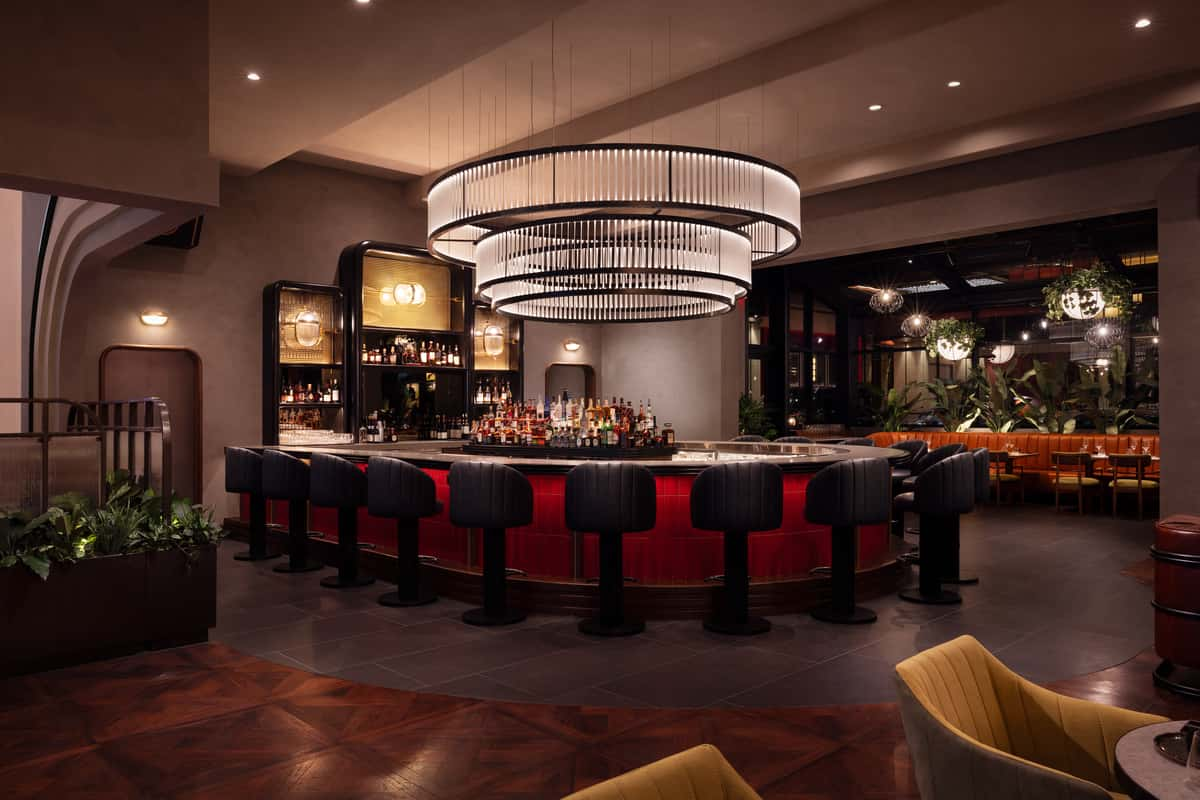
Ambiance and atmosphere are important because they shape how guests feel throughout the event, affecting conversation quality, comfort, and satisfaction. A quiet client dinner calls for a fully enclosed room with controlled sound and paced service. A birthday or rehearsal dinner benefits from privacy combined with a visible culinary atmosphere. A networking reception requires circulation space, standing capacity, beverage access, and a clear arrival path.
Hospitality servicescape research from Boston University identifies physical layout, lighting, temperature, scent, and music as design elements that affect emotional response, satisfaction, and repatronage intention. Evaluate five dimensions before booking:
- Privacy: visual separation, door closures, circulation paths, and restroom route
- Conversation: noise levels, speech intelligibility, and table spacing
- Comfort: temperature controls, drafts, scent, and lighting adjustability
- Service: dedicated captain, pacing, wine service, and allergy communication
- Identity: chef story, open kitchen visibility, art, or destination setting
Request a brief site visit during a comparable service period to assess all five in real conditions.
What Amenities and Technology Features Should You Look For?
The amenities and technology features to look for include audio/visual equipment, Wi-Fi, dedicated climate controls, private restroom access, and a clear load-in path for presentations or décor. Before signing, confirm what is included at no charge versus what carries an added fee.
A Banquet Event Order (BEO) should confirm every amenity in writing: AV setup, room exclusivity window, setup and breakdown times, and day-of technical contact. Georgia Tech's event planning checklist advises reviewing maximum capacity, accessibility accommodations, access times, load-in capability, and included equipment as non-negotiable pre-booking items.
How Does Menu Customization Enhance the Private Dining Experience?
Menu customization enhances the private dining experience by aligning food and beverage choices with the occasion, guest profile, and dietary requirements. A 2025 Foods article identified experiential dimensions, including storytelling and themed concepts, as one of two primary thematic clusters in fine-dining narratives, highlighting the importance of intentional, experience-driven restaurant concepts.
In practice, most private dining venues offer host-selected menus rather than individual ordering. Submit dietary restrictions, religious requirements, vegetarian or vegan needs, and children's requirements in writing before the event, and request written confirmation of how each will be handled.
What Role Does Service Quality Play in a Successful Private Event?
Service quality plays a decisive role because it determines whether the event pacing, dietary communication, and guest comfort are executed as planned. A National Restaurant Association survey found that 52% of consumers would likely participate in private dinner events with a chef or cuisine expert if offered, highlighting demand for chef-led dining experiences.
A study published in the International Journal of Contemporary Hospitality Management found that hotel guests preferred human employees over robot concierges because they valued sincere and genuine interactions.. Ask any venue whether a dedicated service captain is assigned to your room, how allergy protocols are communicated to the kitchen, and who owns pacing decisions on the night.
How Do Budget and Pricing Options Impact Your Selection?
Budget and pricing options impact your selection because the headline per-person menu price rarely reflects the full cost. A PCMA industry case example shows how a $55 lunch buffet reached $79 per person after a 24% service charge, tax on the service charge, food-and-beverage tax, an event fee, and tax on the event fee.
Request a single written estimate that itemizes every cost before signing. The key line items to compare across venues are:
- Food package and beverage package costs
- Room fee or minimum spend (and whether the minimum is food-only or combined)
- Service charge, gratuity, and applicable taxes
- Deposit amount, payment schedule, and cancellation ladder
- AV, décor, staffing, and overtime charges
Comparing venues on total cost rather than menu tier prevents budget surprises and lets you evaluate value accurately.
What Types of Events Are Best Suited for Private Dining Rooms?
Private dining rooms suit a wide range of occasions, from intimate celebrations to structured corporate gatherings. The sections below cover how to align venue style to your event type and which policy questions to ask before booking.
How Can You Match Venue Style to Celebrations Like Birthdays, Anniversaries, or Corporate Dinners?
Matching venue style to celebrations depends on the social pattern the event demands. Birthdays and anniversaries benefit from a visually distinct, enclosed room with a celebratory atmosphere, where complimentary touches and a curated menu reinforce the occasion. Corporate dinners and client entertainment require controlled acoustics, paced service, and a room that signals credibility without distraction. Networking receptions need standing capacity, beverage access, and clear circulation, making cocktail-configured spaces more appropriate than seated layouts. Convention-adjacent dinners should be evaluated against hotel base, transfer time, and the group's accessibility needs. A chef-driven restaurant like Stubborn Seed, with a creative tasting-forward identity, is a particularly strong fit for milestone dinners where the culinary experience is the event itself.
What Should You Ask About Group Packages, Minimums, and Policies?
The questions to ask about group packages, minimums, and policies are those that reveal the fully loaded cost, not just the headline per-person price. Meeting Professionals International reported that 90% of respondents in 2025 were concerned about costs outpacing budgets, which makes written cost clarity essential before committing to any venue. Ask venues to confirm food package tiers, beverage package options, room fees, minimum spend definitions, service charges, gratuity, tax treatment, deposit amount, cancellation terms, and the final-headcount deadline in a single written estimate. Competitor pages that publish both seated and standing capacities alongside minimum-spend ranges provide a useful benchmark for what transparent disclosure looks like; use those patterns as prompts when evaluating any Las Vegas private dining inquiry.
How Can You Make a Private Dining Reservation Seamlessly?
Making a private dining reservation seamlessly requires preparing key information before you call, then securing a written confirmation before any payment. The section below cover what to verify during the booking process and what to bring to that first conversation.
What Is the Best Way to Inquire, Book, and Confirm a Private Room?
A best way to inquire, book, and confirm a private room is to review the venue's written proposal and contract before paying a deposit, then approve a Banquet Event Order documenting the final event details.
During inquiry, ask specifically about acoustic separation. Confirm whether the room has absorptive finishes, a controllable music source, doors that close, and separation from kitchen, bar, casino, patio, or public circulation noise. A room can be visually private but acoustically public, so request a site test at your proposed occupancy level if the event is conversation-led.
Before final payment, require a document that confirms date, time, room exclusivity, guest guarantee, menu, beverage service, allergies, substitutions, table plan, décor, AV, accessibility, setup and breakdown, service sequence, day-of contact, deposit treatment, cancellation schedule, and final-count deadline. According to the University of South Alabama, a Banquet Event Order covers elements such as: menu, guest count, dietary instructions, room setup, and audio/visual requirements. The final document should also state what happens if the room, menu, staffing, or schedule changes.
Send an allergy and dietary matrix early, then obtain written confirmation of how each restriction will be handled.
What Information Should You Prepare Before Contacting a Venue?
The information you should prepare before contacting a venue falls into four categories:
- Event basics: confirmed date, approximate guest count, seated or cocktail format, and occasion type.
- Dietary and accessibility needs: a complete allergy and restriction list for all guests, plus any mobility, hearing, or other accessibility requirements.
- Budget parameters: your target per-person spend, tolerance for service charges and gratuity, and any hard ceiling on total cost.
- Logistics details: guest hotel base, preferred arrival window, transportation mode, and any date conflicts such as convention schedules or local events.
Arriving with this information reduces back-and-forth and lets the venue generate an accurate written proposal on the first exchange. Experienced planners treat the initial contact as an RFP, not a casual inquiry, and that discipline typically produces a faster, more complete confirmation.
What Do Previous Guests Say About Private Dining Room Experiences?
Guest reviews reveal patterns across privacy, service pacing, atmosphere, and value that no venue brochure will volunteer. The section below explains how to read those signals before booking.
Which Reviews or Testimonials Offer Valuable Insight for Your Decision?
Reviews and testimonials offer valuable insight when they address the specific conditions your event requires: privacy quality, service consistency, noise level, and perceived value at the price point.
Look beyond star ratings. A positive review praising "romantic atmosphere" tells you little about whether 20 guests can hold a conversation. Seek reviews that describe group size, occasion type, and service detail.
For Stubborn Seed Las Vegas, published accounts illustrate the range. Condé Nast Traveler reviewer Andrea Bennett described the food as "surprising and even sometimes a little wacky" while "beautiful and most importantly, delicious." On the other hand, a Tripadvisor reviewer, Lana D., reported disorganized service and a dinner completed in under an hour. Condé Nast Traveler reviewer Andrea Bennett described Stubborn Seed's Las Vegas dining room as balancing sophistication with a playful atmosphere.
These perspectives represent individual visits under different conditions. Treat them as prompts: ask the venue directly how private events are staffed, paced, and managed relative to the main dining room.
How Should You Approach Private Dining Room Selection with Upscale Chef-Driven Restaurants Like Stubborn Seed?
Approaching private dining room selection with upscale chef-driven restaurants like Stubborn Seed requires matching the occasion, guest count, privacy level, service model, acoustics, accessibility, menu structure, and fully loaded contract price. The following sections cover how Stubborn Seed's hospitality enhances private events and the key decision principles from this guide.
Can Stubborn Seed's Sophisticated Yet Approachable Hospitality Enhance Your Private Dining Event?
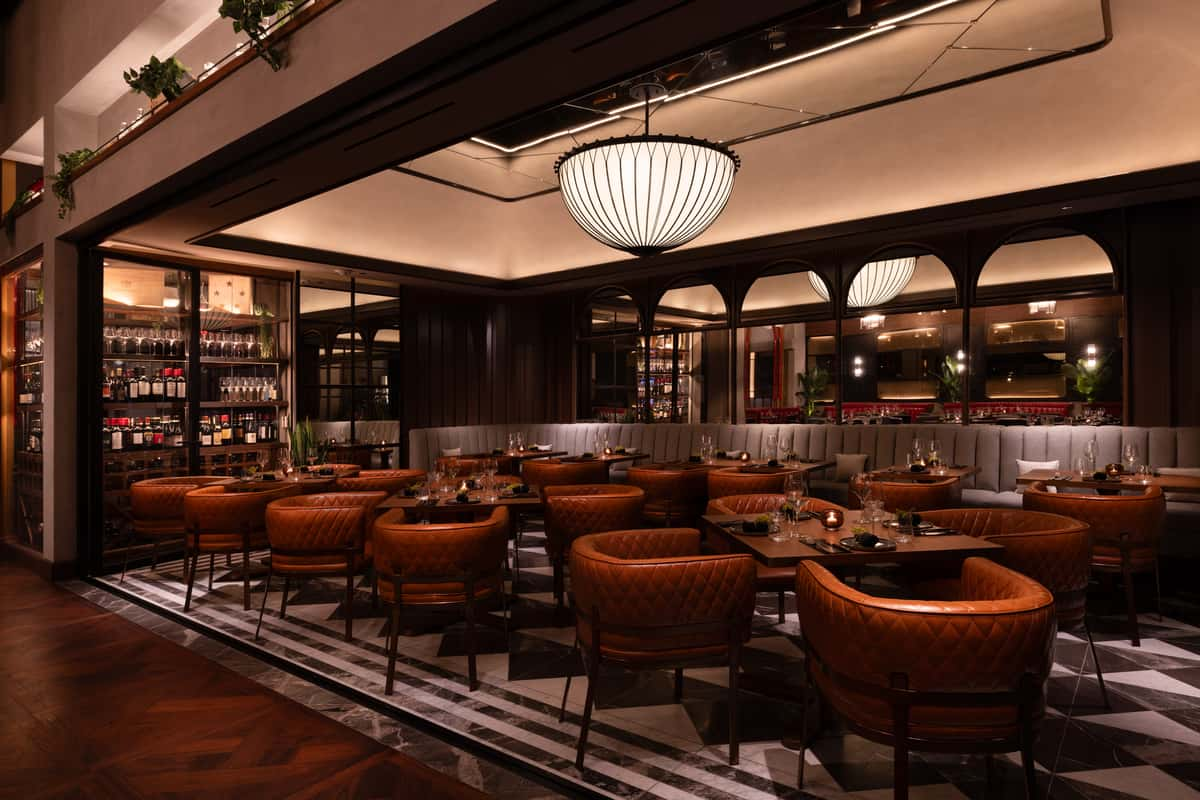
Yes, Stubborn Seed's sophisticated yet approachable hospitality can enhance your private dining event in measurable ways. Located inside Resorts World Las Vegas, Stubborn Seed is led by Chef Jeremy Ford and positions itself around a chef-driven, creativity-first culinary identity. Condé Nast Traveler reviewer Andrea Bennett described the food as "surprising and even sometimes a little wacky" while "beautiful and most importantly, delicious," adding that "the front of house has caught the fever." Stubborn Seed positions itself around a chef-driven, creativity-first culinary identity that reinforces the experiential nature of private events held there.
Stubborn Seed's private-events materials list multiple configurations spanning intimate seated dinners to large-scale cocktail receptions. Contact the venue directly for current capacity figures, room configurations, and availability.
That range means Stubborn Seed can serve an intimate client dinner or a large-scale cocktail reception, but the right configuration depends entirely on your guest count, privacy requirements, and event purpose. A Yelp reviewer, Jenn C., described the atmosphere as "upscale but still hip and fun" with complimentary celebratory touches, which suggests the venue can accommodate both formal and celebratory occasions. However, one Tripadvisor reviewer, Lana D., noted service disorganization during a general dining visit. That experience belongs to a single subjective account, not a measured private-event finding, but it does reinforce the value of requesting a written Banquet Event Order that specifies a dedicated service captain, pacing sequence, and day-of contact before committing.
Contact the venue directly to confirm current menu structure, beverage package options, and any additional private dining offerings. What the official Group & Private Dining PDF does not specify includes current minimum spend, deposit requirements, cancellation terms, room-exclusivity duration, specific AV equipment, acoustic performance measurements, or the exact accessible route through Resorts World. Those terms require a current written proposal directly from the venue.
What Are the Key Takeaways About How to Choose a Private Dining Room: Your Ultimate Guide We Covered?
The key takeaways from this guide are a set of decision principles that apply to any upscale private dining selection, and specifically to Stubborn Seed in Las Vegas.
- Define the event first. Occasion type, guest count, desired privacy level, and social pattern should screen every venue before room aesthetics do.
- Verify actual capacity. Request the approved occupant load, floor plan, table dimensions, aisle widths, service stations, and accessible route. Published seated numbers are a starting point, not a usable-space confirmation.
- Test acoustics separately from visual privacy. A room can be enclosed but acoustically exposed to kitchen, bar, casino, or public circulation noise. Ask for a site visit at a comparable service period.
- Evaluate five experiential dimensions. Privacy, conversation quality, physical comfort, service model, and venue identity each affect event outcome and should be assessed individually.
- Request a fully loaded price in writing. Food package, beverage package, room fee, minimum spend, service charge, gratuity, tax, AV, deposit, and cancellation terms should appear in one written estimate before any commitment is made.
- Confirm logistics for the exact event date. Strip-adjacent venues like Stubborn Seed at Resorts World offer hotel and convention proximity, but show nights, race-week road closures, and valet demand can affect group arrival. Confirm the accessible entrance, drop-off point, and arrival buffer with the venue directly.
- Require a BEO-style confirmation. The final document should confirm date, time, room, exclusivity, guest guarantee, menu, allergies, AV, staffing, setup and breakdown, payment terms, and the day-of contact.
Cornell research found that restaurants offering flexible reservation scheduling can increase revenue by up to 21% compared to rigid timing structures, which signals that venues offering multiple room configurations and event formats are better positioned to match diverse event needs. The selection decision should never reduce to room size alone.