
Importance of Food Presentation: Why It Matters in Fine Dining
Importance of Food Presentation: Why It Matters in Fine Dining
Food presentation in fine dining is the deliberate arrangement, color selection, and compositional technique that shapes how diners perceive flavor, quality, and value before eating. It is not decoration; it is a sensory signal the brain processes before taste ever enters the equation.
This guide covers the psychology behind visual dining, the core techniques and tools that define fine dining plating, how presentation evolved through culinary history, why diners pay more for beautiful dishes.
Visual appeal reaches the brain before the first bite does. Neat, intentional plating triggers neurological responses that elevate perceived flavor, suggest care in preparation, and prime diners to expect quality from every course.
The techniques behind that response are specific and teachable. Fine dining kitchens rely on the rule of thirds, height and layering, deliberate sauce work, and negative space to build plates that guide the eye and communicate skill. Color, texture, and the right professional tools make those presentations consistent across every service.
Presentation did not emerge fully formed. From Escoffier's codified French service to nouvelle cuisine's artistic shift to today's tension between minimalism and maximalist complexity, each era shaped how chefs compose a plate and what diners expect to see.
That visual language directly influences willingness to pay. Research confirms diners pay more for neatly presented food, perceive it as coming from higher-quality restaurants, and share it more widely on social media, creating a commercial loop that connects the plate to the bottom line.
What Role Does Food Presentation Play in Shaping the Dining Experience?
Food presentation shapes the dining experience by influencing taste perception, emotional response, and social behavior before a single bite is taken. The following sections cover how first impressions are formed, how visual appeal alters flavor perception, and how plating drives social media engagement.
How Does Food Presentation Affect a Guest's First Impression?
Food presentation affects a guest's first impression by triggering immediate sensory and psychological judgments about quality, care, and flavor. Visual cues reach the brain before taste does, setting expectations that shape the entire meal.
A 2025 study published in Cogent Food & Agriculture by Berčík et al. confirmed that visual presentation of food has a direct effect on how people perceive its smell and taste, with differences validated at both conscious and subconscious neurological levels. Neat, intentional arrangements signal that a preparer invested care into the dish. Height and layering add dimension, giving guests a landscape to explore visually before engaging with the food itself.
Neatness is particularly persuasive. Research by Zellner et al. (2011) in Appetite found that neatness of food presentation increases liking for taste by suggesting greater care on the part of the food preparer.
In What Ways Does Visual Appeal Influence Taste Perception?
Visual appeal influences taste perception by setting flavor expectations in the brain before food is tasted. Plating shapes the brain's perception of freshness, portion size, and quality through purely visual signals.
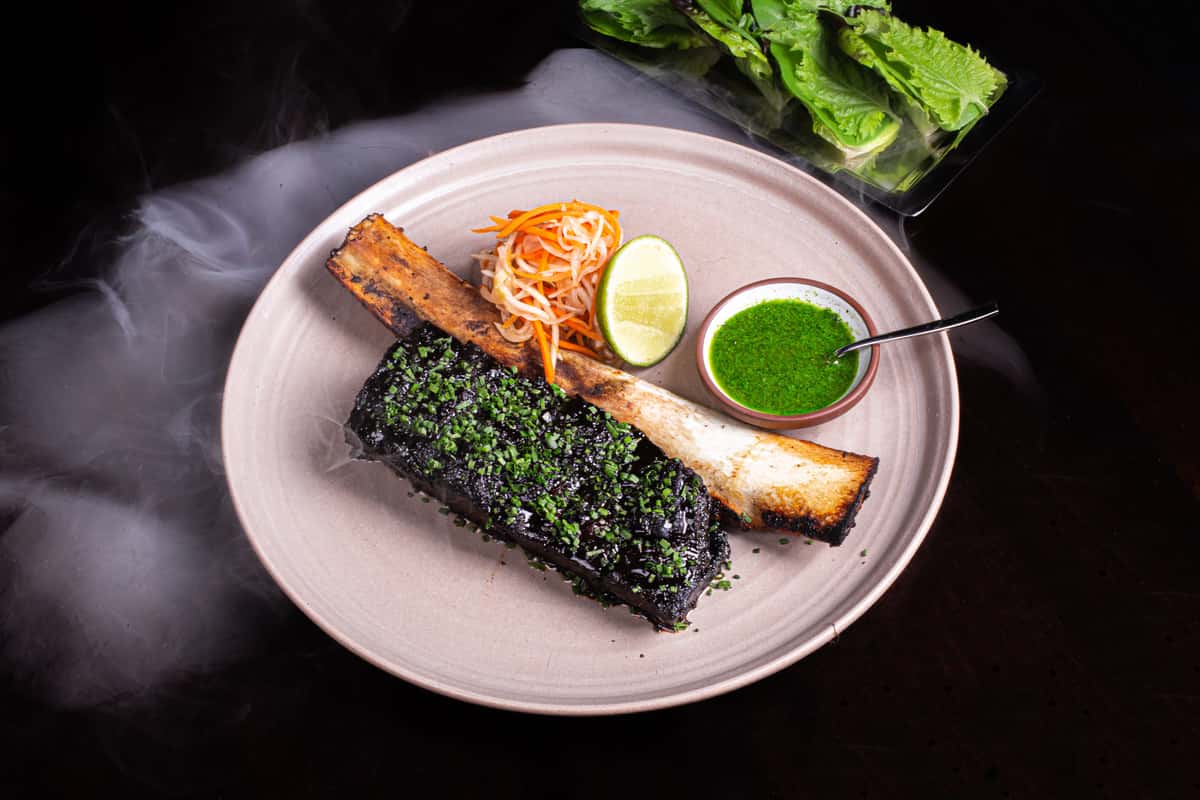
Plate design plays a measurable role. A 2013 study by Stewart and Goss in Flavour found that plate color significantly influences taste perception: white plates enhance perceived sweetness, while black plates convey modernity and higher aesthetic quality. Shape compatibility matters too. Round desserts on square platters are perceived as considerably less appealing than those served on round plates.
The type of aesthetic design also determines how placement affects perception. In a study of 149 participants, food centered on classically aesthetic plates was perceived as tastier than food placed at the edge, while placement had no effect on expressively aesthetic plates.
Does Food Presentation Impact Guests' Willingness to Share on Social Media?
Food presentation does impact guests' willingness to share on social media, and it functions as a direct marketing channel for restaurants. Visually compelling dishes prompt immediate documentation and distribution.
According to Tastewise (2025), 37% of consumers rely on social media to find new dining spots, and 22% of customers revisit restaurants due to engaging social media presence. The 2025 Dash Social Benchmark Report found that food and beverage brands average 289 shares per TikTok post, a figure that doubled within six months. Top-performing food brands leverage visual aesthetics specifically to cut through crowded social feeds.
Presentation's commercial reach extends beyond the plate. Attractive plating drives new customer acquisition through shared content, reinforces brand identity, and correlates directly with higher check averages and premium pricing acceptance. Investing in plating quality is, in practice, investing in organic reach.
What Are the Fundamental Elements of Effective Food Presentation?
The fundamental elements of effective food presentation are technique, color, arrangement, and the right tools working together. The sections below cover the core plating methods used in fine dining, how sensory elements elevate visual appeal, and the professional tools that make memorable presentations repeatable.
Which Plating Techniques Are Most Used in Fine Dining Restaurants?
The plating techniques most used in fine dining restaurants are the rule of thirds, height and layering, sauce work, and negative space. Each method reflects a specific visual logic refined over centuries of culinary evolution.
Fine dining plating traces its foundations to Auguste Escoffier (1846–1935), who introduced refined simplicity and the brigade de cuisine system, replacing ornate classical service with organized elegance. The 1960s nouvelle cuisine movement then shifted plating from decoration to artistic creation, prioritizing lightness and composition. Contemporary molecular gastronomy extended this further, integrating scientific techniques with innovative presentation methods.
Today, the leading techniques include:
- Rule of thirds: Place the focal ingredient off-center to create visual balance and highlight the main component.
- Height and layering: Stack food components to add dimension and guide the diner's eye.
- Sauce work: Apply sauces through smears, dots, or swirls as an artistic element complementing the main ingredient.
- Negative space: Leave intentional empty space on the plate to prevent overcrowding and signal elegance.
According to WebstaurantStore (2025), staff training on these plating techniques directly increases customer satisfaction and dining experience quality.
How Do Color, Texture, and Arrangement Elevate a Dish's Appeal?
A dish's visual appeal is elevated by balancing color, texture, height, negative space, and purposeful garnishing, with the arrangement guiding the eye across the plate.
Color contrast draws immediate attention, while varied textures (such as crisp, creamy, and tender elements on the same plate) create sensory anticipation before the first bite. Arrangement signals intention: a thoughtfully composed plate communicates care and skill, whereas a haphazard one undercuts even excellent ingredients.
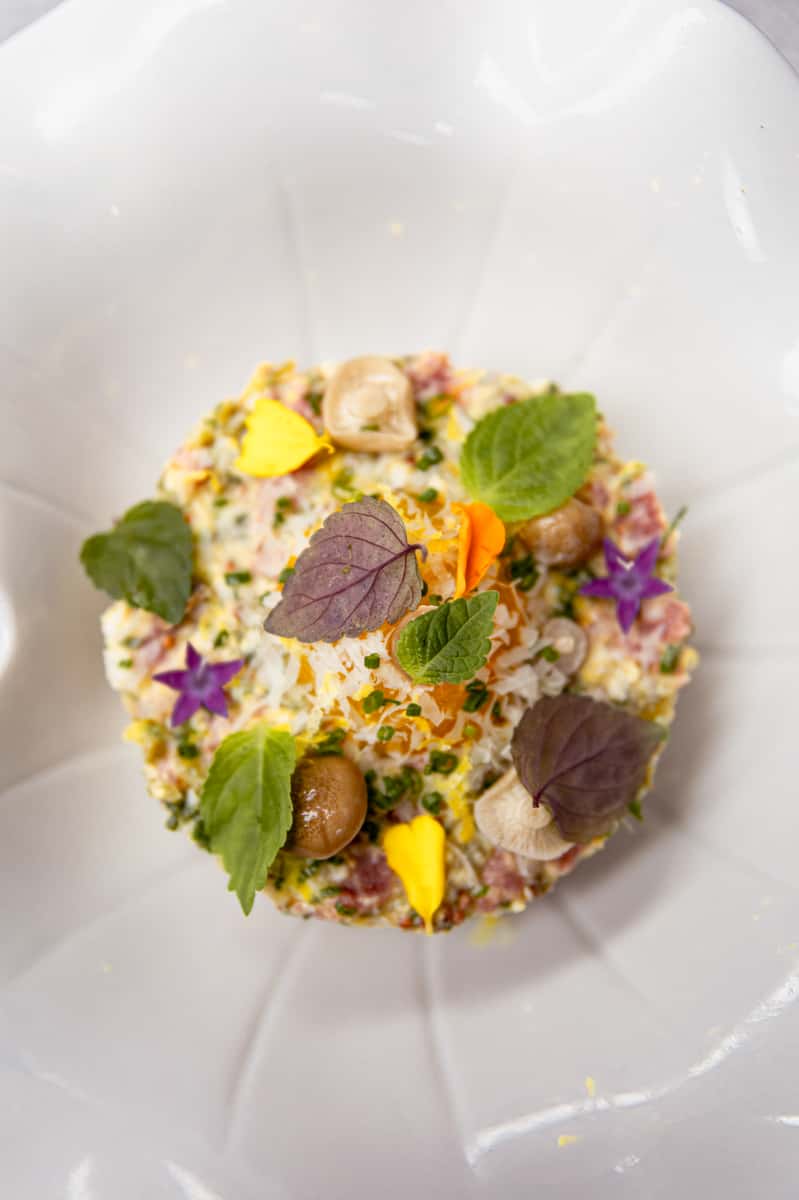
Edible garnishes such as microgreens and edible flowers add color, texture, and flavor accents simultaneously. The guiding principle is "less is more," garnishing with purpose rather than excess.
What Tools and Garnishes Help Achieve Memorable Presentations?
The tools and garnishes that help achieve memorable presentations are precision instruments and intentional edible accents used to execute fine plating techniques consistently at scale. The professional toolkit includes:
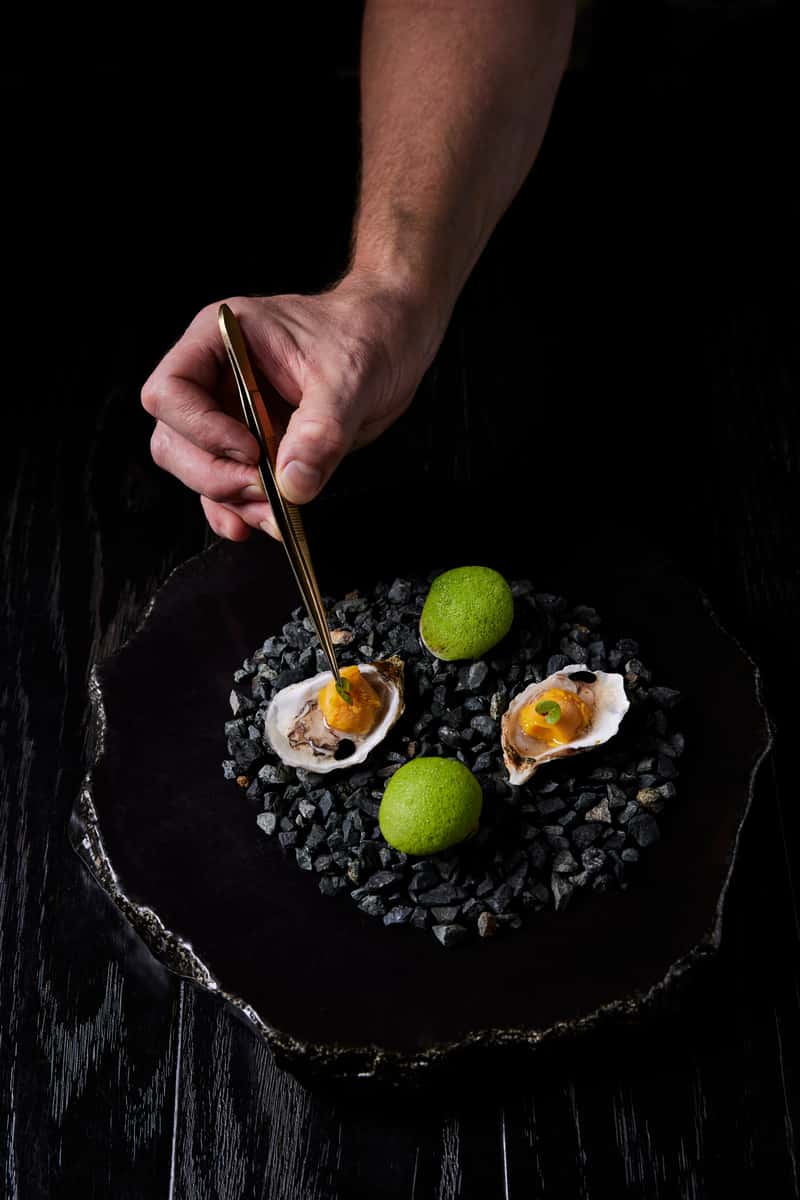
- Tweezers and chopsticks for delicate, precise placement of microgreens and small garnishes.
- Squeeze bottles and brushes for controlled sauce application, including dots, swirls, and smears.
- Thin-offset spatulas for moving food components without disturbing surrounding elements.
- Stacking rings and geometric molds to add height and contain components in structured arrangements.
Consistency across every plate depends on this toolkit. Without it, even skilled cooks struggle to replicate the same presentation at speed during service.
With the right techniques, visual principles, and tools in place, understanding how these elements evolved historically reveals why modern fine dining looks the way it does.
How Has the Importance of Food Presentation Evolved in Modern Fine Dining?
Food presentation evolved from ornate classical decoration through artistic nouvelle cuisine to contemporary scientific modernism. The following H3s trace the historical influences, current trends, and the minimalism-versus-extravagance debate shaping modern fine dining.
What Are the Historical Influences on Today's Presentation Styles?
The historical influences on today's presentation styles trace back to Auguste Escoffier, whose codification of classical French service established the organized systems and refined technique that underpin modern fine dining. The nouvelle cuisine movement of the 1960s and 1970s then shifted plating from decoration to artistic creation, prioritizing lightness and freshness over elaborate classical preparations. Molecular gastronomy and modernist cuisine, emerging from the 1980s onward, further advanced presentation by integrating scientific techniques with culinary expression, producing avant-garde plating methods that continue to define the contemporary dining landscape.
How Do Current Culinary Trends Shape Food Presentation?
Current culinary trends shape food presentation through a tension between competing philosophies: maximalism, minimalism, and science-driven modernism. A 2024 study published in Foods (Głuchowski, Koteluk, and Czarniecka-Skubina) confirmed that plate shape, size, and color directly influence consumer perception of attractiveness and expected price, making plateware selection itself a deliberate trend-driven decision. Chefs today use presentation as a strategic language, choosing visual complexity or restraint based on the story each dish is meant to tell.
Is Minimalism or Extravagance More Valued in Today's Fine Dining?
Neither minimalism nor extravagance is universally more valued; both succeed in different dining contexts. Minimalist plating emphasizes negative space, single focal points, and refined restraint, allowing high-quality ingredients to speak for themselves. Maximalist plating layers flavors, textures, and abundant garnishes into kaleidoscopic arrangements. According to Peter Giuliano's 2025 analysis in Pax Culinaria, the contemporary culinary landscape sustains an ongoing debate between the two approaches, with each finding loyal audiences depending on the restaurant's philosophy and guest expectations. The most effective fine dining presentations commit fully to one vision rather than straddling both.
Why Do Diners Value Presentation as Much as Taste in Upscale Restaurants?
Diners value presentation as much as taste because visual appeal shapes flavor perception, signals quality, and justifies premium pricing before a single bite is taken. The following sections cover how ambiance supports that experience, why guests pay more for beautiful plates, and what psychological effects plateware choices create.
How Does Ambiance and Service Interconnect with Presentation?
Ambiance interconnects with food presentation to shape the holistic luxury dining experience. Lighting, table setting, music, and service all function as supporting layers alongside the plate itself, reinforcing the visual story a dish tells. When these elements align, the sensory experience becomes greater than any single component. A stunning plate served under harsh fluorescent light in a noisy room loses much of its impact; the environment either amplifies or undermines what the chef has crafted.
Are Guests Willing to Pay More for Beautifully Presented Dishes?
Yes, guests are willing to pay more for beautifully presented dishes. According to a 2011 study published in Appetite (Zellner et al.), consumers indicated they would pay more for neatly presented food than messily presented food, and they perceived neatly plated dishes as coming from higher quality restaurants. Separate research confirmed that subjects liked chicken, sauce, and brown rice pilaf significantly more when served in the more attractive plating style. Consumers also report greater willingness to try and purchase attractively plated dishes. Presentation, in practice, is a direct pricing lever.
What Psychological Effects Does Food Presentation Have on Diners?
The psychological effects food presentation has on diners are measurable and plate-color-specific. White round plates heighten sweetness, intensity, quality, and liking ratings. Black plates evoke perceptions of modernity and higher aesthetic quality. Red plates can be perceived as artificial and may actually reduce how much diners eat. Color contrast between plateware and food creates flavor expectations, making food appear more vivid and potentially more flavorful. Choosing the right plate is not decoration; it is flavor engineering before the first bite.
How Should You Experience an Exceptional Food Presentation at Stubborn Seed in Las Vegas?
Stubborn Seed at Resorts World Las Vegas combines Chef Jeremy Ford's Michelin-starred precision with tasting menus designed to engage every sense. The sections below cover how Stubborn Seed's tasting menus elevate food presentation appreciation and the core takeaways on why presentation defines fine dining.
Can Stubborn Seed's Tasting Menus Enhance Your Appreciation of Fine Food Presentation?
Yes, Stubborn Seed's tasting menus can significantly enhance your appreciation of fine food presentation. Chef Jeremy Ford structures each course as a deliberate visual and sensory progression, where plating, flavor, and texture converge as a unified experience. A 2022 study published in Foods (Zhang et al., 11(7):931) found that the subjective beauty of plate patterns significantly influences how diners perceive taste and overall food quality. Guests consistently confirm this at Stubborn Seed: "Hands Down the Best tasting menu in Las Vegas. Absolute Brilliance! Everything we ate hit on all fronts — Flavor, Texture, Plating...it was a feast for your eyes." For anyone seeking to understand why food presentation matters in fine dining, experiencing these courses in sequence is one of the most direct ways to feel that science firsthand.

What Are the Key Takeaways About Why Food Presentation Matters in Fine Dining?
Food presentation matters in fine dining because it stimulates appetite, signals quality, and shapes how flavor is perceived before the first bite is taken. Presentation conveys care, skill, and attention to detail, priming the brain to expect a higher-quality experience. The key takeaways are:
- Presentation drives taste perception. Visual appeal sets flavor expectations that directly influence how food actually tastes.
- Neat, intentional plating signals quality. Arrangement communicates a chef's care and elevates the perceived value of every dish.
- The full experience is multisensory. Plating works alongside ambiance, service, and lighting to create a cohesive luxury dining moment.
- Presentation supports premium pricing. Diners are consistently more willing to pay more for attractively presented food.
Stubborn Seed's tasting menus put every one of these principles into practice across each course Chef Ford serves.