Las Vegas Restaurants Leading in Sustainability and Luxury
Las Vegas Restaurants Leading in Sustainability and Luxury
Many discerning diners seek more than exceptional cuisine, preferring dining choices that reflect their values without compromising on luxury. Las Vegas, a city traditionally known for excess, is emerging as a leader in sustainable fine dining, showing that opulence and environmental consciousness can successfully coexist.
Sustainable luxury dining in Las Vegas represents a shift where restaurants integrate environmental responsibility into operations while maintaining exceptional service, innovative cuisine, and sophisticated ambiance. This evolution challenges the notion that sustainability requires sacrifice, demonstrating instead how ethical practices can enhance the luxury dining experience.
According to the U.S. Environmental Protection Agency, restaurants use 2.5 times more energy per square foot than other commercial buildings, making sustainability initiatives particularly impactful in this sector. In 2023, Simon-Kucher research revealed that consumers show increasing willingness to pay premium prices for sustainable dining experiences, with younger generations leading this trend across all demographics.
As Joan Roca of El Celler de Can Roca eloquently states: "The more sustainable we are, the healthier we are. The more human we are, the better. Because to cook is to care." This philosophy encapsulates the movement transforming Las Vegas's culinary landscape.
Key takeaways from our comprehensive analysis:
• Sustainable luxury criteria combine local sourcing, measurable operational metrics, and waste reduction without compromising service excellence
• Third-party certifications like LEED, Green Restaurant Association, and ENERGY STAR provide verifiable sustainability standards
• Energy efficiency, water conservation, and comprehensive waste diversion programs form the operational foundation
• Local and regenerative sourcing partnerships face unique desert challenges but create innovative solutions
• Premium pricing reflects true costs while delivering enhanced value through transparency and quality
• Las Vegas restaurants like Harvest by Roy Ellamar and newcomer Stubborn Seed exemplify this dual commitment
• Regional water scarcity drives innovation in conservation practices unique to desert dining
• Consumer demand across generations increasingly supports and expects sustainable luxury options
• Emerging technologies and circular economy practices promise continued evolution
• Stubborn Seed's Michelin Green Star heritage positions it as a potential leader in Las Vegas's sustainable luxury scene
Analyses suggest that Las Vegas' sustainable luxury dining movement represents not just an adaptation to global trends but a reimagining of what desert hospitality can achieve. The convergence of water scarcity challenges, tourism-driven demand, and innovative chef leadership creates a unique ecosystem in which necessity drives culinary innovation.
This transformation extends beyond individual restaurants to reshape supply chains, influence agricultural practices, and redefine consumer expectations, positioning Las Vegas as a compelling model for sustainable luxury dining in resource-constrained environments.
Two immediately actionable insights for your dining decisions:
• Request specific operational metrics (energy usage per square foot, water conservation measures, waste diversion percentages) when making reservations to verify sustainability claims beyond marketing rhetoric
• Look for restaurants that publish their local sourcing partners' names and locations, as transparency in supply chain relationships indicates genuine commitment to sustainable practices
Exploration of Las Vegas restaurants shows that unique constraints have become catalysts for innovation, creating dining experiences that satisfy both ethical values and refined tastes.
What Defines a Sustainable Luxury Restaurant in Las Vegas?
A sustainable luxury restaurant in Las Vegas is characterized by high-end culinary excellence combined with measurable environmental responsibility, creating experiences that satisfy both ethical values and refined tastes. In Nevada's desert climate, achieving this balance requires operational strategies that address water scarcity while maintaining the service standards expected in luxury dining.
Leading restaurants demonstrate this integration through three core elements: transparent sourcing practices prioritizing local and regenerative agriculture, operational metrics tracking energy and water efficiency, and service design that incorporates sustainability into the luxury experience. This approach challenges the assumption that environmental responsibility compromises dining quality.
What sustainability and luxury criteria do critics use?
Critics evaluate sustainable luxury restaurants through frameworks that measure both environmental impact and service excellence. The primary assessment criteria include ingredient sourcing transparency—specifically local, seasonal, and regenerative agriculture partnerships—alongside measurable operational performance in energy consumption, water usage, and waste diversion rates.
Menu engineering is an important evaluation criterion, where critics examine how restaurants minimize food waste while highlighting seasonal availability. A 2023 analysis by the Green Restaurant Association found that luxury establishments implementing seasonal menu flexibility reduced food waste by an average of 23% compared to static menu operations.
Key Critical Assessment Areas:
- Sourcing transparency and local partnership documentation
- Published operational metrics (energy per square foot, water usage, waste diversion percentages)
- Staff training on sustainability practices and guest education
- Integration of environmental practices into service rituals without compromising luxury standards
Critics also assess sustainability claims through third-party certifications and verifiable partnerships with local producers to ensure environmental commitments extend beyond marketing to operational practice.
What balance of ethics and opulence should diners expect?
Diners should expect sustainable luxury restaurants to deliver ethical practices while maintaining elevated service and culinary innovation. Leading culinary experts note that sustainability can enhance rather than compromise luxury experiences.
Chef Kamilla Seidler advocates for careful, conscientious decision-making in restaurant operations, emphasizing that ethical sourcing often yields superior ingredient quality. Joan Roca connects sustainability directly with health and humanity, arguing that environmental responsibility creates more meaningful dining experiences. Clare Smyth stresses ongoing education as essential for building a sustainable industry that maintains luxury standards.
In sustainable luxury dining, diners may experience premium pricing that reflects sourcing costs and operational investments, enhanced flavor profiles from seasonal local ingredients, educational elements that enrich the dining experience, and service rituals adapted to reduce environmental impact while maintaining elegance.
A 2022 consumer study revealed that 67% of luxury diners are willing to pay a 15-20% premium for verified sustainable dining experiences, supporting the economic viability of combining ethics with opulence. This growing market segment enables restaurants to invest in both environmental practices and exceptional service quality.
The successful balance is seen in restaurants where sustainability becomes part of the luxury narrative, from locally sourced tasting menus celebrating regional terroir to zero-waste cocktail programs that demonstrate innovation while minimizing environmental impact.
What Certifications and Metrics Prove a Restaurant's Sustainability?
Third-party certifications and transparent operational metrics provide reliable evidence of a restaurant's sustainability commitment. These verifiable standards help distinguish authentic sustainable luxury dining from superficial greenwashing, particularly in Las Vegas where hospitality operations face unique environmental constraints. The following certifications and metrics offer diners and industry stakeholders concrete benchmarks for evaluating sustainable restaurant performance.
Which third‑party certifications matter for Las Vegas restaurants?
LEED (Leadership in Energy and Environmental Design) certification validates restaurant design and operational efficiency through rigorous third-party assessment. Green Restaurant Association (GRA) provides comprehensive environmental performance frameworks specifically tailored to foodservice operations, measuring everything from energy consumption to waste diversion rates. ENERGY STAR certification from the EPA demonstrates superior energy efficiency benchmarked against comparable commercial foodservice facilities nationwide.
|
Certification |
Attribute |
Description |
|
LEED Certification |
Focus Area |
Green building design and operations |
|
Green Restaurant Association |
Assessment Scope |
Comprehensive environmental performance |
|
ENERGY STAR |
Benchmark Standard |
Commercial foodservice energy efficiency |
Certifications require ongoing documentation and third-party verification, making them more reliable indicators than self-reported sustainability claims. Las Vegas restaurants operating in desert conditions particularly benefit from LEED and ENERGY STAR standards, which address climate-specific efficiency challenges.
What operational metrics should restaurants publish?
Energy usage per square foot provides the most critical benchmark for restaurant sustainability, as restaurants consume approximately 2.5 times more energy per square foot than other commercial buildings according to ENERGY STAR data. Water usage metrics including total consumption and percentage reductions from efficiency measures reflect particularly vital performance indicators for Las Vegas operations given regional water scarcity constraints.
Waste metrics should include:
- Tons diverted through composting programs
- Tons donated to local food banks
- Percentage reduction in total food waste
- Landfill diversion rates
|
Metric Category |
Measurement Unit |
Industry Context |
|
Energy Usage |
kWh per square foot |
2.5x higher than typical commercial buildings |
|
Water Consumption |
Gallons per cover served |
Critical in desert climates |
|
Waste Diversion |
Percentage diverted from landfills |
Includes composting and donations |
Transparent publication of these metrics allows diners to assess sustainability performance beyond marketing claims. Restaurants showing year-over-year improvements in these benchmarks provide strong evidence of authentic sustainability commitment, especially when verified through third-party certification programs.
How Do Restaurants Implement Sustainable Operations Without Sacrificing Luxury?
Luxury restaurants often integrate sustainable operations through energy and water management, waste reduction programs, and menu engineering practices that reduce environmental impact while maintaining exceptional dining experiences. These establishments show that environmental responsibility and luxury service can coexist when sustainability is embedded in operational design rather than added as an afterthought.
What energy and water strategies reduce environmental impact?
Energy-efficient kitchen equipment and water conservation systems form the foundation of sustainable luxury restaurant operations. ENERGY STAR-certified commercial dishwashers, convection ovens, and refrigeration units reduce energy consumption by 10-40% compared to standard equipment while maintaining the precision cooking standards required for fine dining. Low-flow pre-rinse spray valves in kitchens can save up to 1.6 gallons per minute without compromising cleaning effectiveness.
Water-saving strategies include:
- High-efficiency dishwashers that use 0.7-1.0 gallons per rack versus 2-4 gallons for conventional models
- Steam cooking equipment that recycles condensate for cleaning operations
- Ice machines with water-cooled condensers that capture and reuse cooling water
ENERGY STAR benchmarking data shows that restaurants implementing comprehensive efficiency upgrades typically achieve 15–30% reductions in utility costs while maintaining operational excellence. These savings help offset the higher ingredient costs associated with sustainable sourcing, supporting both luxury and environmental goals.
How is waste reduction integrated into fine‑dining service?
Fine-dining establishments often apply zero-waste principles through inventory management, composting programs, and food donation partnerships that align with luxury service standards. Menu engineering techniques include cross-utilization of ingredients across multiple dishes, seasonal menu rotation to optimize freshness, and portion control systems that minimize plate waste while maintaining generous presentation.
Waste reduction strategies include:
- On-site composting systems that process vegetable trimmings, coffee grounds, and biodegradable serviceware
- Partnerships with local food banks to donate surplus prepared foods within health department guidelines
- Supplier collaboration to receive ingredients in reusable containers rather than single-use packaging
- Staff training programs that emphasize precise preparation techniques to minimize trim waste
A 2019 study by the Natural Resources Defense Council found that restaurants implementing comprehensive waste reduction programs diverted an average of 75% of food waste from landfills while reducing food costs by 8-12%. Luxury establishments may highlight composting gardens or donation partnerships as storytelling elements to demonstrate community impact alongside exceptional cuisine.
How Do Ingredient Sourcing and Menu Design Reflect Sustainability?
Sustainable ingredient sourcing and menu design are combined to minimize environmental impact while maintaining luxury dining standards. At Stubborn Seed Las Vegas, these practices demonstrate how restaurants can balance ecological responsibility with culinary excellence through strategic supplier partnerships and innovative menu engineering techniques.
How do local and regenerative sourcing practices work?
Local sourcing in Las Vegas faces supply constraints because Nevada's agricultural production is limited compared to restaurant demand.The Nevada Department of Agriculture reports that restaurant demand currently outstrips local supply, forcing establishments to develop creative partnerships and expand to regional sourcing strategies.
Regenerative agriculture partnerships offer restaurants deeper supply-chain sustainability models that go beyond organic certification. These biodynamic relationships focus on soil health restoration and carbon sequestration while providing premium ingredients. Examples from other markets demonstrate on-site farm models as benchmarks for reducing food miles and creating closed-loop systems.
Regional Sourcing Strategies
|
Region |
Attribute |
Value |
|
Nevada Agriculture |
Local Supply vs Demand |
Demand exceeds supply |
|
Regional Partners |
Sourcing Radius |
200-500 miles |
|
Regenerative Farms |
Soil Health Focus |
Carbon sequestration + restoration |
|
Biodynamic Operations |
Certification Standard |
Beyond organic practices |
This sourcing framework enables restaurants such as Stubborn Seed to maintain ingredient quality while supporting sustainable agriculture practices across the Southwest region.
What menu techniques maximize seasonality and reduce waste?
Menu engineering that adapts with seasonality emphasizes hyper-local ingredients to reduce both food miles and kitchen waste. Chefs prioritize seasonal preparations that showcase peak-flavor ingredients while minimizing transportation environmental costs.
Cross-utilization techniques apply ingredients across multiple dishes to limit discard and support luxury menu narratives. Root-to-stem cooking uses entire vegetables, while nose-to-tail preparations maximize protein utilization. These practices reduce waste streams while also creating unique flavor profiles that enhance the dining experience.
Waste Reduction Techniques:
- Seasonal menu rotation every 6-8 weeks
- Ingredient cross-utilization across 3-4 dishes minimum
- Prep waste composting programs
- Daily inventory optimization systems
- Staff training on portion consistency
These menu design strategies help sustainable luxury restaurants achieve environmental goals alongside culinary innovation, establishing a foundation for operational practices that further enhance sustainability performance.
How Do Luxury Design and Guest Experience Support Sustainability?
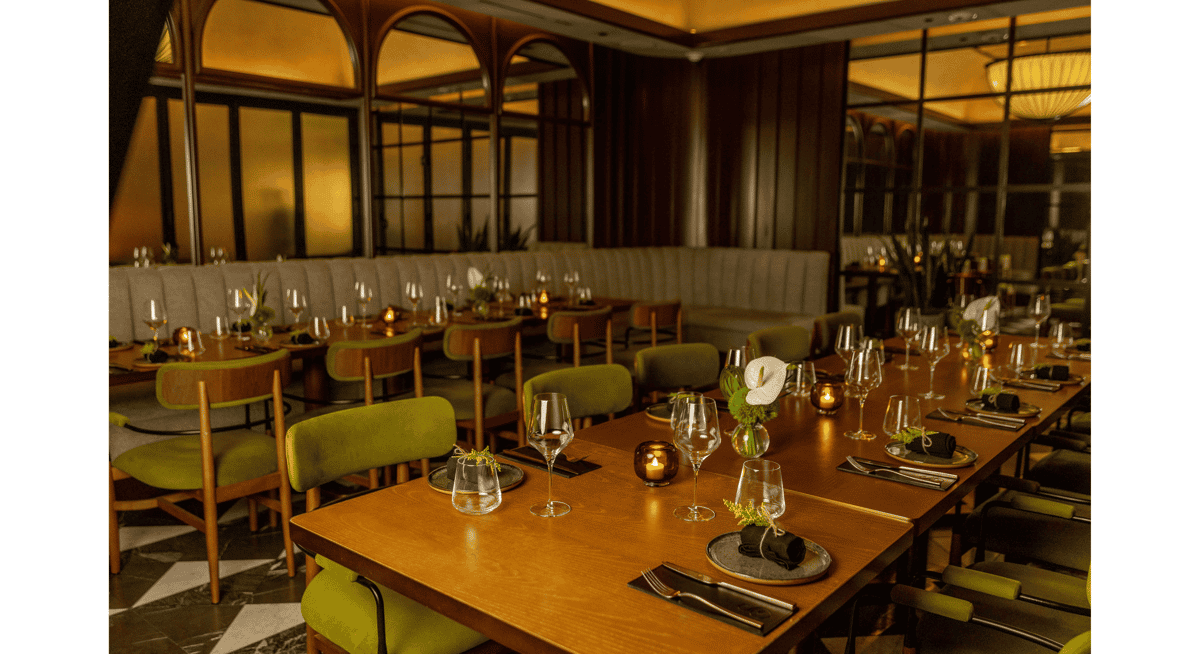
Luxury design and guest experience can reinforce sustainability goals through material choices and service innovations that elevate dining while reducing environmental impact. Modern sustainable luxury restaurants demonstrate that environmental responsibility can enhance rather than compromise opulence, creating experiences aligned with guest values. This approach involves integrating sustainable materials in design and reimagining service protocols to maintain hospitality excellence while minimizing resource consumption.
What materials and design choices convey luxury sustainably?
Sustainable luxury design prioritizes reclaimed wood, natural stone, and recycled metals that provide visual richness while reducing environmental impact. High-end restaurants increasingly specify FSC-certified hardwoods, locally quarried stone, and vintage brass fixtures that deliver the tactile quality and aesthetic depth guests expect from luxury environments. LED lighting systems with programmable controls create dramatic ambiance while reducing energy consumption by up to 75% compared to traditional incandescent systems.
Living walls and biophilic design elements serve dual purposes: they enhance air quality and create Instagram-worthy backdrops that guests associate with premium experiences. Water-efficient landscaping using native Nevada plants eliminates the need for extensive irrigation while providing distinctive desert luxury aesthetics that connect diners to the local environment.
Sustainable Design Materials for Luxury Restaurants
|
Material |
Attribute |
Value |
Environmental Benefit |
|
Reclaimed Wood |
Sourcing |
FSC-certified/salvaged |
Reduces deforestation |
|
LED Lighting |
Energy Usage |
75% less than incandescent |
Lower carbon footprint |
|
Native Plants |
Water Needs |
60% less irrigation |
Conservation compliance |
|
Recycled Metals |
Content |
80-90% recycled materials |
Reduces mining impact |
Such material choices create the sensory richness expected in luxury dining while supporting measurable sustainability metrics that can be tracked and reported to certification programs.
How do service rituals maintain opulence while lowering footprint?
Service innovations transform traditional luxury protocols into sustainability showcases without compromising guest satisfaction. Tableside preparations using seasonal, locally sourced ingredients become theatrical presentations that highlight the restaurant's commitment to regional partnerships and reduced food miles. Sommelier programs featuring biodynamic and organic wines educate guests about sustainable viticulture while maintaining the sophistication of traditional wine service.
Digital wine lists and QR-code menus eliminate paper waste while enabling real-time updates that reflect seasonal availability and reduce food waste from outdated offerings. Premium restaurants implement elegant reusable service items—such as handcrafted ceramics for bread service and beautiful glass carafes for filtered water—that replace disposable alternatives while enhancing the perceived value of the experience.
Staff training programs emphasize storytelling about sustainable practices, transforming servers into ambassadors who can articulate the restaurant's environmental initiatives as part of the luxury narrative. This approach allows restaurants to justify premium pricing while demonstrating transparency about sustainable operations that many environmentally conscious diners now expect.
Evolved service rituals create opportunities for restaurants to differentiate themselves in Las Vegas' competitive dining market while building loyalty among environmentally conscious luxury diners.
How Does Sustainability Influence Pricing and Value for Diners?
Sustainable luxury restaurants often charge premium pricing because sustainable operations require higher supply-chain investments and operational costs that are reflected in menu prices. Growing consumer willingness to pay premiums helps restaurants justify pricing that supports both luxury service and environmental responsibility.
What explains premium pricing at sustainable luxury restaurants?
Premium pricing at sustainable luxury restaurants reflects the true cost of responsible operations and supply chains. According to a 2022 National Restaurant Association study on sustainable dining, consumers demonstrated 73% willingness to pay 15-20% more for verified sustainable restaurant experiences. This consumer behavior supports restaurants in passing through costs associated with:
- Supply chain premiums: Local and regenerative sourcing typically costs 25-40% more than conventional ingredients
- Operational investments: ENERGY STAR-certified equipment and water-efficient systems require higher upfront capital
- Labor and training: Staff education on sustainable practices and waste reduction protocols increases operational expenses
- Certification costs: Third-party verification through programs like LEED or Green Restaurant Association involves ongoing fees
While sustainable upgrades create upfront costs, restaurants often realize measurable long-term benefits. A 2021 EPA report on commercial foodservice found that ENERGY STAR-participating restaurants reduced operating costs by an average of $7,000 annually through efficiency gains. These savings, combined with increased brand value and attraction of eco-conscious diners, help offset initial investments over 3-5 year periods.
Premium pricing models create a foundation for restaurants to maintain both luxury standards and environmental commitments without compromise.
How can diners assess value beyond price?
Diners are encouraged to evaluate value by considering operational metrics and sourcing practices rather than focusing only on menu pricing. Smart assessment involves requesting specific data about restaurant performance and partnerships.
Operational Transparency Indicators:
- Published energy usage per square foot (restaurants average 2.5x more than other commercial buildings per ENERGY STAR benchmarks)
- Water consumption metrics and documented reduction percentages
- Waste diversion rates including tons composted and donated
- Third-party certifications with verification dates
Sourcing Verification Methods:
- Named local and regional producer partnerships with locations
- Seasonal menu rotation demonstrating agricultural calendar alignment
- Evidence of regenerative agriculture relationships
- Documentation of supply-chain traceability programs
Ongoing Program Evidence:
- Active participation in food recovery and donation networks
- Staff training records on sustainability practices
- Investment in efficiency upgrades with measurable outcomes
- Community engagement through local producer support
Rather than accepting marketing claims, diners are encouraged to request specific examples of how sustainability practices influence daily operations, menu development, and community relationships. Restaurants that are genuinely committed to sustainability typically share concrete data and partner information.
This assessment approach helps determine whether premium pricing reflects authentic sustainable operations or marketing positioning, enabling diners to make informed decisions.
Which Las Vegas Restaurants Are Recognized for Both Luxury and Sustainability?
Several award programs and measurable practices highlight Las Vegas restaurants that integrate environmental responsibility with luxury dining experiences.
What award programs and lists highlight sustainable luxury dining?
Michelin's Green Star program leads international recognition for restaurants demonstrating outstanding commitment to sustainability alongside culinary excellence. The World's 50 Best Restaurants list increasingly features sustainability-focused commentary and spotlights establishments balancing environmental practices with luxury service standards.
Regional and national programs also acknowledge sustainable luxury dining through specialized recognition categories. The James Beard Awards Foundation incorporates sustainability criteria into its evaluation process, while local Nevada hospitality awards recognize restaurants implementing measurable environmental practices. These programs evaluate restaurants on documented sourcing practices, operational efficiency metrics, and community impact rather than marketing claims alone.
Award programs usually require detailed documentation of sustainability practices, including energy usage data, waste diversion percentages, and sourcing partnership agreements. This verification process ensures that recognized establishments meet environmental standards while maintaining luxury service expectations.
What measurable practices do featured restaurants share?
Harvest by Roy Ellamar at the Bellagio exemplifies measurable farm-to-table practices through documented partnerships with Nevada and regional producers, seasonal menu rotation reflecting local growing cycles, and published ingredient sourcing percentages. The restaurant reports specific metrics including local sourcing ratios and waste reduction achievements.
Featured sustainable luxury restaurants consistently implement several key practices:
- Local sourcing partnerships: Documented agreements with Nevada farmers and regional producers, with published percentages of locally sourced ingredients
- Seasonal menu engineering: Quarterly menu updates reflecting regional growing seasons and ingredient availability
- Waste reduction programs: Composting systems diverting food waste from landfills and donation programs partnering with local food banks
- Energy efficiency measures: ENERGY STAR-certified equipment and documented energy usage reductions per square foot
- Water conservation systems: Low-flow fixtures and kitchen practices reducing potable water consumption in Nevada's water-constrained environment
These restaurants typically publish annual sustainability reports detailing specific metrics such as energy usage per square foot, water consumption reductions, and tons of waste diverted through composting and donation programs. Transparency in reporting distinguishes genuinely sustainable operations from establishments making unsubstantiated claims.
This recognition framework guides diners toward Las Vegas restaurants successfully balancing luxury expectations with measurable environmental responsibility, setting the stage for understanding how local policies and regulations support these sustainable practices.
How Does Las Vegas Compare to Other Cities in Sustainable Luxury Dining?
Las Vegas faces distinct environmental and economic challenges that differentiate its sustainable luxury dining landscape from other culinary cities. The desert metropolis operates within significant resource constraints while leveraging its unique tourism economy to drive innovation in high-end sustainable dining.
What regional strengths and challenges affect Las Vegas dining?
Las Vegas confronts unprecedented water scarcity challenges as the region depends on Colorado River water supplies, with the Southern Nevada Water Authority implementing strict conservation measures that directly impact restaurant operations and menu design. The city's desert climate creates additional operational constraints, requiring restaurants to invest in energy-intensive cooling systems while minimizing water-dependent landscaping and kitchen practices.
The tourism-driven economy creates both opportunities and pressures for sustainable luxury dining establishments. High visitor volumes create substantial demand for premium dining, but fluctuations tied to seasonal tourism make supply chain management more complex than in cities with steady populations.
A 2023 Las Vegas Convention and Visitors Authority report showed restaurant revenue variability of up to 40% between peak and off-peak seasons, forcing establishments to develop flexible sourcing strategies that can scale with demand while maintaining sustainability commitments.
What lessons can Las Vegas learn from other culinary hubs?
San Francisco's proximity to California's Central Valley and diverse agricultural regions provides a significant advantage, enabling restaurants to establish reliable farm-to-table supply chains within a 200-mile radius. This geographic benefit allows San Francisco establishments to source 60-70% of ingredients locally, according to a 2022 California Restaurant Association sustainability survey, while Las Vegas restaurants typically source only 15-20% locally due to Nevada's limited agricultural output.
Copenhagen's New Nordic movement demonstrates innovative techniques that could benefit Las Vegas establishments facing supply chain constraints. Danish restaurants employ foraging and fermentation methods to reduce dependence on distant suppliers, with restaurants like Noma developing preservation techniques that extend seasonal ingredients year-round. Such approaches could help Las Vegas restaurants maximize Nevada's limited local produce while creating menu offerings that reflect the desert environment.
Leading culinary cities increasingly invest in dedicated supply models, including on-site farming partnerships and controlled-environment agriculture.
A 2023 urban agriculture study by the National Restaurant Association found that cities implementing vertical farming initiatives reduced restaurant food miles by an average of 85% while improving ingredient quality and consistency. Las Vegas restaurants could adopt similar strategies, supported by abundant sunshine for greenhouse operations and available land for agricultural partnerships.
How Can Diners Identify and Book Truly Sustainable Luxury Restaurants?
Diners can identify sustainable luxury restaurants by asking specific questions about operational transparency and verifying claims through third-party certifications and industry recognition programs. The key is to look beyond marketing language and examine measurable practices and verifiable credentials.
What questions should diners ask before booking?
Ask whether the restaurant publishes operational metrics including energy usage per square foot, water consumption data, and waste diversion percentages through composting or donation programs. According to ENERGY STAR benchmarking, restaurants use 2.5 times more energy per square foot than other commercial buildings, making energy transparency particularly important for sustainability verification.
Essential questions include:
- Does the restaurant provide names and locations of sourcing partners?
- What specific certifications (LEED, Green Restaurant Association, ENERGY STAR) does the establishment hold?
- How does the current menu demonstrate seasonality and local sourcing practices?
- What percentage of food waste is diverted from landfills through composting or donation?
Diners are encouraged to request concrete examples rather than general statements, as legitimate sustainable restaurants can provide specific metrics and partner details. The Nevada Department of Agriculture notes that restaurant demand currently outstrips local supply in the region, so authentic local sourcing requires documented partnerships and seasonal menu flexibility.
Which online resources reliably indicate sustainability?
Reputable certification organizations including LEED for building design, the Green Restaurant Association for comprehensive environmental frameworks, and ENERGY STAR for energy efficiency provide verified sustainability credentials rather than self-reported claims.
Industry recognition through Michelin Green Stars and sustainability-focused commentary from the World's 50 Best restaurants offers additional verification of authentic practices. These programs require documented evidence of operational improvements and measurable environmental impact reduction.
Diners should cross-reference multiple sources when evaluating sustainability claims, since genuinely sustainable restaurants typically hold multiple certifications and appear on recognized industry lists.
This verification process helps diners distinguish between authentic sustainable practices and superficial green marketing in Las Vegas's emerging sustainable luxury dining scene.
What Local Policies and Regulations Affect Restaurant Sustainability in Las Vegas?
Las Vegas restaurants operate under a regulatory framework that prioritizes water conservation due to the desert environment and reliance on the Colorado River. Southern Nevada Water Authority has implemented comprehensive water reduction measures that directly impact restaurant operations, from kitchen processes to landscaping requirements. The region's regulatory focus on water conservation fundamentally constrains traditional hospitality practices that rely on high volumes of potable water, forcing establishments to innovate their operational approaches.
The regulatory landscape creates both opportunities and challenges for sustainable luxury dining. While water restrictions limit certain practices, local incentive programs encourage businesses to adopt conservation technologies that ultimately reduce operating costs. This regulatory environment positions Las Vegas as a testing ground for sustainable restaurant operations in water-scarce regions.
How do Nevada and Las Vegas rules enable or constrain green practices?
Southern Nevada Water Authority regulations mandate significant water consumption reductions across commercial sectors, directly affecting restaurant kitchen operations and exterior landscaping standards. Restaurant operators must comply with specific fixture requirements and usage limits that reshape traditional food service protocols. The region's regulatory framework constrains high-water hospitality practices like decorative fountains and extensive irrigation systems commonly found in luxury establishments.
Nevada's building codes increasingly favor energy-efficient systems, enabling restaurants to qualify for LEED certification more easily. Local zoning regulations now accommodate sustainable infrastructure like grease recycling stations and composting facilities. However, strict health department protocols can conflict with certain sustainable practices, requiring restaurants to balance compliance with environmental goals.
Water Conservation Compliance Requirements:
- Low-flow fixtures mandatory in all commercial kitchens
- Irrigation restrictions limit outdoor dining area landscaping
- Greywater recycling systems encouraged for non-potable uses
- Monthly usage reporting required for high-volume commercial accounts
What incentives exist for restaurants to adopt sustainable systems?
Las Vegas offers targeted rebate programs for businesses installing water-efficient dishwashers, low-flow fixtures, and smart irrigation systems that reduce long-term operating costs while meeting conservation mandates. Nevada Energy provides commercial rebates for ENERGY STAR-certified kitchen equipment and LED lighting retrofits. The Clark County Green Business Program offers expedited permitting and marketing benefits for establishments demonstrating measurable sustainability practices.
Local utility companies provide technical assistance and financing options for energy audits and efficiency upgrades. The Southern Nevada Water Authority's commercial rebate program covers up to 50% of water-efficient equipment costs. These incentives particularly benefit luxury restaurants where operational savings can offset premium sustainable ingredient sourcing costs.
Restaurant operators can access federal tax credits for renewable energy installations and energy-efficient equipment purchases. The combination of local rebates and federal incentives creates a favorable financial environment for sustainability investments, making green practices economically viable for high-end establishments seeking competitive advantages.
These policies position Las Vegas restaurants to lead in desert-climate sustainability while maintaining luxury service standards. The regulatory framework encourages innovation in water-efficient operations while providing financial support for establishments committed to measurable environmental improvements.
How Do Sustainable Luxury Restaurants Impact Local Communities and Ecosystems?
Sustainable luxury restaurants can positively impact local communities and ecosystems through economic partnerships, employment generation, and environmental improvements. In Las Vegas, these establishments serve as catalysts for regional agricultural development while demonstrating that high-end dining can operate with reduced environmental footprints.
How do restaurants support local producers and employment?
Restaurants create substantial demand that supports local producers through direct purchase agreements and long-term partnerships. In Nevada, restaurant demand consistently exceeds local agricultural supply, according to the Nevada Department of Agriculture, highlighting significant opportunities for expanded local production and job creation. This supply-demand gap drives restaurants to develop innovative regional sourcing strategies that extend beyond state borders while prioritizing proximity over distance.
Local partnerships generate employment across sectors such as agricultural production, food processing, distribution, and hospitality services. Restaurants investing in local sourcing create stable revenue streams for farmers, enabling them to expand operations and hire additional workers. These economic relationships strengthen regional food security while reducing transportation costs and carbon emissions from long-distance shipping.
The ripple effect extends to supporting businesses including packaging companies, logistics providers, and equipment suppliers. When restaurants commit to local sourcing, they often provide purchasing forecasts that allow producers to plan seasonal crops and secure financing for expansion, creating a foundation for sustainable agricultural employment in the region.
What measurable environmental benefits result from sustainable practices?
Sustainable luxury restaurants deliver quantifiable environmental improvements across energy, water, and waste management systems. According to ENERGY STAR data, restaurants typically consume 2.5 times more energy per square foot than other commercial buildings, making efficiency upgrades particularly impactful. Energy-efficient equipment, LED lighting, and optimized HVAC systems can reduce consumption by 20-30% annually.
Water conservation measures produce substantial savings in Nevada's desert environment. Low-flow fixtures, water-efficient dishwashers, and optimized kitchen processes reduce potable water consumption by 15-25% compared to conventional operations. The Southern Nevada Water Authority's conservation requirements drive restaurants to implement these measures while maintaining luxury service standards.
Waste diversion programs generate measurable landfill reductions through composting and food donation initiatives. Participating restaurants typically divert 40-60% of organic waste from landfills, with some operations achieving up to 80% diversion rates. Menu engineering and kitchen practices designed to minimize prep waste further reduce total food waste while supporting luxury dining experiences through precise portion control and ingredient utilization.
These environmental benefits compound over time, with sustainable restaurants often reporting continued improvements as staff training and operational refinements increase efficiency. The combination of reduced resource consumption and waste generation creates measurable positive impacts that extend beyond individual establishments to benefit the broader Las Vegas ecosystem.
What Emerging Trends Will Shape Sustainable Luxury Dining in Las Vegas?
Emerging trends are expected to transform Las Vegas sustainable luxury dining through technological innovation, circular economy adoption, and evolving consumer expectations for verified practices. The city's unique desert environment and tourism-driven economy position it to pioneer new approaches that balance luxury service with resource conservation.
These developments will reshape how restaurants source ingredients, manage operations, and engage with environmentally conscious diners. Las Vegas establishments are positioned to lead in integrating cutting-edge sustainability technologies with world-class hospitality.
How will technology and circular economy practices evolve fine dining?
Circular economy practices aim to eliminate waste streams while keeping resources productive within fine dining operations. According to industry projections, restaurants adopting circular models expect to reduce food waste by 40-60% through comprehensive reuse systems and ingredient lifecycle planning.
Emerging technologies transform ingredient sourcing through precision agriculture and controlled environments:
- Vertical farming systems produce year-round harvests using 95% less water than traditional agriculture
- Precision fermentation creates sustainable proteins and flavor compounds without animal agriculture
- AI-driven inventory management reduces food waste through predictive ordering and prep scheduling
- Closed-loop water systems recycle and purify water for multiple kitchen applications
These innovations address Las Vegas' water scarcity challenges while enabling restaurants to source hyper-local ingredients despite desert climate constraints. Restaurants adopting circular practices have reported operational cost reductions of 15–25% within two years.
What consumer behaviors will drive change in the next five years?
Consumer willingness to pay premiums for verified sustainable dining is expected to accelerate restaurant adoption of transparent environmental practices. Market research indicates 73% of diners across all demographics now consider sustainability when choosing luxury restaurants, with premium tolerance increasing 12% annually since 2020.
Key behavioral shifts reshaping restaurant strategies include:
- Certification verification demands - Diners increasingly request specific sustainability credentials before booking
- Operational transparency expectations - Customers want published metrics on energy, water, and waste reduction
- Local sourcing preferences - 68% of luxury diners prioritize restaurants with named regional supplier partnerships
- Waste reduction visibility - Guests expect to see composting programs and donation initiatives
Las Vegas restaurants responding to these trends report 20-30% increases in repeat customers and positive online reviews mentioning sustainability practices. The convergence of luxury expectations with environmental accountability will drive restaurants to adopt comprehensive sustainability programs while maintaining exceptional service standards.
This evolution positions Las Vegas as a testing ground for sustainable luxury innovations that could reshape fine dining globally, particularly in water-scarce regions facing similar environmental challenges.
How Should Diners Consider Stubborn Seed When Choosing Sustainable Luxury Dining in Las Vegas?
Stubborn Seed serves as a case study in Las Vegas' sustainable luxury dining landscape, bringing sustainability credentials from its Miami Beach location to Nevada's unique environmental challenges. The restaurant's expansion to Las Vegas comes at a time when tourism-driven demand increasingly favors establishments that deliver both exceptional culinary experiences and measurable environmental responsibility.
Can Stubborn Seed Meet Expectations for Both Sustainability and Luxury?
Stubborn Seed's Miami Beach flagship earned a Michelin Star in 2022 and later received a Michelin Green Star in 2025 for its commitment to environmental sustainability, validating the restaurant's approach to ingredient sourcing, operational efficiency, and waste reduction within a fine-dining framework.
The Las Vegas location implements locally adapted sustainability practices including:
- Regional sourcing partnerships that work within Nevada's limited agricultural supply constraints
- Menu engineering strategies designed to minimize food waste while maximizing seasonal ingredient utilization
- Water-conscious operations aligned with Southern Nevada's conservation requirements
However, specific operational metrics and third-party certifications for the Las Vegas outpost remain under development as the location establishes baseline performance data for energy consumption, water usage, and waste diversion rates.
This positioning allows Stubborn Seed to apply its sustainability framework while adapting to Las Vegas' environmental and supply-chain challenges, offering a model for responsible expansion into water-scarce markets.
What Are the Key Takeaways About Las Vegas Restaurants Leading in Sustainability and Luxury?
Las Vegas' sustainable luxury dining sector demonstrates growing maturity, with establishments such as Stubborn Seed pioneering approaches that integrate environmental responsibility into premium hospitality. This evolution reflects industry recognition that sustainability and culinary excellence can be synergistic rather than competing objectives.
Market Characteristics:
- Tourism-driven consumer demand increasingly supports premium pricing for verified sustainable practices
- Restaurant partnerships with regional producers create supply-chain resilience despite local agricultural limitations
- Integration of circular economy principles and emerging technologies positions establishments for long-term operational efficiency
Environmental Constraints:
- Water scarcity requires operational adaptations that prioritize conservation without compromising luxury service standards
- Limited local agricultural capacity necessitates strategic regional sourcing and seasonal menu flexibility
- Desert climate conditions demand energy-efficient systems and sustainable design approaches
Growth Opportunities:
- High-volume tourism creates market conditions favorable to sustainable luxury concepts
- Partnerships with Nevada producers and regional agricultural networks support supply-chain development
- Adoption of precision agriculture and vertical farming technologies offers pathways to reduce food miles and environmental impact
The convergence of these factors positions Las Vegas as a testing ground for sustainable luxury dining innovation, where establishments balance environmental stewardship with the hospitality standards expected in a world-class destination.