
Michelin Miami: Interior Design Impact & Luxury Living
Michelin Miami: Interior Design Impact & Luxury Living
Michelin recognition in Miami is a catalyst that connects culinary excellence, intentional spatial design, and the city's broader luxury lifestyle market. The Michelin Guide's presence has elevated expectations for how restaurants look, feel, and operate, turning interior design into a competitive differentiator across South Florida's fine dining scene.
This guide covers Michelin-starred ambiance and its defining elements, Miami's cultural and architectural influence on restaurant interiors, key design trends shaping luxury dining spaces, Stubborn Seed's distinctive position in this landscape, and what discerning diners should seek across the city's recognized settings.
Michelin-level ambiance in Miami hinges on grand entryways, open kitchen transparency, and curated material palettes where every spatial decision supports service and guest retention.
Miami's Art Deco heritage and MiMo architecture provide the design vocabulary that contemporary restaurants reinterpret, while the city's multicultural communities drive demand for spaces that feel cosmopolitan yet rooted in local identity.
Design trends at this level blend historic architectural references with modern restraint, and sustainability now functions as both an operational framework and a guest-facing value proposition through certifications like the Michelin Green Star.
Stubborn Seed, designed by Celano Design Studio, exemplifies this convergence with its industrial chic interiors, glass-fronted chef's window, and status as the only Miami Beach restaurant holding both a Michelin Star and a Michelin Green Star.
For diners navigating Miami's competitive luxury market, Michelin recognition serves as a quality signal that aligns culinary integrity, ethical commitment, and service excellence with the city's upscale living standards.
What Defines Michelin-Starred Ambiance in Miami's Fine Dining Scene?
Michelin-starred ambiance in Miami's fine dining scene is defined by the interplay of intentional interior design, curated luxury elements, and spatial storytelling. The following sections explore how design choices shape the guest experience and which elements of luxury prove essential.
How Do Interior Design Choices Shape the Dining Experience in Michelin Restaurants?
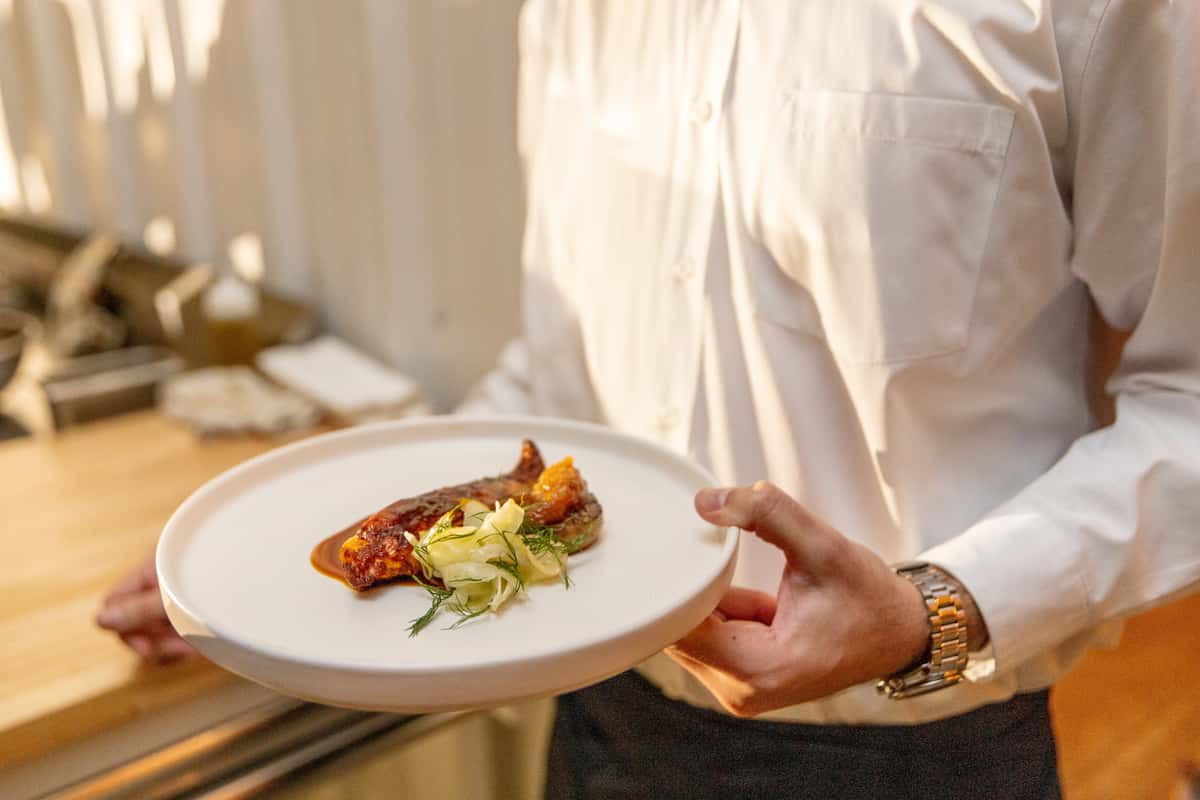
Interior design choices shape the dining experience in Michelin restaurants by creating immersive environments that reinforce culinary identity. Grand entryways with architectural lighting, private dining rooms, and prominent wine displays serving as visual art installations are signature features of Michelin-level establishments. The Miami Design District functions as an epicenter for this convergence, housing several starred restaurants that reflect the neighborhood's focus on luxury retail, art, and striking architecture.
According to Bloom Intelligence, approximately 78% of first-time restaurant guests do not return for a second visit, which underscores how profoundly first impressions, including spatial design, affect retention. L'Atelier de Joël Robuchon Miami illustrates this principle with a 34-seat dining counter offering direct views of the open kitchen. Thoughtful spatial design has become a critical differentiator in Miami's competitive market, where personnel costs carry similar weight to food costs. For restaurants operating at this level, design is not decoration; it is infrastructure that supports service, storytelling, and long-term guest loyalty.
What Elements of Luxury Are Essential for Miami's Michelin Restaurants?
The elements of luxury essential for Miami's Michelin restaurants span material quality, operational scale, and experiential consistency. According to analysis by Brandon Adams, luxury restaurants in Miami typically require around 100 covers per night to stay afloat, necessitating approximately 17,500 diners citywide each night to sustain the current market of very expensive establishments. That demand pressure means every design and service decision must justify itself commercially.
Essential luxury elements include:
- High-quality materials and custom finishes that signal investment in the guest environment.
- Dress codes ranging from formal to business casual, reinforcing an elevated atmosphere.
- Open kitchen concepts and transparency features that connect diners to the culinary process.
- Attentive, knowledgeable service calibrated to feel welcoming rather than rigid.
Michelin recognition has expanded beyond traditional fine dining to include diverse culinary approaches, yet the expectation of polished ambiance remains constant. Understanding how cultural context influences these interiors reveals even more about what makes Miami's scene distinctive.
How Has Miami's Local Culture Influenced Michelin-Recognized Restaurant Interiors?
Miami's local culture has shaped Michelin-recognized restaurant interiors through tropical design traditions, multicultural influences, and sustainable material sourcing. The following sections explore environmental aesthetics and community-driven design trends.
In What Ways Do South Florida's Environmental Aesthetics Impact Interior Design?
South Florida's environmental aesthetics impact interior design by embedding tropical modernism, coastal elements, natural light, and climate-responsive architecture into restaurant spaces. Miami Modernist architecture (MiMo), which developed during the post-war period (1945–1960) as a regionalist response to the International Style, established the foundation for blending modernist geometry with tropical warmth. That heritage still echoes in today's dining rooms.
Contemporary Michelin-recognized restaurants channel this lineage by pairing Art Deco references with sleek, modern atmospheres that emphasize culinary transparency. According to Wikipedia, MiMo emerged specifically as South Florida's answer to the International Style, fusing clean lines with regional character. Sustainable practices reinforce this connection to place: reclaimed materials, energy-efficient lighting, and local organic sourcing allow interiors to reflect the surrounding landscape rather than import a generic aesthetic. For restaurants serious about longevity in Miami, designing with the environment rather than against it is not optional; it is the baseline expectation.
How Do Miami's Diverse Communities Inform Luxury and Design Trends?
Miami's diverse communities inform luxury and design trends by driving demand for culturally layered, globally resonant interior concepts. The city's Latin American, Caribbean, and European populations create a dining audience that expects spaces to feel cosmopolitan yet personally familiar.
This multicultural demand pushes hospitality design toward several outcomes:
- Blending regional influences, from Art Deco to MiMo to Latin color palettes, within a single cohesive interior.
- Prioritizing transparency and accessibility through open kitchen layouts and approachable service models.
- Incorporating artisan craftsmanship and locally sourced materials that honor the communities surrounding each restaurant.
Contemporary luxury restaurant design increasingly emphasizes this democratization of fine dining. Rather than defaulting to European formality, Miami's best interiors reflect the city's identity: warm, bold, and unapologetically diverse. That cultural specificity is precisely what separates a forgettable dining room from one guests remember.
With cultural context shaping how restaurants look and feel, the next consideration is which broader design trends define Miami's Michelin-level spaces.
What Are the Key Interior Design Trends in Miami's Michelin-Level Restaurants?
The key interior design trends in Miami's Michelin-level restaurants center on blending historic architectural styles with contemporary aesthetics and integrating sustainable practices into high-end spaces. The following sections explore how modern and classic elements merge, and how sustainability shapes luxury dining design.
How Are Modern and Classic Styles Blended in Luxurious Dining Spaces?
Modern and classic styles are blended in luxurious dining spaces by layering Miami's rich architectural heritage with contemporary materials and clean-lined design. MiMo architecture blends clean geometry of the broader modern movement with a sense of playfulness and, at times, outright extravagance, creating spaces that feel both sophisticated and approachable.
This interplay shows up throughout Miami's Michelin-level restaurants. Art Deco motifs, smooth curves, and decorative details are paired with sleek industrial finishes and minimalist layouts. The result is an environment where historical character anchors the room while modern restraint keeps it feeling current. For restaurants competing at this level, the blend signals intentionality; every design choice communicates that the space was curated, not assembled.
What Role Does Sustainability Play in High-End Restaurant Design?
Sustainability plays a growing role in high-end restaurant design by influencing material selection, operational frameworks, and how dining spaces communicate values to guests. LEED certification provides a rigorous framework for green building design and operations, while the Michelin Green Star focuses more broadly on a restaurant's overall sustainability narrative and impact.
These two standards push luxury restaurants in complementary directions. Premium materials like marble, brass, smoked glass, Venetian plaster, and chevron parquet floors remain foundational elements of high-end design, yet sourcing responsibly and incorporating reclaimed or energy-efficient components adds a layer of purpose. According to Terrapin Construction Group, high-end restaurant buildouts in Miami typically range from $500 to $1,500 per square foot, reflecting both premium material selection and custom design implementation.
Restaurants that once competed purely on opulence now differentiate through authentic environmental commitments woven into the guest experience. With restaurants having largely replaced clubs and lounges as Miami's primary nightlife venues, the pressure to deliver design that is both visually striking and ethically grounded has never been higher.
How Does Stubborn Seed Stand Out in Miami's Luxury Dining and Design Landscape?
Stubborn Seed stands out through its Celano Design Studio interiors, glass-fronted chef's window, and dual Michelin Star and Green Star recognition. The following sections explore its distinctive design features and its balance of luxury with comfort.
What Interior Features Distinguish Stubborn Seed as a Michelin-Recognized Venue?
The interior features that distinguish Stubborn Seed as a Michelin-recognized venue include industrial chic décor, Art Deco references, and a glass-fronted chef's window visible from the dining room. Celano Design Studio, a New York-based hospitality firm, designed the space to blend Miami Beach's architectural heritage with sleek, modern aesthetics. According to Whitewall, the restaurant's design pays homage to Art Deco while emphasizing culinary transparency and contemporary atmosphere. The chef's window transforms kitchen preparation into a visual element of the dining experience, reinforcing the connection between design and cuisine. Stubborn Seed remains the only Miami Beach restaurant holding both a Michelin Star and a Michelin Green Star.
How Does Stubborn Seed Create a Unique Balance Between Luxury and Comfort?
Stubborn Seed creates a unique balance between luxury and comfort by pairing Michelin-level culinary precision with an approachable, unpretentious atmosphere. The restaurant's name reflects Chef Jeremy Ford's philosophy on resilience, inspired by the tenacity it takes for plants to grow. That grounded ethos carries into every detail of the dining room, where sophisticated design never overshadows warmth. Stubborn Seed's team prioritizes education and hospitality, explaining Ford's culinary choices rather than relying on intimidating fine dining protocols. This combination of elevated craft and genuine ease is a rare quality in Miami's competitive luxury dining scene, and it contributes directly to Stubborn Seed's consistent Michelin recognition.
With its design identity and service philosophy established, discerning diners can explore what to seek across Miami's broader Michelin-recognized settings.
What Should Discerning Diners Seek in Miami's Michelin-Recognized Settings?
Discerning diners should seek a combination of culinary integrity, ethical commitment, and service excellence that aligns with Miami's elevated lifestyle standards. The following sections cover how Michelin criteria match upscale expectations and how service enhances the luxury experience beyond design alone.
How Do Michelin Criteria Align with Miami's Upscale Living Expectations?
Michelin criteria align with Miami's upscale living expectations by rewarding the same qualities high-net-worth residents already demand: exceptional ingredient quality, consistency, and ethical responsibility. The Michelin Green Star, for instance, highlights restaurants with strong environmental and ethical standards, focusing on sustainable gastronomy practices that resonate with Miami's increasingly design-conscious and values-driven luxury market.
Beyond sustainability, Michelin recognition itself functions as a powerful quality signal. According to research published by ScienceDirect, customers are willing to pay higher prices specifically for the distinction of dining at a Michelin-starred restaurant, with the recognition alone justifying premium pricing. For discerning diners accustomed to Miami's luxury real estate and lifestyle standards, that credibility shortcut matters; it separates restaurants genuinely committed to excellence from those trading on atmosphere alone.
What Aspects of Service Enhance the Luxury Experience Beyond Design?
The aspects of service that enhance the luxury experience beyond design include attentive pacing, knowledgeable staff, and thoughtfully curated beverage programs that elevate the entire meal. Beautiful interiors set expectations, but service determines whether those expectations are met or exceeded.
As one TripAdvisor reviewer noted, "The cocktails were just as impressive as the food, and the wine pairing elevated the entire experience. Service was attentive without being overbearing." That balance between presence and restraint is the hallmark of true hospitality at the Michelin level. In my experience, the restaurants that endure in Miami's competitive market are those where every team member understands the guest's journey from arrival to departure, not just what arrives on the plate.
With service and standards aligned, the next step is experiencing how a specific venue brings these elements together.
How Can Stubborn Seed Elevate Miami Fine Dining Through Atmosphere and Service?
Stubborn Seed elevates Miami fine dining by combining a thoughtfully designed atmosphere with approachable, knowledgeable service. The sections below explore how chef-driven tasting menus enhance luxury living and summarize the key takeaways from this article.
Can Stubborn Seed's Chef-Driven Tasting Menus Enhance Luxury Living Experiences?
Stubborn Seed's chef-driven tasting menus can enhance luxury living experiences by transforming a meal into a multi-sensory event. The 6-course and 9-course formats allow Chef Jeremy Ford to guide guests through a curated progression of flavors, where each plate reflects seasonal ingredients and meticulous technique. As Reddit fine dining enthusiasts report, "The service was spot on and fun. The 9 course tasting menu was served at a nice pace. Neither rushed nor too slow. The servers were professional and knowledgeable." Contemporary luxury restaurant design increasingly emphasizes transparency and accessibility through open kitchens and approachable service models, and Stubborn Seed embodies this shift. For discerning residents seeking elevated experiences close to home, few formats deliver the level of immersion that a well-paced tasting menu provides.
What Are the Key Takeaways About Michelin Miami: Interior Design Impact & Luxury Living We Covered?
The key takeaways about Michelin Miami, interior design impact, and luxury living center on the deep connection between spatial design, culinary excellence, and lifestyle quality. This article covered several actionable insights:
- Michelin-starred ambiance in Miami relies on intentional material selection, layered lighting, and design narratives rooted in local culture.
- Miami's Art Deco heritage and MiMo architecture directly shape how luxury restaurants create immersive environments.
- Sustainability, reflected through the Michelin Green Star, is now a design and operational differentiator, not just an ethical choice.
- Service quality carries operational weight equal to food costs at Michelin-starred restaurants, making hospitality investment essential.
- Stubborn Seed demonstrates how chef-driven vision, thoughtful interior design, and approachable service converge to define modern Miami fine dining.
Booking two to four weeks in advance for weekend reservations remains the best way to experience these spaces firsthand.