
Seafood Cuisine Definition: Complete Guide
Seafood Cuisine Definition: Complete Guide
Seafood cuisine is the culinary use of aquatic animals and their derived products, including finfish, mollusks, crustaceans, and cephalopods, defined by ingredient and culinary context rather than the presence of a shell alone.
This guide covers the historical roots of seafood cooking, the main ingredient categories and their preparation differences, key cooking techniques, regional culinary traditions, nutrition and sustainability considerations, pairing principles, and what elevated seafood experiences look like in fine dining.
Seafood's origins are layered and site-specific, shaped by archaeology, religion, and cultural exchange across civilizations, with the Mediterranean record particularly well-documented and modern kitchens now navigating sustainability certifications and sourcing transparency as consequential forces.
The ingredient landscape includes five important categories: finfish, bivalve mollusks, gastropods, cephalopods, and decapod crustaceans, each benefiting from preparation approaches tailored to their texture, muscle structure, and flavor profiles.
Cooking techniques range from raw preparations such as sashimi and ceviche to dry-heat methods like grilling and frying to precision approaches like sous vide, with fat content, thickness, and species determining which method best preserves flavor and texture.
Regional traditions from Japanese washoku to Peruvian ceviche to Louisiana gumbo each carry distinct ecological and cultural logic, while nutrition and sustainability decisions hinge on species origin, gear type, and certification rather than a species name alone.
Pairing and fine dining complete the picture: beverages balance salinity, fat, and umami, and chef-driven tasting menus, including the globally influenced, precision-led format at Stubborn Seed in Las Vegas, demonstrate how seasonal sourcing and technical execution transform seafood into a cohesive narrative across every course.
How Has Seafood Cuisine Evolved Throughout Culinary History?
Seafood cuisine has evolved across thousands of years, shaped by archaeology, religion, trade, and modern culinary innovation. The sections below cover the earliest documented roots of seafood consumption and the contemporary forces driving seafood's place in professional kitchens.
What Are the Earliest Roots of Seafood Cuisine Around the World?
The earliest roots of seafood cuisine around the world are site-specific and contested, with no single uncontested global origin point. Archaeological claims depend on whether physical evidence reflects deliberate consumption, butchering, or preservation rather than natural animal accumulation. According to research published by the Smithsonian Tropical Research Institute, Irit Zohar noted that a study of traditional fishing communities "provides a powerful model for identifying fish butchering and preservation methods at archaeological sites around the world, and at many time periods." Beyond physical evidence, cultural forces also shaped early foodways. Published in the International Journal of Gastronomy and Food Science, research confirms that "myths, religious rites and cultural exchanges between peoples and civilizations have shaped the Mediterranean culinary traditions along the history." The Mediterranean record is particularly well-documented because written culinary sources survive, spanning ancient Egyptian foodways, Roman seafood-centered cookery, and medieval Christian fasting practices. This documented history, however, represents one region and should not be treated as a universal global sequence.
How Has Modern Seafood Cuisine Been Influenced by Culinary Innovation?
Modern seafood cuisine has been influenced by culinary innovation through sustainability standards, sourcing transparency, and shifting chef confidence toward seafood as a primary protein. The Aquaculture Stewardship Council's sustainability label now "proves that seafood has been farmed to the ASC environmental and social standard, with traceability maintained through the supply chain," giving chefs and menus a credible framework for responsible sourcing claims. Despite these structural improvements, culinary expert Barton Seaver noted that "chefs don't have the confidence to see seafood as their preferred protein," identifying a meaningful gap between the ingredient's potential and its current positioning on professional menus. Sustainability certification, supply chain traceability, and chef education are, in practice, the three most consequential levers shaping where seafood cuisine goes next.
What Types of Seafood Are Commonly Used in Seafood Cuisine?
The types of seafood commonly used in seafood cuisine span five main categories: finfish, bivalve mollusks, gastropods, cephalopods, and decapod crustaceans. The sections below explain how these groups differ in preparation and which species appear most frequently across menus worldwide.
How Do Fish, Shellfish, and Crustaceans Differ in Preparation?
Fish, shellfish, and crustaceans differ in preparation because their muscle structure, texture, and flavor profiles require distinct cooking approaches. Finfish, such as salmon or cod, suit grilling, steaming, baking, or curing. Bivalve mollusks, such as oysters, clams, mussels, and scallops, are often served raw, steamed, or roasted. Cephalopods, including squid, cuttlefish, and octopus, tolerate high-heat searing or slow braising. Decapod crustaceans, such as shrimp, crab, crayfish, and lobster, are typically boiled, steamed, or grilled.
A 2026 U.S. Fish and Wildlife Service Federal Register final rule formally defines shellfish as "an aquatic invertebrate animal" encompassing Phylum Mollusca and Order Decapoda, confirming that "shellfish" is both a culinary label and a legal category encompassing multiple biological groups. These often do not align, so the term requires context on any menu.
The distinction matters practically: a kitchen that treats all shellfish as interchangeable will overcook delicate bivalves or undercook dense crustaceans.
What Are the Most Popular Seafood Ingredients Globally?
The most-produced aquatic animal species globally in 2022 include whiteleg shrimp, cupped oysters, and several finfish species including grass carp, Nile tilapia, and anchoveta. According to the Food and Agriculture Organization of the United Nations' State of World Fisheries and Aquaculture 2024, whiteleg shrimp reached 6.8 million tonnes of production in 2022, followed closely by cupped oysters at 6.2 million tonnes.
The core ingredient categories found across global menus are:
- Finfish: salmon, cod, tuna, tilapia, bass, and anchovy
- Bivalve mollusks: oysters, clams, mussels, and scallops
- Cephalopods: squid, cuttlefish, and octopus
- Decapod crustaceans: shrimp, crab, crayfish, and lobster
- Supplementary ingredients: roe, sea vegetables, and fermented fish products
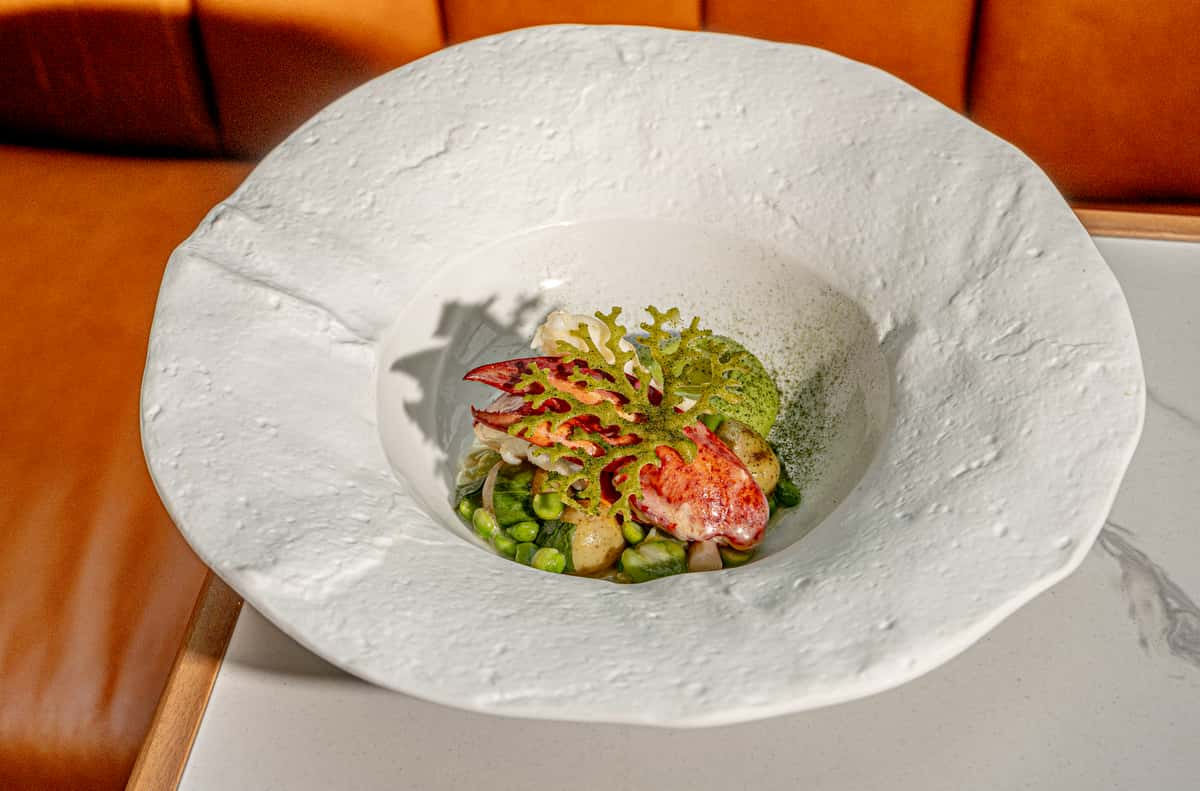
Production volume is not equivalent to per-capita consumption; species availability varies significantly by region, season, and sourcing method. With so much variation across markets, quality and availability matter more than fixed species lists, as Anthony Wells, then executive chef of Juniper & Ivy in San Diego, noted in an article published by the James Beard Foundation: "When we source seafood, we rarely look for specific species or sizes, and rely more on pristine quality and whatever happens to be available that day."
What Are the Key Cooking Techniques in Seafood Cuisine?
The key cooking techniques in seafood cuisine span raw preparations, dry-heat methods, and moist-heat methods. The sections below cover how raw, grilled, steamed, and fried dishes are prepared, then explain which factors most directly shape cooking times and final flavor.
How Are Raw, Grilled, Steamed, and Fried Seafood Dishes Prepared?
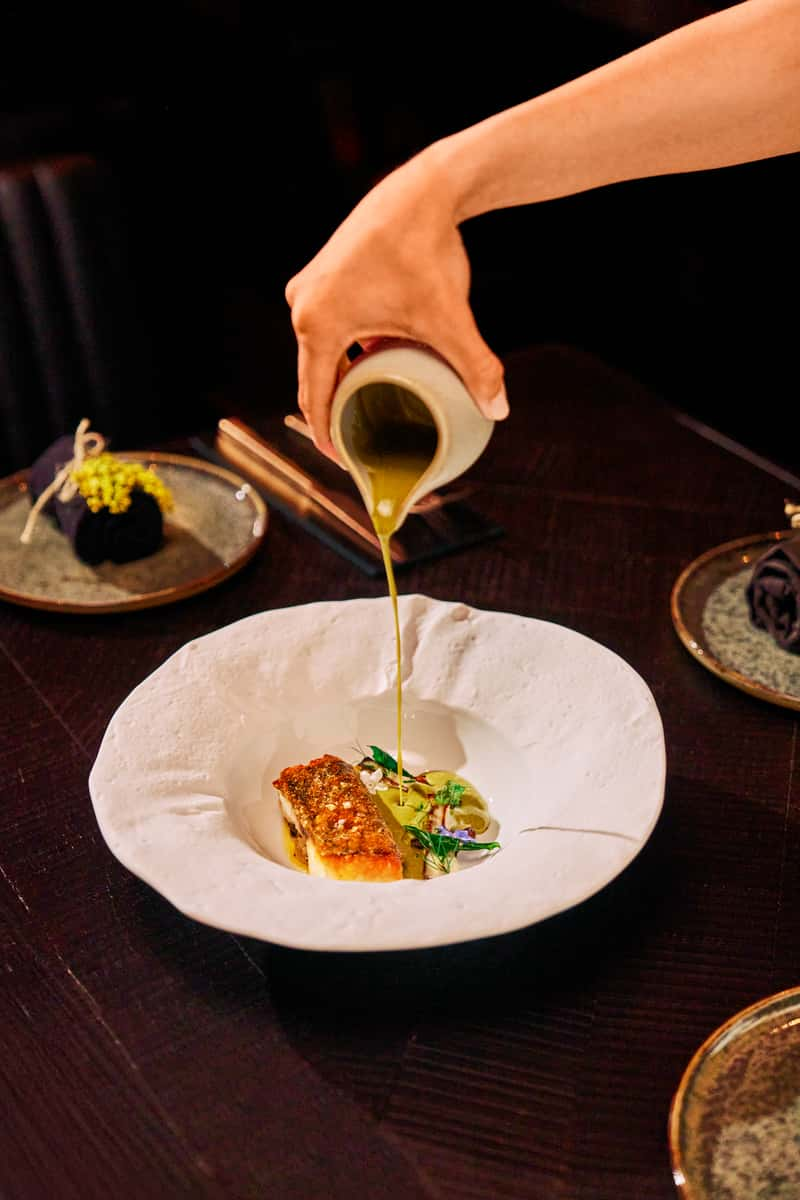
Raw, grilled, steamed, and fried seafood dishes are prepared through distinct processes that each transform protein structure differently. Raw preparations such as crudo and sashimi are generally served without cooking, while ceviche uses an acidic marinade and gravlax is salt cured for fast browning and char. Steaming and poaching apply moist heat gently, preserving delicate texture. Frying submerges or coats seafood in hot oil, producing a crisp exterior. Other methods include smoking, baking, roasting, en papillote, and sous vide, each suited to specific species and desired textures.
What Factors Affect Cooking Times and Flavors for Seafood?
The factors that affect cooking times and flavors for seafood include species, fat content, thickness, temperature, and whether dry or moist heat is used. Fish muscle fibers and their collagen break down quickly, so high heat over a short period is often sufficient with dry-heat methods, according to Kansas State University food science research. Temperature precision matters: a peer-reviewed review in Foods (MDPI) reported that sous vide and steaming caused slight oxidation of unsaturated fatty-acid groups in sea bass, generating volatile compounds that positively affected aroma without causing significant overall lipid oxidation. As chef Jeremy Sewall notes, "Seafood, in general, is a lighter style of cooking," requiring careful acid balance so no single element overwhelms the palate. Fat content, carryover heat, and humidity are equally decisive variables that home cooks often underestimate.
What Distinguishes Regional Styles of Seafood Cuisine?
Regional seafood cuisine differs by local species, climate, trade history, religion, and preparation traditions. The sections below compare Mediterranean, Asian, and American approaches, then identify signature dishes from six distinct culinary regions.
How Does Mediterranean Seafood Cuisine Differ From Asian or American Styles?
Mediterranean seafood cuisine often features aromatics, wine based preparations, and herbs, reflecting regional traditions shaped in part by historical trade, religious practices, and cultural exchange. Southern French tradition, for example, builds complex fish stews with fennel, saffron, and garlic. Japanese cuisine, by contrast, is built upon rice and fish, emphasizing seasonality and precision, according to JAPAN HOUSE Los Angeles. Southeast Asian seafood traditions rely heavily on fermentation: a peer-reviewed review confirms that fermented fish is a staple food in South and Southeast Asian foodways, with fish pastes and sauces particularly prevalent. Southern Louisiana's style is multicultural and ingredient-driven, blending Indigenous, French, Spanish, and African influences. Each tradition reflects local species availability, climate, and ritual rather than a single defining technique.
What Are Signature Seafood Dishes From Various Regions?
Signature seafood dishes vary widely across regions, each anchored in local ingredients and cultural practice. Key examples include:
- Bouillabaisse (Southern France): A rich fish stew originally made from whatever fish was available, now prepared with lobster, shrimp, saffron, orange peel, fennel, and rouille, according to the Auguste Escoffier School of Culinary Arts.
- Washoku (Japan): A cuisine built on rice and fish, balancing taste, technique, and deep attunement to seasonality.
- Fermented fish dishes (Southeast Asia): Fish pastes and sauces such as shrimp paste and fish sauce form foundational flavor bases across Thailand, Vietnam, and the Philippines.
- Oyster gumbo and crawfish beignets (Louisiana): The National Park Service documents these alongside New Orleans shrimp rolls and steamed catfish as representative of the region's multicultural seafood repertoire.
- Gravlax (Scandinavia): Salmon cured in salt and dill, served with mustard sauce, per Encyclopaedia Britannica.
- Ceviche (Peru): Recognized by UNESCO as an intangible cultural heritage, ceviche is raw fish marinated in lemon juice, seasoned with chili pepper and salt, with recipes varying by region.
These dishes are anchors, not complete regional definitions. Internal variation within each tradition is substantial, shaped by local species, season, and cultural exchange.
How Do Nutrition and Sustainability Impact Seafood Cuisine Choices?
Nutrition and sustainability both shape which seafood appears on menus and plates. The subsections below cover the documented health benefits and risks of eating seafood, and how sustainability frameworks influence restaurant sourcing decisions.
What Are the Health Benefits and Risks of Consuming Seafood?
The health benefits and risks of consuming seafood vary by species, preparation method, and the consumer's overall diet. The Joint FAO/WHO consultation concluded that "consuming fish provides energy, protein and a range of other nutrients important for health," and that benefits and individual effects depend on the fish consumed, food preparation methods, and consumer characteristics.
The relationship between seafood and improved health outcomes is not straightforwardly causal. According to the NIH Office of Dietary Supplements, many observational studies link higher seafood intake with improved outcomes, but it is difficult to determine whether benefits stem from omega-3 content, other seafood components, dietary substitution, or health behaviors.
Species choice, mercury exposure, and cooking method all remain material factors worth evaluating before drawing broad conclusions about any single seafood's health value.
How Does Sustainability Influence Seafood Sourcing and Menus?
Sustainability influences seafood sourcing and menus through certification programs, sourcing guidelines, and growing industry demand for traceable ingredients. The National Restaurant Association's 2025 forecast, based on responses from nearly 300 U.S. industry professionals, ranked "Sustainability and Local Sourcing" as the top overall trend.
Sustainability labels used in professional sourcing decisions include:
- MSC Fisheries Standard 3.1, which assesses whether wild fisheries are well-managed and environmentally sustainable.
- ASC sustainability label, which certifies farmed seafood meets environmental and social standards, with traceability maintained through the supply chain.
- Monterey Bay Aquarium Seafood Watch, which rates seafood as "Best Choice," "Good Alternative," or "Avoid" based on environmental risk.
Sustainability cannot be determined from a species name alone; origin, gear type, farm system, stock status, and the date of any certification are all material to a responsible sourcing decision.
How Should Seafood Be Paired With Sides, Sauces, and Beverages?
Seafood pairing works by balancing salinity, fat, acidity, bitterness, sweetness, umami, texture, and intensity. The sections below cover sides and sauces that complement seafood flavors, followed by wine, beer, sake, and cocktail pairings.
What Sides and Sauces Enhance Seafood Flavors?
Sides and sauces enhance seafood flavors by matching or contrasting the dish's dominant characteristics: fat content, brininess, and texture. Oily fish such as mackerel carry a stronger sea flavor, and according to Bon Appétit, Chef Junghyun Park recommends a dipping sauce of soy, rice vinegar, and sugar, or ssam with garlic and chiles to cut through that richness. For delicate white fish, acid-forward vegetables work equally well; wine-braised artichokes and carrots, a classic Provençal preparation, pair naturally with crispy white fish by complementing rather than overpowering its mild flavor. The key principle is that intensity should match intensity: robust sauces suit full-flavored fish, while lighter preparations call for restrained, bright accompaniments.
Which Wines or Cocktails Best Complement Seafood Cuisine?
The wines, beers, sake, and cocktails that best complement seafood cuisine each address a specific flavor dimension of the dish. According to Food & Wine, Lou Rossi notes that a light-bodied, crisp pilsner adds acidity that cuts through the richness of fried batter, while Jenn Grosskruger finds that stout's roasty, malty notes work well alongside briny oysters. The Japan National Tourism Organization reports that sake and seafood share components that enhance each other, with sake drawing out seafood's umami. For cocktails, bartender Brandon Kemp cautions against muddling flavor profiles, recommending restraint so the drink complements rather than overwhelms the dish.
The primary pairing categories are:
- Crisp pilsner: cuts richness in fried seafood preparations.
- Stout: reinforces briny, mineral notes in oysters.
- Mineral whites and sparkling wine: complement fresh or delicate seafood.
- Sake: draws out and amplifies umami in raw and lightly prepared fish.
- Cocktails: require restraint; the beverage should not override the dish's flavor profile.
These are expert editorial recommendations, not controlled sensory trial results. Freshness and seasonality ultimately shape which pairing performs best at the table.
What Should Diners Know About Seafood Cuisine Experiences in Upscale Restaurants?
Fine dining transforms seafood from a simple protein into a narrative, with each course reflecting sourcing decisions, seasonal timing, and technical precision. The following sections cover how modern tasting menus showcase seafood and what guests can expect from chef-driven formats.
How Do Modern Fine Dining and Tasting Menus Showcase Seafood Dishes?
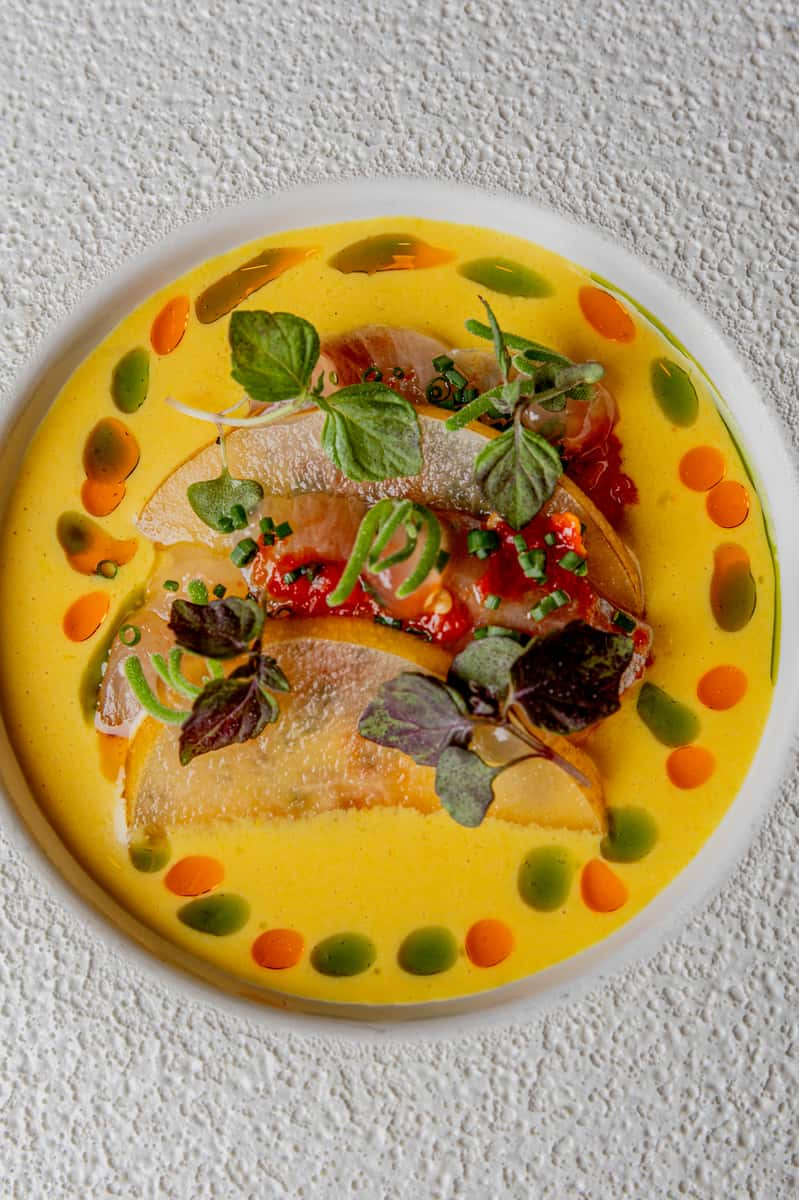
Modern fine dining showcases seafood dishes through regionally focused, multi-course tasting menus that prioritize sourcing transparency and seasonal variation. The former One-MICHELIN-Star Reverie in Washington, D.C., illustrated this approach: after reopening in 2024, chef-owner Johnny Spero concentrated his tasting menu solely on New England-sourced seafood, producing roughly 12 to 16 dishes per service, according to the MICHELIN Guide, before the restaurant closed in October 2025. On the Las Vegas Strip, a globally influenced tasting menu format brought dishes such as sake- and citrus-cured Japanese yellowtail and pan-roasted barramundi with baby leeks, fennel, shiitake sofrito, and galangal green curry.
The strongest seafood tasting menus do more than rotate fish species. They communicate a point of view, whether ecological, regional, or technique-led, and that storytelling is often what separates a memorable meal from a series of expensive plates.
What Can Guests Expect From Chef-Driven Seafood Tasting Menus?
A seafood tasting menu is a sequenced, multi-course dining format in which the chef selects and arranges seafood preparations to build a coherent flavor and sourcing narrative across the meal. Guests typically encounter several distinct elements:
- A set number of courses tied to a seasonal or thematic concept.
- Species selected for freshness and availability rather than fixed to a permanent menu.
- Beverage pairings, often including sake, mineral whites, or sparkling wine, chosen to complement each course.
- Front-of-house storytelling about sourcing, provenance, and preparation technique.
Menus change as seasons and supply shift, so specific dishes should always be confirmed directly with the restaurant before a visit.
How Does Stubborn Seed in Las Vegas Curate Elevated Seafood Cuisine Experiences?
Stubborn Seed in Las Vegas curates elevated seafood cuisine experiences through a precision-led, ingredient-responsive, globally influenced tasting-menu format. The sections below cover its seasonal seafood dishes and key takeaways from this complete guide.
What Seasonal or Chef-Driven Seafood Dishes Are Offered at Stubborn Seed?
The seasonal and chef-driven seafood dishes at Stubborn Seed reflect a globally influenced tasting-menu identity built on what the brand describes as "honest ingredients" elevated through "rigid and persistent execution," as stated on the official Stubborn Seed homepage. Chef Jeremy Ford, winner of Bravo's Top Chef Season 13, shapes a menu that rotates with ingredient availability. Documented seasonal examples have included Japanese kanpachi carpaccio, madai veronique, sake- and citrus-cured Japanese yellowtail, and pan-roasted barramundi with baby leeks, fennel, shiitake sofrito, and galangal green curry. Because menus change seasonally, diners should verify current offerings directly with the restaurant before visiting.
What Are the Key Takeaways About Seafood Cuisine Definition: Complete Guide We Covered?
The key takeaways from this seafood cuisine guide are practical distinctions that help diners and professionals navigate a complex category with greater precision. Seafood is defined by culinary context, not taxonomy alone, spanning finfish, bivalves, cephalopods, and crustaceans prepared through dozens of methods. Cooking technique, ingredient origin, sustainability certification, and species-specific nutrition all matter and cannot be treated as interchangeable. Regional cuisines, from Japanese washoku to Peruvian ceviche to Louisiana gumbo, each carry distinct ecological and cultural logic. At the fine dining level, Stubborn Seed demonstrates how a chef-driven tasting menu integrates seasonal sourcing, global influences, and ingredient precision into a cohesive experience worth verifying directly before each visit.