
Top Culinary Programs in Miami : Your Local Guide
Top Culinary Programs in Miami : Your Local Guide
Top culinary programs in Miami are structured training pathways offered by accredited institutions that prepare students for professional kitchen and hospitality careers through certificates, associate degrees, and bachelor's degrees.
This guide covers program types and timelines, school reputations and accreditation, curriculum evaluation, costs and financial aid, career connections, and how upscale dining experiences deepen culinary education.
Miami institutions offer credentials ranging from 16-week certificates to four-year bachelor's degrees, with options spanning general culinary arts, pastry and baking, international cuisine, and farm-to-table cooking. Certificate credits at several schools stack directly toward associate or bachelor's programs, so students can enter the workforce quickly while preserving a path to advanced credentials.
Schools like FIU's Chaplin School of Hospitality and Tourism Management, Miami Culinary Institute, and Mariano Moreno Culinary Institute distinguish themselves through accreditation, required internship or industry hours, and, in FIU's case, a 92% retention rate. Alumni outcomes and student-first leadership philosophies reinforce each program's standing in the industry.
Miami-Dade County's tropical climate fuels a year-round growing season that supplies programs with regional produce, seasonal seafood, and Latin American ingredients. Coursework at top schools integrates Farm to Fork principles, local sourcing networks, and student-run restaurant training that simulates real service conditions.
Tuition spans roughly $1,400 for short certificates to over $28,000 for a full bachelor's degree, with federal aid, institutional scholarships, and industry-specific grants available to offset costs. Over 8,000 food service managers work within 50 miles of Miami, and structured internship requirements at leading programs give graduates verifiable professional experience before they enter a competitive hiring market.
Dining at establishments like Stubborn Seed in Miami adds another learning dimension; ingredient-driven tasting menus and mentorship-rooted kitchens expose students to sourcing precision and plating standards that formal coursework alone rarely replicates.
What Types of Culinary Programs Are Available in Miami?
The types of culinary programs available in Miami include short-term certificates, associate degrees, bachelor's degrees, and focused diplomas. Each format differs in duration, depth, and career outcome. The sections below break down how certificates compare to degrees, which specializations Miami schools offer, and how long each program typically takes.
How Do Certificate and Degree Culinary Programs Differ?
Certificate and degree culinary programs differ in duration, general education requirements, and career positioning. According to the National Center for Education Statistics, a certificate covers focused coursework that may overlap with an associate's degree but excludes general education requirements, while an associate's degree usually requires at least two full-time academic years and a bachelor's degree usually requires four to five.
In Florida, the distinction plays out clearly across Miami institutions:
- Career certificates prepare students for entry-level employment and range from 40 to over 1,500 hours.
- College Credit Certificates can generally be completed in one year or less and must be part of an AS or AAS degree.
- Associate degrees (AS or AAS) are two-year programs designed for direct entry into high-demand occupations.
Mariano Moreno Culinary Institute illustrates the pathway well: its 12-month certificate credits transfer directly toward its 24-month AAS degree. For students who need to start earning quickly, certificates offer the fastest on-ramp; for those seeking management roles or broader culinary knowledge, a degree program builds a stronger foundation.
Which Culinary Specializations Can You Pursue in Miami?
The culinary specializations you can pursue in Miami span general culinary arts, pastry and baking, international cuisine, hospitality management, and farm-to-table cooking. Miami Dade College's Culinary and Hospitality Institutes added updated coursework in American Regional and Contemporary Cuisine alongside Skill Enhancement Kitchen Labs. Florida Education Institute covers Latin American Cuisine, International Cooking Techniques, and a dedicated Pastry and Baking Management AAS that includes chocolate and sugar arts, artisan breads, and modern desserts. Keiser University's Associate of Science program incorporates Classical French Cuisine, International Cuisine, and Farm to Fork coursework. Miami's multicultural dining scene makes this city particularly strong for students drawn to cross-cultural culinary training.
What Is the Typical Duration of Culinary Programs in the Area?
The typical duration of culinary programs in the Miami area ranges from 16 weeks to four years, depending on credential type.
|
Program |
Institution |
Duration |
|
Food and Beverage Specialist CCC |
Miami Dade College |
16 weeks |
|
Culinary Arts Diploma |
Florida Education Institute |
36 weeks |
|
Baking and Pastry Arts Certificate |
McFatter Technical College |
600 hours (approx. 9 months) |
|
Certificate in Culinary Arts |
Mariano Moreno Culinary Institute |
12 months |
|
AAS in Culinary Arts |
Mariano Moreno Culinary Institute |
24 months |
|
Culinary Arts AS |
Keiser University |
24 months (72 credits) |
|
Pastry & Baking Management AAS |
Florida Education Institute |
75 weeks |
|
BS in Restaurant/Culinary Management |
Florida International University |
120 credits (four-year track) |
According to McFatter Technical College, its Baking and Pastry Arts program totals 600 hours across two modules and includes ServSafe Certified Food Protection Manager certification. Students weighing speed against depth should note that shorter certificates can stack into longer degree programs at several Miami institutions.
With a clear picture of program types, specializations, and timelines, the next step is evaluating which Miami schools carry the strongest reputations.
Which Miami Culinary Schools Have the Highest Reputations?
The Miami culinary schools with the highest reputations combine strong accreditation, industry-connected faculty, and proven graduate outcomes. Below, we examine what distinguishes each top program and how alumni trajectories validate program quality.
What Sets Apart Each Top Culinary School in Miami?
What sets apart each top culinary school in Miami is a combination of accreditation standing, curriculum depth, and real-world training infrastructure. FIU's Chaplin School of Hospitality & Tourism Management ranks as the number-four U.S. public hospitality-management program and number 31 globally, with 1,800-plus enrolled students, 92% retention, and over 740 internship placements. The American Culinary Federation's accredited postsecondary directory lists Miami Culinary Institute among its recognized Florida programs, signaling peer-reviewed curriculum standards.
Key differentiators across top Miami schools include:
- FIU requires at least 1,000 industry hours plus a 300-hour advanced internship for its B.S. in Restaurant/Culinary Management.
- Keiser University concludes its 72-credit, 24-month A.S. with a 12-credit externship in real restaurants or food service operations..
- Mariano Moreno Culinary Institute embeds internships during the second semester of its certificate programs.
ACF accreditation and mandatory externship hours are two of the most reliable indicators of program seriousness; schools that lack both deserve closer scrutiny before enrollment.
How Do Alumni Success Stories Reflect Program Quality?
Alumni success stories reflect program quality by demonstrating how classroom training translates into professional achievement. Dean Michael Cheng, Ph.D., CHE, of FIU's Chaplin School states, "Our paramount focus is our students. We are here for our students, and I cannot underscore that enough." That student-first philosophy is visible in graduate trajectories across hospitality, restaurant management, and culinary entrepreneurship.
FIU hospitality graduate Sage Lewis illustrates the practical confidence strong programs build: "When you cook, you can control more of what is going inside of your body instead of eating out." This mindset, emphasizing ingredient awareness and kitchen autonomy, reflects the ingredient awareness he says he developed cooking for his own athletic performance. Programs that consistently produce graduates who think critically about sourcing, technique, and wellness tend to maintain the strongest industry reputations over time.
With program reputation established, evaluating specific curriculum components helps narrow the right fit.
What Should You Consider When Evaluating Culinary Program Curriculums?
You should consider how well a culinary program curriculum balances local food knowledge, regional trends, and hands-on training. The sections below cover how Miami programs integrate local ingredients and what types of practical training you can expect.
How Do Miami Culinary Programs Incorporate Local Ingredients and Trends?
Miami culinary programs incorporate local ingredients and trends by building coursework around the region's tropical produce, multicultural cuisine traditions, and farm-to-table sourcing networks. Miami-Dade County's tropical climate supports a year-round growing season, and UF/IFAS Extension Miami-Dade publishes commercial-grower resources for crops such as avocado, mango, mamey, carambola, lychee, and longan. Programs like Keiser University's A.S. in Culinary Arts include Farm to Fork and American Regional Cuisine among their listed courses. According to the American Culinary Federation, its accredited postsecondary directory lists Miami Culinary Institute and St. Thomas University among Florida institutions, signaling peer-reviewed curriculum standards.
For aspiring chefs, choosing a program that teaches ingredient seasonality and local procurement creates a meaningful advantage in Miami's dining market.

What Kinds of Hands-On Training Are Offered?
The kinds of hands-on training offered in Miami culinary programs include kitchen labs, student-run restaurants, externships, internships, and industry certifications. Practical formats vary by institution:
- Miami Dade College operates the student-run Café @ MCI for front- and back-of-house training, plus Skill Enhancement Kitchen Labs.
- Keiser University requires a 12-credit externship in real restaurants or food-service operations as the final course.
- Mariano Moreno Culinary Institute assigns certificate students an internship during the second semester.
According to the Florida Department of Business and Professional Regulation, Florida law requires food managers to pass a certification exam within 30 days of employment. Many programs embed ServSafe or equivalent certification directly into their curriculum to prepare graduates for this requirement.
Hands-on training quality often separates a good program from a great one; prioritize schools that place you in working kitchens early. Understanding these curriculum factors helps clarify how Miami programs connect students with career opportunities.
What Are the Costs and Financial Aid Options for Culinary Schools in Miami?
The costs and financial aid options for culinary schools in Miami vary widely by credential type and institution. Short certificates can start around $1,400, while four-year degrees reach into five figures. Scholarships, grants, and federal aid help offset these expenses.
How Can Scholarships and Grants Be Secured for Culinary Study?
Scholarships and grants for culinary study can be secured through a combination of federal applications, institutional awards, and industry-specific funding. Filing the FAFSA is the essential first step; FIU lists December 1 as its early-award priority date, and approximately 89% of full-time undergraduates at the university receive some type of aid, according to FIU's undergraduate admissions page.
Beyond federal aid, prospective students should pursue these funding sources:
- Industry-specific scholarships from hospitality organizations and culinary foundations.
- Institutional merit and need-based awards offered directly by each school.
- Employer-sponsored tuition assistance from restaurants and hotel groups.
For students with both financial need and strong academics, competitive full-tuition awards do exist. The Carnival Gold Scholars program, for example, provided full-tuition scholarships including room and board to FIU hospitality students. Applying early and to multiple sources is the single most effective strategy most applicants underutilize.
What Are Typical Tuition Ranges in Miami Culinary Institutions?
Typical tuition ranges in Miami culinary institutions span from roughly $1,400 for short certificates to over $28,000 for a four-year bachelor's degree. No standardized Miami-wide average exists because programs differ significantly in length, credential type, and fee structures.
Published examples illustrate this range:
- Miami Dade College's Food and Beverage Specialist certificate: approximately $1,419 for 12 credits over 16 weeks.
- McFatter Technical College's Baking and Pastry Arts program: $2,609 for 600 hours (Florida residents).
- FIU's B.S. in Restaurant/Culinary Management: $235.57 per credit for in-state students, totaling over $28,000 across 120 credits before fees.
Always confirm current tuition directly with each institution, since published rates change and additional fees apply. The real cost comparison should factor in program length, included certifications, and whether credits transfer toward higher credentials.
With financial planning in place, understanding how Miami programs connect graduates to the local job market becomes the next consideration.
How Do Miami Culinary Programs Connect Students With Career Opportunities?
Miami culinary programs connect students with career opportunities through structured internships, restaurant partnerships, and industry-hour requirements built into their curricula. The sections below cover local partnerships and internship access, followed by graduate employment outcomes.
What Local Restaurant Partnerships and Internship Opportunities Exist?
Local restaurant partnerships and internship opportunities exist across multiple Miami culinary programs, with required industry placements embedded directly into degree completion. Florida International University's B.S. in Restaurant/Culinary Management requires at least 1,000 industry hours plus an advanced internship of an additional 300 hours before graduation, according to FIU Online. These placements position students inside working kitchens, hotel operations, and food-service businesses throughout South Florida.
Miami Dade College's Food and Beverage Specialist certificate credits apply toward its A.S. in Hospitality Management, creating a stackable pathway that pairs classroom learning with on-site training. Programs with built-in externship components give students a meaningful advantage because they graduate with verifiable professional experience, not just coursework.
How Successful Are Miami Culinary Graduates in Securing Jobs?
Miami culinary graduates benefit from strong regional demand for food-service professionals. Miami Dade College's career data lists 8,066 Food Service Managers employed within a 50-mile radius of Miami and 1,059 annual openings, with a median wage of $66,548. The Florida Department of Commerce provides 2023 to 2031 occupational employment projections for Miami-Dade County through its data search tool, offering graduates a resource for tracking local hiring trends.
These labor-market conditions favor graduates who hold credentials with hands-on components. Programs that combine certification with real kitchen hours tend to produce candidates employers prioritize, particularly in a metro area where hospitality remains one of the largest employment sectors.
With career pathways established, dining at Miami's top restaurants offers another lens into professional culinary standards.
How Can Upscale Dining Experiences Like Stubborn Seed Enhance Culinary Learning?
Upscale dining experiences like Stubborn Seed enhance culinary learning by exposing aspiring chefs to advanced tasting-menu techniques, seasonal sourcing strategies, and mentorship-driven knowledge that formal programs alone rarely teach. The sections below explore specific insights from Stubborn Seed's approach and key takeaways from Miami's top culinary programs.
What Unique Insights Can Stubborn Seed's Curated Dining Programs Provide for Aspiring Chefs?
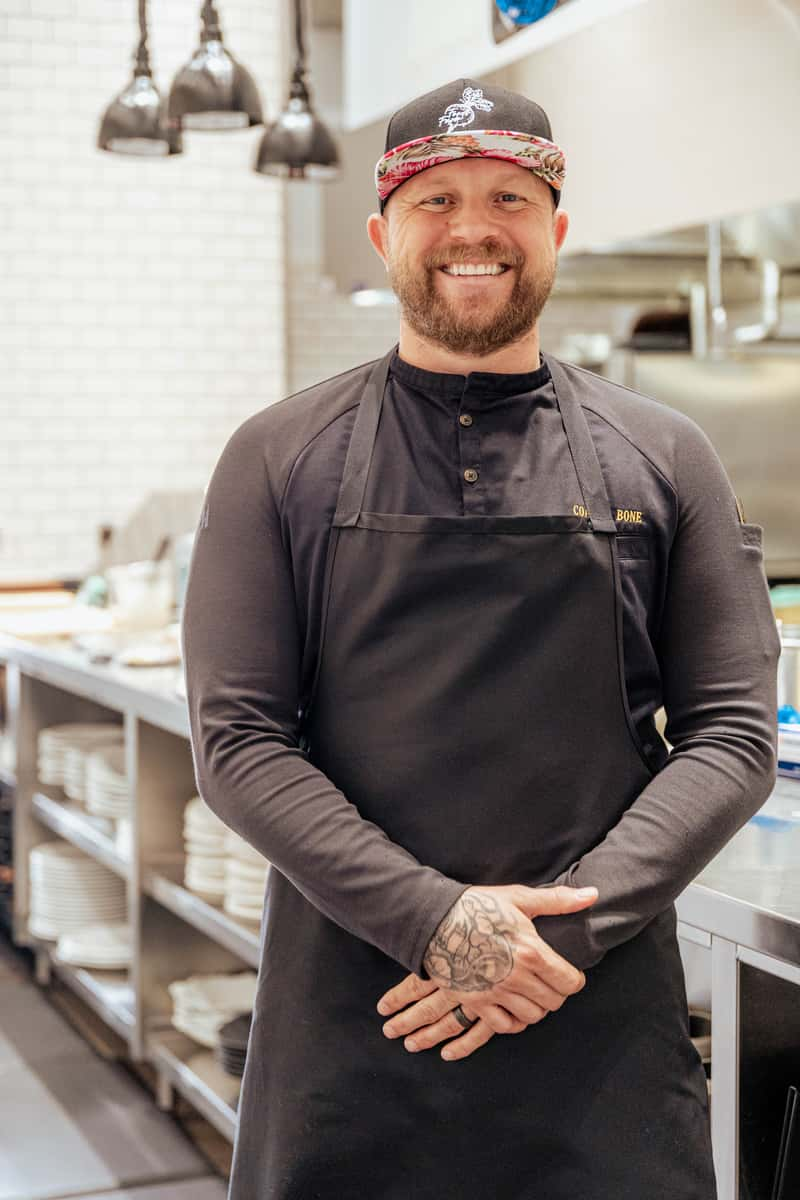
Stubborn Seed's curated dining programs provide aspiring chefs with firsthand exposure to ingredient-driven creativity and the mentorship philosophy that shapes professional kitchens. Chef Jeremy Ford's approach centers on sourcing precision and continuous learning, principles developed through years working under mentors like Dean Max.
As Ford told Robb Report, "Chefs can buy carrots from anywhere. But if there's a certain place that has better ones in July than anyone else, you only learn that through guys like Dean." This kind of purveyor-level knowledge, passed informally from chef to chef, is difficult to replicate in a classroom.
Studying a tasting-menu format in action teaches plating composition, flavor sequencing, and timing under real service pressure. For culinary students in Miami, dining at or learning from establishments operating at this level bridges the gap between academic technique and professional execution.
What Are the Key Takeaways About the Top Culinary Programs in Miami We Covered?
The key takeaways about the top culinary programs in Miami are that the city offers a uniquely rich environment for culinary education, combining strong institutional programs with unmatched access to diverse ingredients and high-caliber dining. Students benefit from:
- Programs ranging from short certificates to four-year degrees, many with built-in internship or externship requirements.
- ACF-accredited institutions and nationally ranked hospitality schools.
- Hands-on training in student-run kitchens that simulate real restaurant operations.
- A year-round growing season that supplies tropical fruits, seasonal seafood, and Latin American produce directly into curriculum and kitchen practice.
According to Miami-Dade County's Regulatory and Economic Resources department, the county's tropical climate supports year-round crop production, and Miami-Dade ranks second in Florida in overall farm-production value. This agricultural access gives Miami culinary students a sourcing advantage that few other U.S. cities can match.
Choosing the right program starts with matching your career goals to the credential type, hands-on hours, and industry connections each school provides.