
Types of Wine Service: A Complete Guide to Etiquette
Types of Wine Service: A Complete Guide to Etiquette
Wine service etiquette is the set of protocols governing how wine is selected, opened, poured, and enjoyed in a dining setting. These standards have evolved from elaborate 18th-century French displays to the streamlined, course-by-course formats used in modern fine dining.
This guide covers service styles and tableside protocols, glassware and sommelier tools, guest etiquette during the tasting ritual, temperature and storage requirements, common mistakes and recovery techniques, cultural differences across regions, and how Stubborn Seed in Miami Beach applies these principles.
We trace wine service from its origins in French and Russian traditions through American adaptations, detailing the precise choreography that governs every step from bottle presentation to the final pour.
Proper glassware selection and professional tools play a direct role in the experience; varietal-specific bowl shapes affect aroma concentration, while equipment like decanters, Coravin systems, and digital thermometers ensure each bottle is served in peak condition.
Guest-side etiquette centers on the tasting ritual, which exists to detect faults like cork taint rather than to judge personal preference. Open communication with the sommelier about flavor likes, dislikes, and budget leads to better pairings and a more relaxed interaction.
Serving temperature and cellar storage protect wine integrity before it reaches the glass, while knowing how to handle common errors (from over-pouring to broken corks) keeps the experience seamless for both staff and diners.
Wine customs vary from France's ceremony-driven terroir philosophy to Miami's multicultural, spice-forward pairing culture, where Stubborn Seed's education-focused wine program offers an ideal setting to experience these principles firsthand.
What Are the Most Common Types of Wine Service in Upscale Dining?
The most common types of wine service in upscale dining are French service, Russian service, Guéridon service, and American service. Each style reflects a distinct balance of ceremony, efficiency, and guest interaction, shaped by centuries of hospitality evolution.
How Does Traditional Wine Service Differ from Modern Approaches?
Traditional wine service differs from modern approaches in formality, pacing, and how much guests participate in the experience. Service à la Française, originating in the 18th century, presented all dishes for a course simultaneously while guests served themselves from platters. Although visually dramatic, food often cooled before consumption, and the format demanded enormous tables with extensive staff.
Service à la Russe replaced that model. Introduced to France in 1810 by Russian Ambassador Alexander Kurakin, this sequential course-by-course approach ensured each dish arrived hot. According to a 2021 analysis of dining service history, Russian service established the foundational protocol of serving wine from the right and food from the left, becoming the standard for formal fine dining by the 1880s.
Modern American service streamlined these traditions further, with food plated directly in the kitchen for efficiency and consistent portion control. Where French culture still emphasizes ceremony and terroir, American fine dining prioritizes education, accessibility, and cross-cultural pairings. The best modern programs blend classical precision with a relaxed confidence that puts guests at ease rather than on display.
What Are the Key Steps in Formal Tableside Wine Service?
The key steps in formal tableside wine service follow a precise choreographed sequence. The sommelier presents the wine list from the guest's right side, offers recommendations based on vintage and food compatibility, then retrieves and presents the selected bottle, confirming producer, varietal, and vintage aloud.
Opening requires careful technique:
- The foil is cut at the second lip to prevent dripping behind the capsule.
- The cork is extracted quietly with minimal bottle movement.
- The lip is wiped with a clean serviette.
- The cork is placed on an underliner at the host's right for inspection.
According to the Court of Master Sommeliers' 2023 Hospitality Standards, the tasting pour uses the right hand with the label facing the host, offering 1 to 1.5 ounces. Service then proceeds clockwise, finishing with the host. Guéridon service adds theatrical flair through tableside decanting on a mobile cart, though this resource-intensive style typically requires a chef de rang and commis for every 8 to 12 guests.
How Should Each Wine Type Be Served for Optimal Enjoyment?
Each wine type should be served at its specific ideal temperature using appropriate technique. Temperature mistakes are the most frequently identified service error; whites served too warm lose crispness, while reds pulled straight from a refrigerator taste muted and austere.
Recovery is straightforward when issues arise. Whites that arrive warm should be placed immediately in an ice bath, and overly cold reds benefit from a few minutes at ambient temperature. Cork failures require composure: if a cork crumbles during extraction, the sommelier should calmly remove the debris and filter the wine through a decanter, or replace the bottle entirely if the wine is compromised.
Service should always occur from the guest's right side using the right hand. As wine service professional Joshua Nyadjor notes, "The biggest mistake in wine service is treating knowledge like a performance. Guests do not need a lecture. They need confidence." That principle applies to every pour, regardless of varietal.
Understanding these service foundations prepares you to evaluate the glassware and tools that make each step possible.
What Glassware and Tools Are Essential for Proper Wine Service?
Proper wine service requires varietal-specific glassware, professional-grade opening and preservation tools, and disciplined pouring technique. The following sections cover glass shape selection, sommelier equipment, and correct handling practices.
Which Glass Shapes and Sizes Match Different Wines?
Glass shapes and sizes match different wines based on how each bowl design concentrates aromas and directs liquid across the palate. According to Riedel, manufacturers design varietal-specific glasses using scientific principles of fluid dynamics and aroma concentration.
The key pairings include:
- Burgundy/Pinot Noir glasses feature a wide bowl with large surface area to capture delicate, layered aromas from lighter reds.
- Bordeaux/Cabernet glasses use a tall bowl with a slightly narrower opening, letting harsh ethanol vapors dissipate while focusing robust fruit.
- Chardonnay glasses employ a medium-wide bowl that aerates complex whites without over-exposing floral notes.
- Champagne flutes minimize surface area to preserve effervescence, though many sommeliers now prefer wider tulip shapes for vintage Champagne.
Choosing the correct shape is one of the simplest ways to elevate any wine's expression at the table.
What Specialized Tools Do Professional Sommeliers Use?
Professional sommeliers use a precise toolkit built around opening, aerating, preserving, and temperature-verifying wine. The Court of Master Sommeliers, Americas mandates that candidates carry two wine openers, two pens, a notepad, and two odorless lighters.
Core tools include:
- Double-hinged sommelier knife (Waiter's Friend): the industry-standard corkscrew, providing leverage for smooth extraction without breaking the cork.
- Decanters: used to separate sediment from older reds and aerate young, tannic wines.
- Aerators: force oxygen into wine as it pours, simulating hours of decanting in seconds.
- Coravin preservation systems: extract wine through the cork via a medical-grade needle while replacing displaced liquid with inert argon gas.
- Digital wine thermometers: confirm bottles reach precise serving temperatures before tableside presentation.
How Should Wine Glasses Be Handled and Presented?
Wine glasses should be handled by the stem or base to prevent body heat from warming the bowl. Fingerprints on the glass surface also obscure the wine's color and clarity, diminishing visual evaluation.
Pouring discipline matters equally. Filling a glass beyond the widest part of the bowl prevents proper swirling and aroma concentration. Standard pours should not exceed one-third of the bowl for large red wine glasses or one-half for white wine glasses. This restraint gives the wine room to breathe, allowing volatile compounds to gather in the headspace above the liquid. Overpour is among the most common service errors, yet also the easiest to correct with consistent staff training.
With the right glassware and tools in place, understanding proper etiquette completes the service experience.
What Are the Etiquette Rules Diners Should Follow During Wine Service?
The etiquette rules diners should follow during wine service center on clear communication, proper tasting protocol, and respectful interaction with staff. The sections below cover how to share preferences, evaluate a pour, and maintain a polite exchange with your sommelier.
How Should Guests Indicate Wine Preferences to Staff?
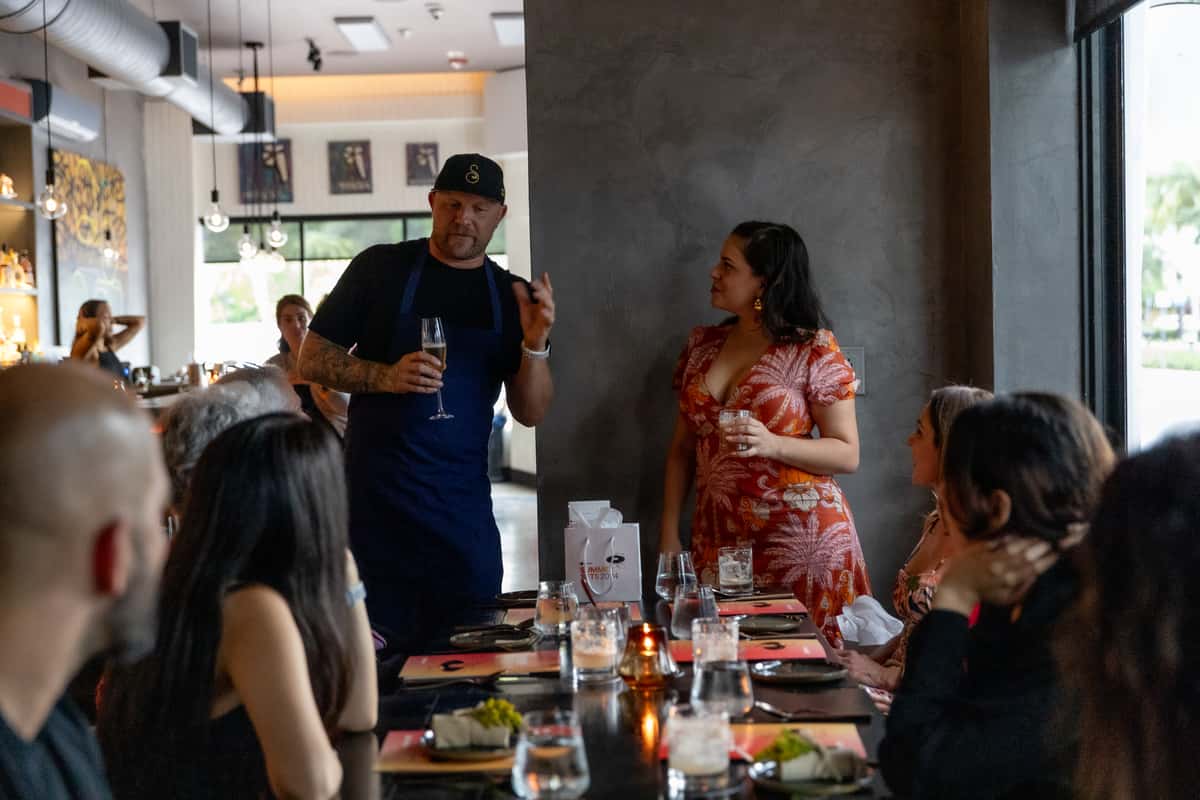
Guests should indicate wine preferences to staff by being direct about flavor likes, dislikes, and budget. Rather than navigating the wine list alone, pointing to a price range on the menu and describing preferred styles gives the sommelier clear direction without awkwardness.
As Andrew Algren, Wine Director at Cherry Circle Room in Chicago, advises: "Do not assume your sommelier is out to get you! If you are dining somewhere you trust, then their entire staff is there to help you. Be open and honest about your likes, preferences and price points."
Glassware also plays a role in this exchange. If a particular wine is served in a glass that seems mismatched, it is reasonable to ask; research indicates that the wrong glass can suppress up to 50 percent of a wine's aromas.
What Is the Proper Way to Taste and Accept Wine at the Table?
The proper way to taste and accept wine at the table is to evaluate the pour for faults, not personal preference. When the sommelier presents a small taste, the guest checks whether the wine is sound through a brief ritual:
- Look at the wine's clarity and color against a white background.
- Swirl gently to release volatile aromatic compounds.
- Smell for musty, wet-cardboard notes (cork taint) or vinegar sharpness (oxidation).
- Taste a small sip to confirm your aromatic assessment.
If the wine is sound, a simple nod or "That's lovely, thank you" signals approval. If something seems off, state politely: "I'm concerned there might be something wrong with this bottle." The sommelier will then taste and confirm.
Refusal is only acceptable for chemical faults such as TCA cork taint, oxidation, or maderization. According to a 2019 Wine Anorak analysis on restaurant wine refusal, rejecting a flawless wine because it does not match personal taste is considered poor etiquette, though exceptional hospitality programs may still offer a replacement.
How Can Guests Ensure a Polite Interaction with Sommeliers?
Guests can ensure a polite interaction with sommeliers by treating the exchange as a collaboration rather than a test. A few practical guidelines make the experience smoother for everyone:
- Trust the recommendation. If you shared your preferences clearly, let the sommelier guide you without second-guessing every suggestion.
- Avoid performative expertise. Swirling, sniffing, and tasting should be genuine evaluation, not theater.
- Ask questions freely. Curiosity about a region, grape, or pairing signals engagement, not ignorance.
- Acknowledge the service. A brief thank-you after the pour or at the end of the meal goes a long way.
Most dining discomfort around wine comes from uncertainty, not actual mistakes. The sommelier's role is to remove that uncertainty, so the most effective etiquette is simply honest, relaxed communication.
Understanding these guest-side protocols prepares you for recognizing how temperature and storage shape the wine before it reaches your glass.
How Do Temperature and Storage Influence Wine Service Etiquette?
Temperature and storage directly shape wine service etiquette by determining whether a bottle reaches the glass in optimal condition. The sections below cover recommended serving temperatures, proper storage and presentation protocols, and how staff maintain perfect conditions throughout service.
What Are the Recommended Serving Temperatures for Different Wines?
The recommended serving temperatures for different wines range from 42°F for sparkling and light whites to 65°F for full-bodied reds. According to the Court of Master Sommeliers and prominent wine educators, serving wine at the correct temperature is critical for unlocking its full potential; incorrect temperatures can mute aromas or exaggerate alcohol content.
|
Wine Category |
Specific Styles |
Temperature (°F) |
|
Sparkling |
Champagne, Prosecco, Cava |
42–50°F |
|
Light White & Sweet |
Sauvignon Blanc, Riesling |
42–50°F |
|
Full-Bodied White |
Chardonnay |
50–59°F |
|
Rosé |
Dry Rosé |
45–55°F |
|
Light Red |
Pinot Noir |
50–59°F |
|
Medium Red |
Merlot |
55–62°F |
|
Full-Bodied Red |
Cabernet Sauvignon |
58–65°F |
|
Dessert |
Tawny Port, Sweet Sherry |
55–62°F |
For most dining situations, erring slightly cool is safer than serving too warm, since wine warms naturally in the glass.
How Should Bottles Be Stored and Presented in Fine Dining?
Bottles in fine dining should be stored horizontally at 55°F with controlled humidity, then presented label-forward in pristine condition. According to Wine Guardian, the ideal storage range is 50–59°F, and temperature stability matters more than the exact degree; fluctuations cause liquid to expand and contract, potentially compromising the cork seal. Relative humidity between 65% and 75% prevents corks from drying out while keeping labels free from mold.
Bottles finished with natural cork require horizontal storage to keep the cork moist. Upon retrieval from the cellar, the sommelier presents the bottle with the label clearly visible and unblemished, demonstrating proper stewardship to the guest. This seamless transition from cellar to table reflects a restaurant's commitment to quality at every stage.
How Do Staff Ensure Wines Are Served at Perfect Conditions?
Staff ensure wines are served at perfect conditions through systematic cellar management, pre-service temperature checks, and tableside tools such as ice buckets. Decanting is another critical step: sommeliers decant older reds to separate sediment and young, tannic wines to encourage aeration, pouring in one smooth movement over a light source to stop before sediment enters the decanter.
Maintaining these standards requires coordination between the cellar team and floor staff. Consistent monitoring, from storage through the final pour, separates competent wine programs from exceptional ones.
With temperature and storage protocols established, understanding common service mistakes helps both staff and guests avoid pitfalls that undermine these careful preparations.
What Mistakes Should Be Avoided in Wine Service Etiquette?
The mistakes that should be avoided in wine service etiquette include temperature errors, over-pouring, incorrect positioning, and mishandling corks or returns. Both servers and guests share responsibility for preventing these faux pas.
How Can Servers and Guests Prevent Common Faux Pas?
Servers and guests can prevent common faux pas by understanding the most frequent wine service errors and their corrections. According to a 2022 Wineshop.it analysis, serving white wines too warm or red wines too cold ranks as the single most common mistake, followed closely by over-pouring and incorrect service positioning.
Key errors to avoid include:
- Temperature mismanagement: Whites served above 59°F lose crispness; reds pulled straight from a refrigerator taste muted and flat.
- Over-pouring: Filling a glass beyond the widest point of the bowl prevents proper swirling and aroma concentration.
- Wrong service side: Pouring should always occur from the guest's right side using the right hand.
- Treating knowledge as performance: Guests need confidence from their server, not a lecture.
For guests, honesty about preferences and price points eliminates most awkward interactions before they start.
What Are the Professional Approaches to Handling Uncorking Issues?
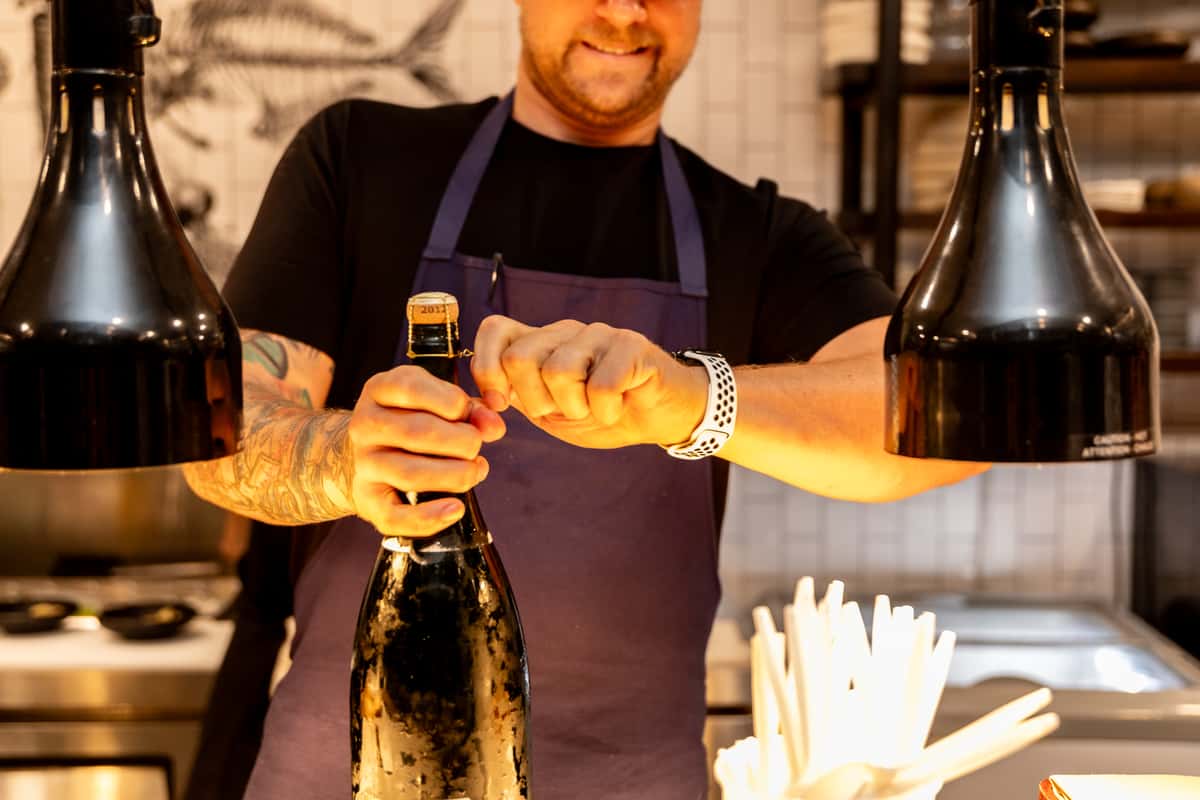
The professional approaches to handling uncorking issues center on calm, discreet recovery rather than visible struggle. A crumbly or broken cork is not uncommon, particularly with older vintages where natural cork has degraded over years of storage.
When a cork breaks in the neck, the sommelier should carefully remove the remaining fragments without pushing debris into the wine. If particles enter the bottle, filtering the wine through a clean decanter resolves the issue seamlessly. Should the cork damage compromise the wine itself, replacing the bottle entirely is the correct response. The goal is always to maintain the guest's confidence; a composed recovery often goes unnoticed and reflects higher skill than a flawless extraction.
When Should a Wine Be Sent Back Respectfully?
A wine should be sent back respectfully only when a genuine chemical fault is detected. Legitimate reasons include cork taint (TCA), which produces a musty, wet-cardboard aroma, oxidation that creates vinegar-like sharpness, or maderization. As wine journalist Jamie Goode states, "The only acceptable reason to reject a wine is faultiness. Full stop."
Simply disliking a sound wine you ordered is not valid grounds for return. If something seems off, a polite approach works best: stating "I'm concerned there might be something off about this bottle" allows the sommelier to taste and confirm independently. Exceptional restaurants may still offer a replacement for a sound wine, but guests should not expect this as standard practice.
Understanding when and how to send back a bottle ensures both guest satisfaction and mutual respect during the dining experience.
How Does Wine Service Differ Across Cultures and Regions?
Wine service differs across cultures and regions through distinct customs rooted in each area's gastronomic history. European traditions, Miami's multicultural dining scene, and international standardization efforts each shape how wine reaches the table.
What Unique Customs Exist for Wine Service in Europe Versus America?
The unique customs for wine service in Europe versus America reflect fundamentally different relationships with wine as a cultural product. French wine service emphasizes ceremony and terroir, treating wine as inseparable from the meal. Italian service tends to be less formal, centering regional pride and wine's role as a daily agricultural staple. Spanish traditions feature relaxed elegance built around Sherry and tapas pairings.
American fine dining, by contrast, approaches wine with a focus on education and accessibility. According to the Court of Master Sommeliers, Americas, professional wine service in the U.S. follows a precise, choreographed sequence designed to ensure quality control and guest satisfaction. Miami exemplifies this American approach, with restaurants like Stubborn Seed integrating structured wine pairings into multi-course tasting menu formats that guide guests through the experience without formality. This structured, knowledge-forward approach compensates for America's shorter viticultural history by democratizing wine through adventurous cross-cultural pairings. For diners navigating these differences, understanding the host culture's relationship with wine matters more than memorizing rigid rules.
How Do Local Miami Dining Scenes Adapt Wine Etiquette?
Local Miami dining scenes adapt wine etiquette by blending Latin American, Caribbean, and European influences into a distinctly cosmopolitan approach. The city's multicultural population creates demand for sommelier teams that can navigate diverse flavor profiles and guest expectations simultaneously.
Miami's rapid fine dining growth, including the arrival of the Michelin Guide, has elevated service standards while preserving an approachable warmth. Restaurants pair wines with bold, spice-driven cuisines that challenge traditional European pairing conventions. Stubborn Seed earned a Michelin star while maintaining this balance, offering guests structured wine pairings alongside Chef Jeremy Ford's contemporary tasting menus in a setting that feels sophisticated yet welcoming. This means sommeliers in Miami often prioritize guiding guests through unfamiliar combinations rather than adhering to rigid Old World protocols. The result is a wine culture that feels sophisticated yet welcoming, reflecting the city's identity as a crossroads of international dining traditions.
How Does International Influence Shape Wine Service Standards?
International influence shapes wine service standards through formal standardization bodies that create universal benchmarks. The International Organization for Standardization established the ISO 3591:1977 wine-tasting glass, mandating an overall height of 15.5 cm, a volume of 21.5 cl, and a rim diameter of 46 mm. Its elongated egg-cup shape, with a wide bowl and narrow opening, concentrates aromas toward the nose while allowing proper aeration.
Beyond glassware, tools like digital wine thermometers ($30 to $60) help ensure bottles reach the table at precise temperatures regardless of geography. These international frameworks give restaurants everywhere a shared foundation, even as local customs add their own character to the experience.
How Should You Experience Wine Service and Etiquette at Stubborn Seed?
Stubborn Seed combines Michelin-starred tasting menus with professional wine service. The following sections explore how the restaurant's format elevates etiquette and summarize the core principles covered throughout this guide.
Can Stubborn Seed's Innovative Tasting Experiences Enhance Wine Service Etiquette?
Stubborn Seed's innovative tasting experiences can enhance wine service etiquette by embedding formal sommelier protocols directly into a multi-course progression. The restaurant's wine pairing option guides guests through structured pours that follow traditional tableside standards: the sommelier presents each bottle label-forward, pours a 1 to 1.5-ounce taste for the host's approval, then serves remaining guests clockwise before filling glasses evenly to half full. The sommelier team follows traditional tableside standards, presenting each bottle label-forward and serving guests through a structured, course-by-course progression. This approach transforms standard etiquette into an intuitive, course-by-course learning experience where guests absorb proper wine ritual naturally.
What Are the Key Takeaways About Types of Wine Service and Etiquette We Covered?
The key takeaways about types of wine service and etiquette center on a few actionable principles:
- Wine service evolved from elaborate French and Russian traditions into the streamlined, course-by-course format used in modern fine dining.
- Formal tableside protocols follow a precise sequence: present, confirm, open, pour a tasting sample, then serve clockwise.
- Correct glassware shape and serving temperature directly affect aroma expression and overall enjoyment.
- The tasting ritual exists to check for faults like cork taint, not to evaluate personal preference.
- Standard tipping protocol calls for 18 to 22 percent on the total bill, including wine.
- Communicating preferences openly with the sommelier leads to better pairings and a more comfortable experience.
Stubborn Seed in Miami Beach puts these principles into practice through wine pairings that complement Chef Jeremy Ford's tasting menu format, providing an opportunity to experience professional wine service alongside complex, contemporary cuisine.