
What Is Caviar: All You Need to Know About It
What Is Caviar: All You Need to Know About It
Caviar is the salt-cured roe of sturgeon or paddlefish, the only fish whose eggs may be sold under the unqualified label "caviar" under U.S. law. All other salted fish roe, from lumpfish to salmon, must carry the species name on the label.
This guide covers what caviar is and where it comes from, why it carries luxury status, how to store and serve it correctly, the best ways to eat and enjoy it, its nutritional profile and health considerations, how to distinguish authentic caviar from substitutes, and how Stubborn Seed in Las Vegas brings caviar into a fine dining context.
Caviar's origins span thousands of years, from Persian harvests in the Caspian Sea to Indigenous North American traditions dating back 4,000 years, and understanding that lineage explains much of its cultural weight and price.
Proper storage depends on whether the product is fresh or pasteurized, with shelf life varying significantly between the two; correct service keeps caviar cold over cracked ice and eaten from a small spoon with the fingers.
Traditional accompaniments include blinis, crème fraîche, and high-acid sparkling wines, while modern fine dining extends caviar into composed dishes such as macarons and tasting-menu courses.
A serving of caviar delivers 24.6 g of protein, substantial omega-3 fatty acids, and 20 mcg of vitamin B-12, though its high sodium content and potential heavy metal exposure in some wild-caught varieties warrant attention.
Authentic sturgeon caviar requires CITES-compliant labeling; purchasing from regulated sources is the most reliable safeguard against the mislabeling documented in market studies.
What Exactly Is Caviar and Where Does It Come From?
Caviar is salt-cured roe harvested from sturgeon and paddlefish, two of the world's oldest fish families. The sections below cover which fish species produce true caviar under U.S. law, how harvesting and processing developed over millennia, and what varieties and grades distinguish one tin from another.
What Types of Fish Produce True Caviar?
The types of fish that produce true caviar are species within the order Acipenseriformes, specifically sturgeon and paddlefish. Under U.S. federal regulation (50 CFR 23.71), "caviar" means the processed roe of any sturgeon or paddlefish species exclusively. The FDA reinforces this further: the unqualified term "caviar" applies only to salt-cured sturgeon roe. Products made from other species must carry the fish's common name on the label, such as lumpfish caviar, salmon caviar, or flying-fish caviar.
Well-known sturgeon species include beluga (Huso huso), osetra (Acipenser gueldenstaedtii), sevruga (Acipenser stellatus), Siberian sturgeon (Acipenser baerii), kaluga, hackleback, and American white sturgeon. According to the University of Florida IFAS Extension, high demand for sturgeon caviar has driven a wide range of substitutes made from algae, capelin, whitefish, and plant products — none of which may be labeled simply "caviar" in the U.S. market.
All exports of sturgeon or paddlefish caviar require CITES permits and must be declared to a U.S. Fish and Wildlife Service inspector.
How Is Caviar Harvested and Processed?
Caviar harvesting is one of the oldest documented food practices in human history. According to NOAA Fisheries, Indigenous tribes harvested Atlantic and shortnose sturgeon for their meat and roe beginning approximately 4,000 years ago, and Atlantic sturgeon eggs were valued as high-quality caviar long before European settlement. Harvard University's Russia in Global Perspective project identifies the Persians as the first recorded people to harvest Caspian Sea sturgeon roe for consumption, a practice later celebrated at Greek and Roman feasts.
Traditional processing involves removing the ovary, separating eggs through a stainless-steel screen, rinsing, grading, and dry-salt curing. The malossol method uses minimal salt to preserve freshness and flavor. Modern aquaculture has introduced no-kill methods using ovulated eggs, reducing pressure on wild sturgeon populations that face ongoing conservation concerns.
What Are the Different Grades and Varieties of Caviar?
The different grades and varieties of caviar are distinguished by species, egg size, color, and salt content. Beluga, osetra, and sevruga represent the three most recognized Caspian varieties, while kaluga, white sturgeon, and Siberian sturgeon caviar are prominent in farmed production. According to a June 2022 to June 2023 Italian fish-farm case study published in Water, beluga caviar commanded 800 euros per kilogram, Russian sturgeon 500 euros per kilogram, white sturgeon 310 euros per kilogram, and Siberian sturgeon 300 euros per kilogram, illustrating how species directly determines value.
Color grading is also used: very light caviar carries a "000" designation, medium color is "00," and dark caviar is marked "0." Osetra is an elegant medium-grain variety with a smooth, nutty flavor ranging in color from gray to beige, dark green, and a rare gold. Understanding grades and species is particularly important given that mislabeling remains a documented market issue.
Why Is Caviar Considered a Luxury Food?
Caviar holds luxury status because of its ancient origins, scarce supply, and the international trade controls that govern it. The sections below cover its historical and cultural significance, then examine how rarity and sourcing directly shape its price.
What Historical and Cultural Significance Does Caviar Hold?
Caviar's historical and cultural significance stems from thousands of years of elite consumption across multiple civilizations. According to Harvard University's Russia in Global Perspective, beluga caviar is particularly significant for its place in history as a gourmet delicacy intended for consumption by elites, with Persians being the first recorded people to harvest sturgeon roe from the Caspian Sea, later appearing at Greek and Roman feasts.
That lineage never faded. The Smithsonian Center for Folklife and Cultural Heritage notes that caviar is often associated with a sort of decadence, and for many Russian families it remains a fixture of celebratory tables. That centuries-long association with privilege is arguably the strongest driver of caviar's enduring prestige, more so than flavor alone.
How Does Rarity and Sourcing Impact Caviar's Value?
Rarity and sourcing impact caviar's value because sturgeon populations are limited, harvests are tightly regulated, and international trade requires government-issued permits. According to Colgate University research by Graybill, caviar extraction spanning centuries accelerated during the Soviet era, turning the resource into a luxury commodity and endangering the sturgeon that produce the roe.
Today, the U.S. Fish and Wildlife Service requires CITES permits for all caviar exports and imports involving paddlefish or sturgeon. That regulatory burden constrains legal supply globally. In 2024, the Observatory of Economic Complexity recorded global trade in caviar and caviar substitutes at $556 million, with the United States alone importing over $81.9 million worth. Limited wild stocks, long aquaculture timelines, and compliance costs combine to keep prices high.
How Do You Properly Store and Serve Caviar?
Proper caviar storage and service preserve both flavor and food safety. The two H3s below cover refrigeration guidelines and the recommended vessels for keeping caviar cold at the table.
What Are the Best Practices for Storing Caviar?
The best practices for storing caviar depend on whether the product is fresh or pasteurized. According to USDA Food Safety and Inspection Service mail-order guidance, non-pasteurized fresh caviar keeps for up to six months unopened and only two days once opened under refrigeration, while pasteurized vacuum-packed caviar stays shelf-stable for up to one year unopened. Neither type should be frozen. For salmon roe specifically, the University of Alaska Fairbanks Cooperative Extension Service recommends storing it tightly covered in the refrigerator for two to three weeks, or in the freezer for up to two months, using glass, ceramic, or plastic freezer containers. Because shelf life varies by product formulation and packaging, always follow the manufacturer's instructions rather than applying a single universal rule.
What Serving Temperatures and Vessels Are Recommended for Caviar?
The serving temperature and vessels recommended for caviar prioritize keeping the product cold throughout the meal. Caviar is traditionally served cold in a small crystal bowl set on a bed of cracked ice, accompanied by small rounds of toast. A small spoon is used to transfer the caviar onto a toast round; guests then eat with their fingers. Keeping the bowl over ice at the table slows any temperature rise that would degrade delicate flavor and texture. Choosing the right vessel is a practical matter as much as an aesthetic one: ice service is the most reliable way to hold the ideal chill from kitchen to table.
What Are the Best Ways to Eat and Enjoy Caviar?
The best ways to eat and enjoy caviar center on three essentials: proper serving technique, thoughtful food and drink pairings, and observing established etiquette. The sections below cover each in practical detail.
What Are Traditional and Modern Ways to Serve Caviar?
Traditional ways to serve caviar involve chilling it in a small crystal bowl set on cracked ice, accompanied by small rounds of toast. According to Etiquette Scholar's caviar etiquette guide, caviar is scooped with a small spoon onto a toast round, with optional garnish, and eaten with the fingers.
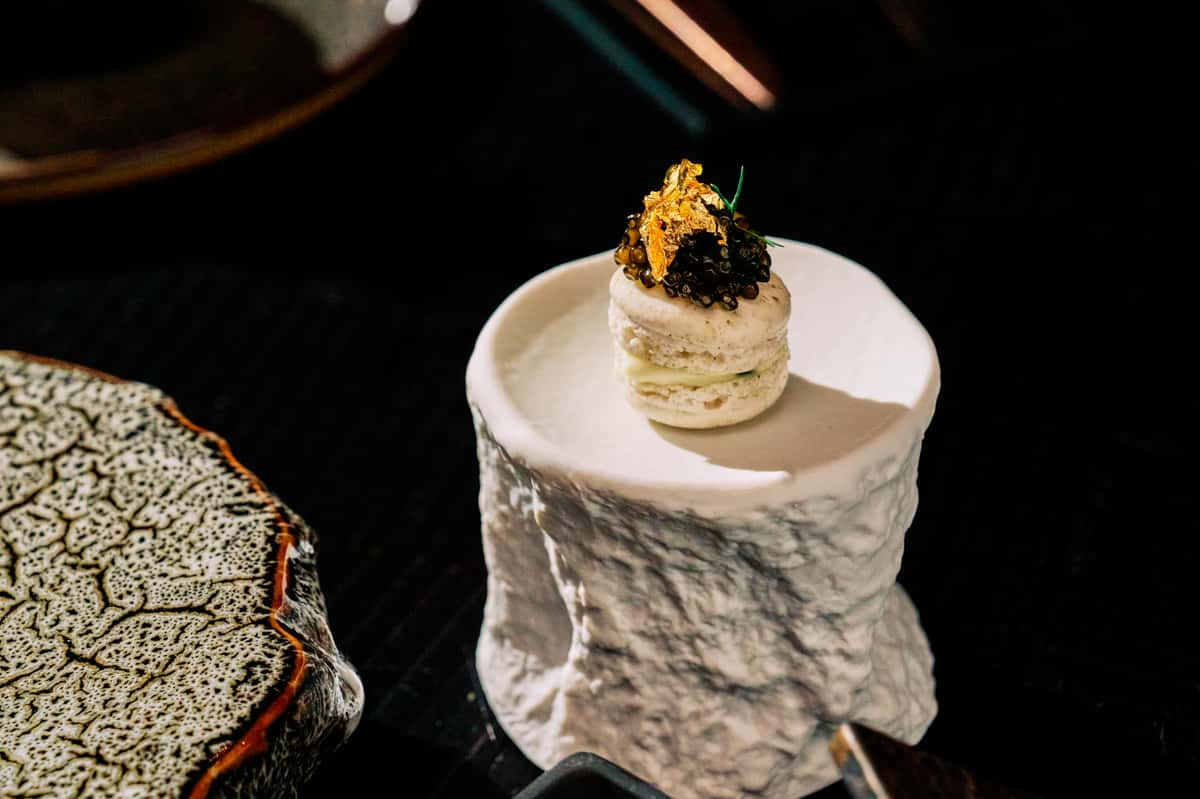
Classic accompaniments include blinis, sour cream, and crème fraîche. Modern presentations push further: fine-dining chefs incorporate caviar into composed courses, using it atop potato chips, in macarons, or within tasting-menu bites. The Smithsonian Center for Folklife and Cultural Heritage notes caviar's association with festive tables and celebration, a cultural thread that continues in both traditional and contemporary service.
What Food and Drink Pairings Complement Caviar Best?
The food and drink pairings that complement caviar best lean on high acidity to balance caviar's rich protein and fat content. Virginia Tech's Enology Extension notes that high-protein, high-fat foods require wines with high perceptible acidity to refresh the palate, making crisp sparkling wines a natural match.
Champagne is among the most widely cited pairings. Ariel Arce of caviAIR, quoted by Food & Wine, describes her preferred service: "We take a little caviar, we put it on a potato chip, we pop it in our mouth, and we wash it down with a little champagne." Neutral, fat-rich bases such as potato chips, blinis, and toast rounds support caviar without overpowering its flavor.
What Etiquette Should You Follow When Eating Caviar?
The etiquette you should follow when eating caviar begins with the serving spoon. Etiquette Scholar's caviar etiquette guide specifies that caviar is scooped with a small spoon, placed onto a toast round, and eaten with the fingers rather than a fork.
Key etiquette principles include:
- Use a small spoon to transfer caviar from the bowl to your toast or blini.
- Eat the prepared bite with your fingers.
- Avoid pressing or crushing the eggs; allow them to pop naturally on the palate.
- Keep caviar cold throughout service by maintaining its ice bed.
Respecting these conventions ensures the eggs' texture and flavor remain intact from bowl to palate.
What Health Benefits and Nutritional Information Does Caviar Offer?
Caviar offers a concentrated nutritional profile, including protein, omega-3 fatty acids, and key vitamins. The following sections cover its key nutrients and the dietary considerations worth knowing before eating it regularly.
What Key Nutrients Are Found in Caviar?
The key nutrients found in caviar include protein, omega-3 fatty acids, vitamin B-12, selenium, and vitamin D. According to the USDA FoodData Central record for caviar (FDC ID 2706332, published October 2024), a serving contains 24.6 g of protein, 264 kcal, 3.8 g of DHA, 2.741 g of EPA, 20 mcg of vitamin B-12, 65.5 mcg of selenium, and 2.9 mcg of vitamin D. Sodium is notably high at 1,500 mg per serving, a direct result of the salt-curing process.
These figures represent a generic caviar record and do not include a complete percentage-daily-value panel.
Are There Any Health Risks or Dietary Considerations With Caviar?
The health risks of caviar include high sodium content, potential heavy metal contamination, and food safety concerns for pregnant women. Research published in PubMed found that caviar from wild Persian sturgeon may contain elevated levels of mercury and other heavy metals; however, that finding applies specifically to wild-caught Caspian Sea sturgeon, not all caviar products.
Pregnant women should exercise particular caution. FoodSafety.gov advises cooking all seafood to 145°F (63°C), as raw or cured seafood may harbor Listeria, which can cause miscarriage or stillbirth.
A market study published in Molecules also found a 33.4% species mislabeling rate across 21 caviar batches examined in China, underscoring the importance of purchasing from verified, CITES-compliant sources.
How Can You Differentiate Authentic Caviar From Alternatives?
Differentiating authentic caviar from substitutes requires understanding both labeling regulations and sensory quality indicators. The following sections cover common substitutes and key purchasing signals.
What Are Common Caviar Substitutes and How Do They Compare?
Common caviar substitutes are products made from lumpfish, capelin, flying fish, whitefish, salmon, or even algae and plant-based materials, formulated to imitate sturgeon roe. According to the University of Florida IFAS Extension, high demand for sturgeon caviar combined with limited supply has driven the development of this wide range of alternative products. Under U.S. food regulations, only eggs from sturgeon and paddlefish may be sold simply as "caviar"; all substitutes must carry a species-identifying label, such as "lumpfish caviar" or "salmon caviar."
The global scale of this market is significant. In 2024, the top importers of caviar and caviar substitutes were the United States (81.9M,1.67Mkg),theEuropeanUnion(57.7M, 1.52M kg), France (44.7M,1.86Mkg),Germany(42.5M, 1.49M kg), and Japan ($37.5M, 2.34M kg), according to World Integrated Trade Solution data (World Bank).
How Do You Spot Quality Caviar When Purchasing?
Quality caviar can be spotted by examining labeling, packaging integrity, and sensory characteristics before purchase. On the label, look for species identification, country of origin, harvest year, and a CITES-compliant non-reusable tag on all sturgeon products entering trade. Eggs should appear uniformly sized, glossy, and intact, with no broken or mushy pearls. Fresh, high-quality caviar carries a clean, briny scent rather than a pungent or overly fishy odor.
It is worth noting that USDA freshness figures are mail-order storage guidance and do not establish universal sensory-quality criteria for every caviar product, so relying on label dates alone is insufficient. Purchasing from a reputable, regulated supplier with traceable sourcing remains the most reliable quality safeguard.
How Can You Experience Exceptional Caviar in Las Vegas at Stubborn Seed?
Stubborn Seed brings Chef Jeremy Ford's Michelin-recognized fine dining to Resorts World Las Vegas at 3000 S Las Vegas Blvd. The sections below cover how caviar appears on the menu and the key lessons from this guide.
How Does Stubborn Seed Incorporate Caviar Into Its Fine Dining Experience?
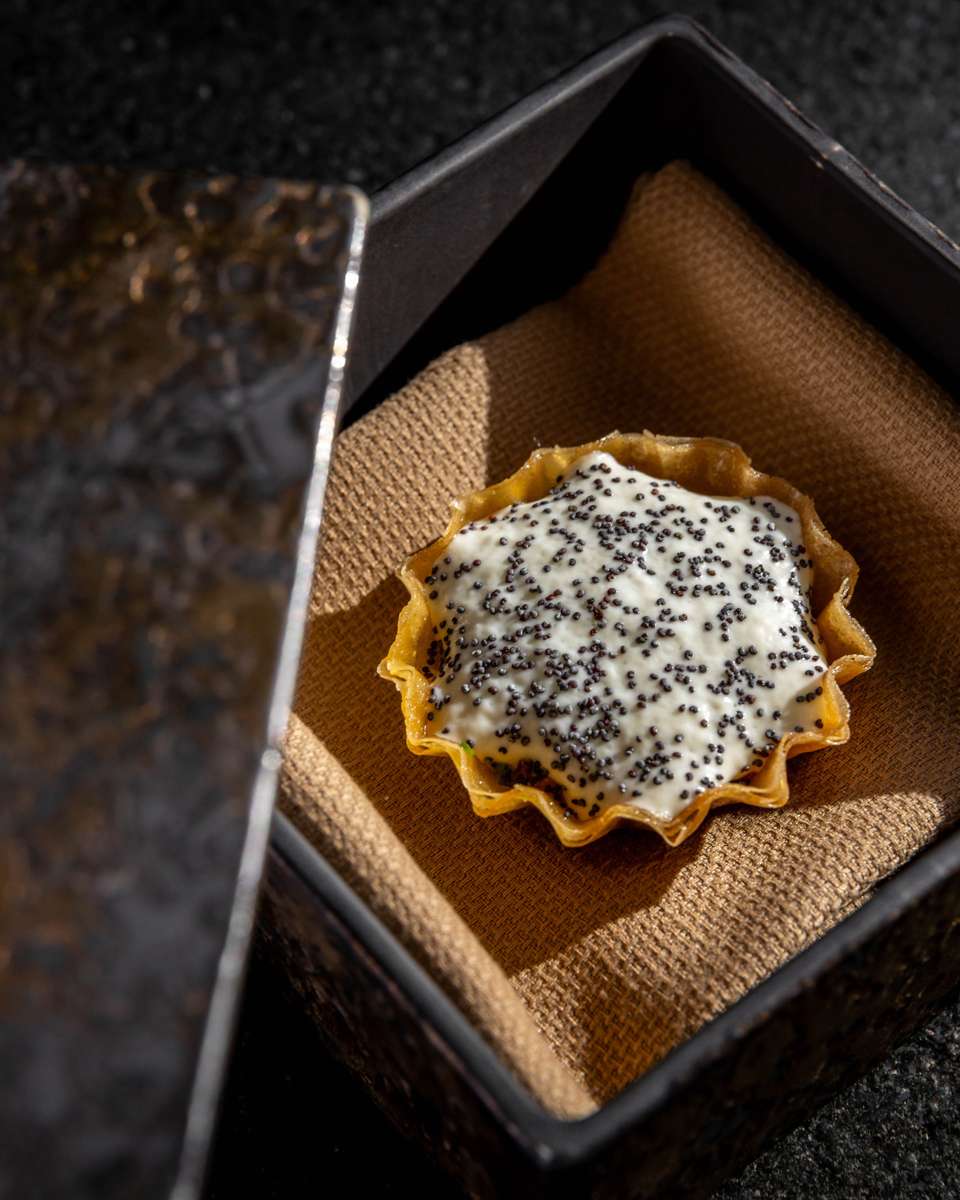
Stubborn Seed incorporates caviar into its Las Vegas fine dining experience through a Kaluga Caviar Macaron served with champagne citrus crema and dill. According to the Las Vegas Review-Journal, Jeremy Ford, the Top Chef Season 13 winner, brought his Michelin-recognized Miami restaurant to Resorts World on the Strip. The tasting menu at Stubborn Seed Las Vegas evolves seasonally, crafted from the freshest available ingredients, so the caviar presentation reflects Ford's commitment to ingredient-driven, modernist cooking. Reservations can be made through SevenRooms. Stubborn Seed represents one of the most compelling ways to experience premium caviar in a fine dining context in Las Vegas.
What Are the Key Takeaways About What Is Caviar and How to Eat It We Covered?
The key takeaways about what caviar is and how to eat it are:
- Definition: True caviar is the salted roe of sturgeon or paddlefish; all other fish roe must be labeled with the species name, per FDA guidance.
- Varieties: Common types include beluga, osetra, sevruga, and kaluga, each differing in grain size, color, and flavor.
- Storage: The University of Alaska Fairbanks recommends storing salmon roe caviar refrigerated for two to three weeks or frozen up to two months in glass, ceramic, or plastic containers.
- Serving: Caviar is served cold over cracked ice, scooped onto toast rounds, and eaten with the fingers.
- Pairings: High-acid wines complement caviar's fat and protein content well.
- Authenticity: Only sturgeon and paddlefish roe may be labeled simply "caviar" under U.S. law.
For a curated fine dining experience featuring caviar in Las Vegas, Stubborn Seed offers the ideal setting.