
What is Experiential Dining? Meaning & Unique Experiences Guide
What is Experiential Dining? Meaning & Unique Experiences Guide
Experiential dining is a restaurant format that deliberately extends the meal beyond food quality, incorporating interactive or sensory elements into the experience to make guests feel elevated or transported rather than simply fed.
This guide covers what experiential dining actually means, the formats and atmospheres that define it, the trends and audiences driving its growth, how to identify and evaluate authentic venues, and how Stubborn Seed delivers this approach in Las Vegas.
Experiential dining can differ from traditional dining through choreography, immersive environments, or direct chef interaction. Formats range from multisensory tasting menus and chef's tables to theatrical pop-ups, dark dining, and underwater restaurants, each using sensory design to make the format itself part of the narrative.
Atmosphere, themed menus, and chef interaction work together to shape how guests perceive and remember a meal. Oxford psychologist Charles Spence identifies every sensory touchpoint, including lighting, sound, scent, and even the weight of the cutlery, as active contributors to how food is experienced.
Social media influence, post-pandemic dining behavior, and demand for personalization have accelerated experiential dining's rise. Millennials and Gen Z are among the audiences showing interest in experiential dining, and USDA data shows that food away from home accounted for a record 58.5% of total U.S. food spending in 2023.
Evaluating a venue requires asking direct questions about format, duration, dietary accommodation, and interaction style before booking, since authentic concepts communicate these details transparently.
Stubborn Seed, the Michelin-starred Miami restaurant from Top Chef winner Chef Jeremy Ford and Grove Bay Hospitality Group, has brought seasonal contemporary American tasting menus to an outpost at Resorts World Las Vegas, a city that hosted The World's 50 Best Restaurants awards.
What Does Experiential Dining Actually Mean?
Experiential dining extends far beyond food quality, layering interactive and sensory elements around every course. The sections below define how it differs from traditional dining and identify the core elements that shape it.
How Does Experiential Dining Differ from Traditional Dining?
Experiential dining differs from traditional dining in its deliberate use of interactive and sensory elements that extend the guest's engagement well beyond the plate. Traditional dining delivers comfort through familiar food-and-service conventions, while the experiential model introduces what hospitality platform Lightspeed describes "a lot more moving pieces and components."
The contrast shows up across several dimensions:
- Service model: Traditional dining centers on food and attentive service; experiential dining adds choreography, themed environments, or live interaction.
- Guest engagement: Conventional restaurants evoke familiarity; experiential venues aim to make guests feel elevated or transported.
- Sensory involvement: Experiential formats deliberately activate sight, sound, and scent alongside taste.
- Price: An Eventbrite survey found 50% of respondents would pay an average of $58 more per person for the same menu paired with chef interaction.
- Duration: Formats such as dark dining place guests in sensory-altered environments for approximately 90 to 120 minutes.
Notable examples illustrate the range. Ultraviolet by Paul Pairet in Shanghai and The Alchemist by Rasmus Munk in Copenhagen combine haute cuisine, arts, sciences, and digital technology to create immersive journeys in highly controlled layouts, according to a study published in the International Journal of Gastronomy and Food Science. Ithaa Undersea Restaurant at Conrad Maldives, is located approximately five to six meters beneath the Indian Ocean, accommodates just 14 guests per service. These examples are not universal benchmarks; formats and price points vary widely across concepts.
What Are the Core Elements That Define Experiential Dining?
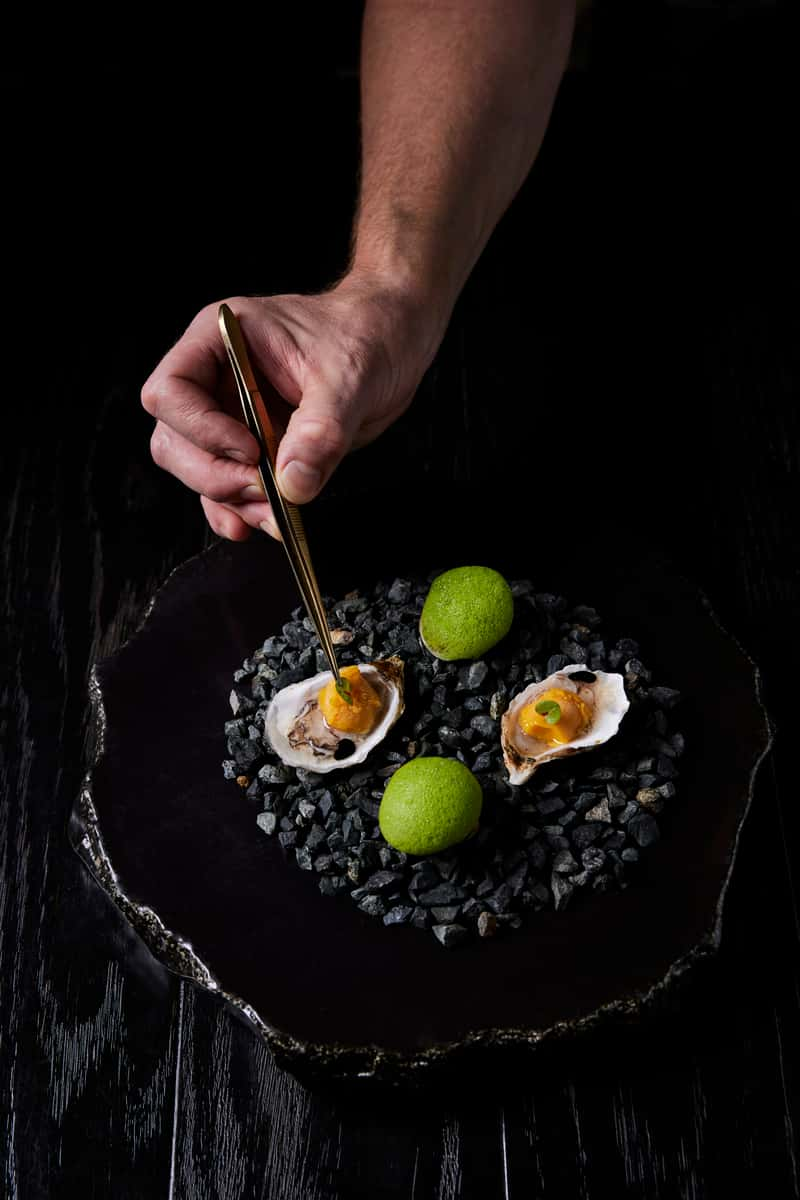
The core elements that define experiential dining are multi-sensory design, interactivity, immersive atmosphere, and storytelling woven throughout the meal. As Oxford experimental psychologist Charles Spence noted, perception of food involves "everything from the color of the plate to the weight of the cutlery in your hands, from the background music to any ambient scent, as well as the lighting and even the softness of the chair you are sitting on."
These elements typically include:
- Multi-sensory design: Deliberate choices around lighting, sound, scent, and spatial layout to reinforce a unified atmosphere.
- Interactivity: Chef presentations, tableside preparation, or theatrical reveals that draw guests into the cooking process.
- Immersive storytelling: A narrative thread connecting the menu, decor, and service into a coherent journey.
- Exclusivity: Limited seating or ticketed formats that heighten perceived value and focus.
A study of 391 respondents who visited three environmentally certified restaurants in five-star hotels in South Korea found that overall image positively influenced both revisit intention (β = 0.890, p < 0.01) and willingness to pay a premium (β = 0.535, p < 0.01), published in MDPI's Sustainability. Atmosphere and perceived image, in other words, carry measurable commercial weight. In practice, the strongest experiential concepts treat every sensory touchpoint as intentional rather than incidental, which separates them from restaurants that simply offer excellent food in a pleasant room.
What Types of Experiences Are Common in Experiential Dining?
Common experiences in experiential dining include theatrical performances, chef interactions, immersive atmospheres, and themed menus. The sections below explore how atmosphere and menu design each contribute to these formats.
What Role Does Atmosphere Play in Experiential Dining?
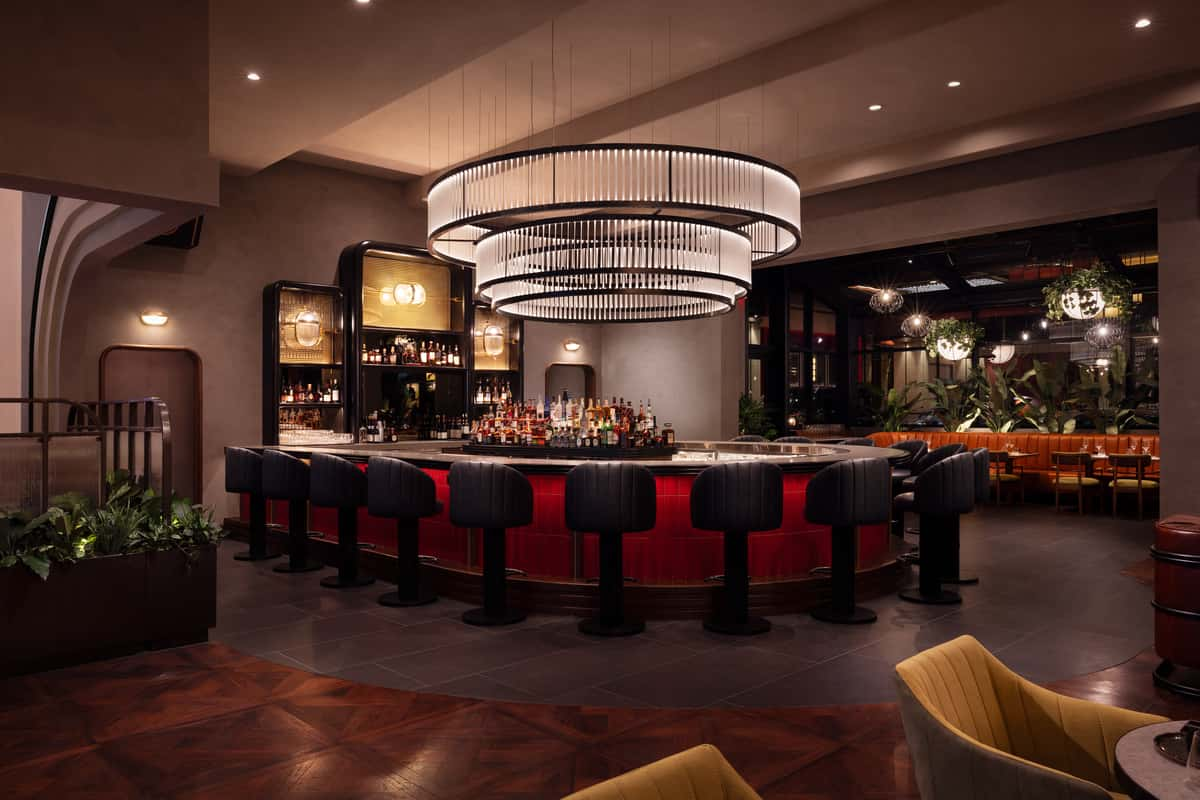
Atmosphere plays a foundational role in experiential dining by shaping how guests perceive, feel, and remember a meal. Design elements such as lighting, soundscapes, spatial layout, and decor work together to signal that dinner will be something beyond the ordinary. According to sensory scientist Charles Spence, every element influences taste: "Everything from the color of the plate to the weight of the cutlery in your hands, from the background music to any ambient scent, as well as the lighting and even the softness of the chair you are sitting on."
Atmosphere is often underestimated as a driver of guest satisfaction, but it functions as the stage that makes every other experiential element more convincing.
How Do Themed Menus and Chef Interactions Enhance the Experience?
Themed menus and chef interactions enhance experiential dining by transforming a meal into a guided narrative with a clear point of view. A University of Manitoba study found that pop-up diners readily embraced scarce menus and enjoyed surprise dishes chosen by the chef, while the same scarcity in a conventional restaurant was perceived as a limitation. The context created by the theme reframed expectation entirely.
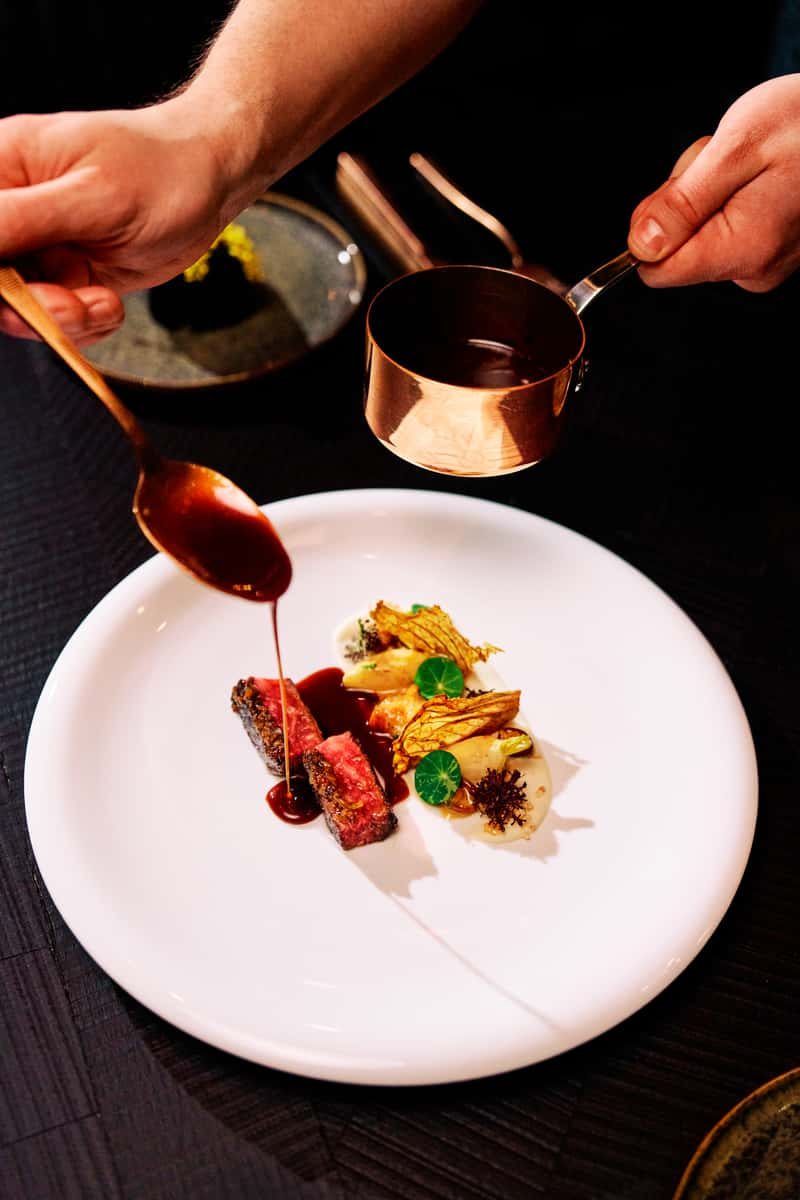
Direct chef interaction deepens this effect. When a chef presents each course, explains ingredients, and answers questions, the meal becomes a conversation rather than a transaction.
With atmosphere and menu design working together, experiential dining earns its distinction from conventional restaurant formats.
Why Has Experiential Dining Become Popular in Recent Years?
Experiential dining has grown popular because shifting consumer priorities, social media influence, and post-pandemic behavior have pushed diners to seek memory-making occasions over routine meals. The trends and demographics driving this shift are covered below.
What Emerging Trends Are Shaping Experiential Dining?
The emerging trends shaping experiential dining include social media shareability, eatertainment formats, and demand for personalization. According to Pew Research Center, 78% of 18- to 29-year-olds use Instagram and 62% use TikTok,demonstrating the reach of visual social media platforms among younger adults. A quarter of Americans want venues that combine an activity with food and drink, with live performances being the most preferred option at 30%, according to Restaurant Dive. McKinsey research found that 71% of consumers expect personalized interactions from brands and businesses, and 76% become frustrated when those expectations are not met, highlighting the broader importance of personalization in customer experiences. These forces together reward restaurants that treat each visit as a curated, multi-sensory event.
What Demographic Groups Are Most Drawn to Experiential Dining?
The demographic groups most drawn to experiential dining are Millennials, Gen Z, and high-net-worth consumers. Younger diners actively seek immersive, shareable meals that translate well on social platforms. Separately, Charles Schwab's 2024 survey reached a national sample of 1,005 wealthy Americans with $1 million or more in investable assets, offering insights into affluent consumers' financial attitudes rather than their dining preferences. Post-pandemic behavior also plays a role: USDA data shows spending on food away from home reached $4,485 per capita in 2023, the highest share of food spending dedicated to dining out since records began in the 1930s. Experiential dining captures diners across both age and income groups who now expect more than a meal.
How Can You Tell If a Restaurant Offers Authentic Experiential Dining?
Authentic experiential dining is identifiable through specific signals: transparent booking details, honest communication about the format, and a concept built around genuine sensory or interactive intent. The sections below cover the questions to ask before reserving and how to calibrate your expectations.
What Questions Should You Ask Before Booking?
The questions you should ask before booking an experiential dining venue cover format, duration, dietary needs, and interaction style. Knowing these details before you arrive prevents misaligned expectations and protects your investment.
Ask the venue directly about each of the following:
- What is the format? Confirm whether it is a tasting menu, dinner theater, chef's-table setting, or another concept.
- How long does the experience last? Duration varies significantly across formats.
- Are dietary restrictions accommodated? Confirm how the kitchen handles allergies and substitutions.
- What level of chef or staff interaction is included? Some venues offer course-by-course explanations; others do not.
- How are reservations and payments structured? Clarify whether tickets or deposits are required in advance.
Research from Stanford Graduate School of Business found that consumers assign higher ratings to restaurants regarded as authentic, even after controlling for restaurant quality. Asking direct questions before booking is one of the most reliable ways to gauge whether a venue's authenticity claim is substantiated.
How Should Expectations Be Set for Experiential Dining?
Expectations for experiential dining should be set around engagement, not just food quality. Unlike conventional dining, experiential venues ask guests to participate in a deliberate sensory or narrative arc, which means the evening unfolds differently from a standard restaurant visit.
Set expectations by acknowledging these key realities:
- The experience is the product. Atmosphere, pacing, and interaction carry as much weight as the dishes themselves.
- Timing is structured. Courses and event elements follow a sequence; arriving on time matters more than it would at a casual restaurant.
- Some control is surrendered willingly. Chef-driven tasting menus and themed formats reduce individual choice by design, and that constraint is part of the value.
- Staff interaction varies by concept. At some venues, servers narrate each course; at others, the kitchen team presents dishes directly.
Treating experiential dining as a curated event rather than an a-la-carte meal frames the evening correctly and allows the designed details to land as intended.
What Are Notable Examples of Experiential Dining Around the World?
Notable examples of experiential dining span two of North America's most competitive culinary markets: Las Vegas and South Florida. The section below covers what makes each region distinct and which globally recognized concepts have redefined what dining can be.
How Do Las Vegas and South Florida Stand Out for Experiential Dining?
Las Vegas and South Florida stand out for experiential dining because both regions combine exceptional culinary talent with high-demand, experience-driven audiences. Las Vegas was chosen as the 2024 host city for The World's 50 Best Restaurants awards, a recognition that reflects its status as a globally celebrated dining destination with a roster of the industry's most revered chefs. South Florida operates at a comparable scale: according to Florida Atlantic University's South Florida Economic Report, the region generates over $400 billion in combined real GDP across Broward, Miami-Dade, and Palm Beach counties, making it one of the country's most dynamic economies. That economic density sustains a dining culture where guests actively seek elevated, memorable experiences rather than routine meals.
Which Unique Concepts Have Gained International Recognition?
The unique concepts that have gained international recognition include multisensory tasting-menu restaurants, underwater dining rooms, dark dining, and theatrical pop-up formats. A study published in the International Journal of Gastronomy and Food Science examined Ultraviolet by Paul Pairet in Shanghai and The Alchemist by Rasmus Munk in Copenhagen as prime examples of venues that combine haute cuisine, arts, sciences, and digital technologies to deliver immersive journeys. Ithaa Undersea Restaurant at Conrad Maldives seats just 14 guests five meters beneath the Indian Ocean. In 2024, Disfrutar in Barcelona was named The World's Best Restaurant, serving roughly 30 dishes with frequent table theatre and chef interaction. These concepts succeed because the format itself becomes the narrative, not just a backdrop to the food.
What Should You Consider When Choosing an Experiential Dining Venue?
Choosing the right experiential dining venue requires evaluating reputation, accessibility, and dietary accommodation. The sections below cover how reviews shape selection and—which practical access and allergy factors matter most.
How Important Are Reviews and Reputation in the Selection Process?
Reviews and reputation are important in the selection process because they reveal whether a venue delivers on its experiential promises consistently. Research from Stanford Graduate School of Business found that consumers assign higher ratings to restaurants regarded as authentic, even after controlling for restaurant quality, making perceived authenticity a measurable driver of satisfaction. Pacing, service timing, and the coherence of the overall experience are details that only appear in detailed guest accounts, not marketing copy. Reading multiple recent reviews across platforms gives the clearest picture of what a booking actually delivers.
What Accessibility and Dietary Considerations Might Be Relevant?
The accessibility and dietary considerations relevant to experiential dining include physical access, allergy protocols, and menu flexibility. Under Title III of the Americans with Disabilities Act, restaurants must provide people with disabilities an equal opportunity to access their goods and services. However, a 2024 article in The Guardian reported that nearly all of the restaurant websites checked by columnist Jay Rayner lacked accessibility information, while wheelchair user Jamie Hale said he typically had to contact six or seven venues to find suitable access. On the dietary side, the CDC has identified gaps in restaurant knowledge and practices around food allergies, recommending staff training, separate preparation equipment, and available ingredient lists. Before booking, confirm physical access routes and ask directly about cross-contact procedures for your specific dietary needs.
How Does Stubborn Seed by Grove Bay Hospitality Group Deliver Experiential Dining in Las Vegas?
Stubborn Seed delivers experiential dining in Las Vegas through chef driven tasting menus, seasonal contemporary American cuisine, and a playful fine dining format at Resorts World. The sections below cover what sets its tasting menus apart and the key takeaways from this guide.
What Sets Stubborn Seed's Seasonal Tasting Menus and Contemporary American Cuisine Apart?
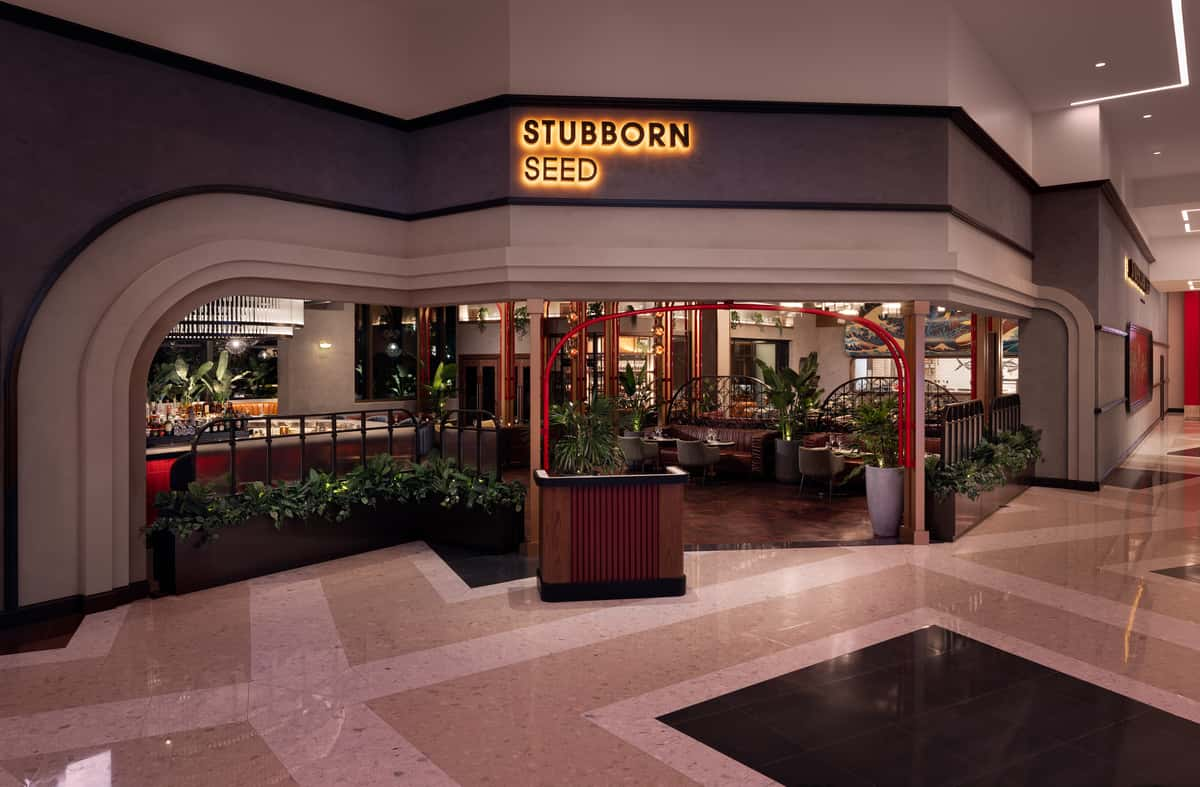
Stubborn Seed's seasonal tasting menus set the restaurant apart by combining multi-course contemporary American cuisine with a format Chef Jeremy Ford describes as "a very fun high-end experience... a chill version of fine dining, a little more approachable."
Ford built his culinary foundation without formal training, learning through mentors including Jean-Georges Vongerichten before partnering with Grove Bay Hospitality Group founders Francesco Balli and Ignacio Garcia-Menocal to open the original Stubborn Seed in Miami Beach in 2017. According to a January 2025 Las Vegas Review-Journal report, the Las Vegas location initially planned to offer tasting menus featuring eight and ten courses.
Stubborn Seed uses locally sourced, rotating ingredients to build colorful, design-forward plates, giving each visit a distinct seasonal character that rewards returning guests.
What Are the Key Takeaways About What is Experiential Dining? Meaning & Unique Experiences Guide We Covered?
The key takeaways from this experiential dining guide are that memorable restaurant experiences go well beyond the plate, engaging all the senses through atmosphere, storytelling, chef interaction, and intentional design. As Johnson & Wales University notes, experiential dining "goes the extra mile to stimulate the senses through unique themes and other interactive elements," aiming to make guests feel "elevated or even transported rather than grounded in familiarity."
The most important lessons from this guide are:
- Experiential dining engages multiple senses, not just taste.
- Formats range from tasting menus and chef's tables to theatrical and immersive concepts.
- Authenticity, seasonal menus, and chef-driven storytelling drive perceived value.
- Las Vegas has emerged as a leading destination for elevated experiential dining.
- Stubborn Seed at Resorts World represents this approach within a Michelin-starred, approachable fine dining context.
Choosing a venue with genuine culinary identity, like Stubborn Seed, is the clearest path to a dining experience worth remembering.