
What Makes Oysters Fresh? Expert Tips for Spotting Quality
What Makes Oysters Fresh? Expert Tips for Spotting Quality
Oyster freshness is the condition of a live or shucked oyster as measured by shell integrity, liquor clarity, aroma, and unbroken cold-chain handling from harvest to plate.
This guide covers how to read visual and sensory freshness cues, what storage conditions and timelines actually preserve quality, how sourcing and seasonality shape flavor and safety, the most common freshness myths, how to order confidently at fine dining establishments, and what Stubborn Seed in Las Vegas delivers within that framework.
Fresh oysters close when tapped, carry a clean briny scent, and hold clear liquor over plump, firm meat. Sensory checks reveal quality loss but cannot confirm microbiological safety, since harmful pathogens can be present without any change in appearance or smell.
Temperature and handling are the primary controls once an oyster leaves the water. Live oysters should be kept cold and used within seven days for best freshness; shucked oysters should be refrigerated below 41°F and used according to their labeled dates and storage instructions.
Where and when an oyster was harvested determines its baseline flavor long before storage enters the equation. Regional water conditions create distinct merroir profiles, while the R-month rule reflects real spawning-driven quality changes, even though illness is possible in any month.
Pearls have no bearing on edibility, and a visually perfect oyster is not automatically safe to eat raw. Asking for harvest date, harvest region, and storage details before ordering is the simplest way to close that gap.
At Stubborn Seed in Las Vegas, Chef Jeremy Ford's sourcing philosophy centers on peak-quality ingredients, reflected in West Coast Oysters served with ginger and green apple mignonette, citrus foam, and orange habanero hot sauce.
How Can You Tell If Oysters Are Truly Fresh?
Telling whether oysters are truly fresh relies on visual cues, smell, and texture. The following sections cover what shell condition and liquor appearance reveal, and what sensory signals confirm quality or signal spoilage.
What Visual Signs Indicate Freshness in Oysters?
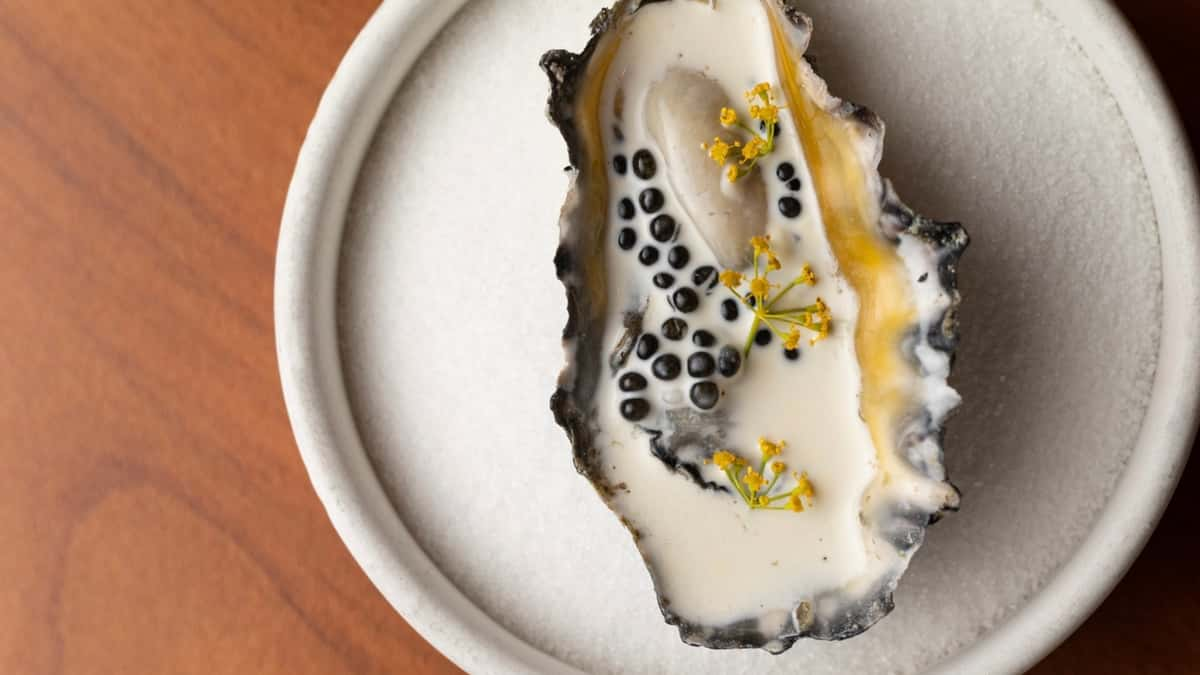
The visual signs of freshness in oysters include tightly closed shells, intact shell edges, and clear liquor. According to the U.S. Food and Drug Administration, live oysters will close when the shell is tapped; any oyster that fails to close, or has a cracked or broken shell, should be discarded immediately.
For shucked oysters, the meat should appear plump and fully covered in its liquor. That liquor should be clear to slightly milky or light gray, with no visible grit, shell fragments, or cloudiness. Virginia Cooperative Extension identifies clear liquor as one visual characteristic of good-quality shucked oysters, alongside plump meat and a fresh smell. A turbid or discolored liquor, or meat that appears darker and muddy in color, signals quality loss.
What Does Fresh Oyster Smell and Texture Reveal?
Fresh oyster smell and texture reveal the oyster's current state of quality, though not necessarily its safety. A fresh oyster should smell clean, briny, and oceanic. As documented by the National Marine Fisheries Service, odor progressively shifts from fresh to stale, then musty, while the meat loses firmness and develops a darker, muddier appearance during refrigerator storage.
Texture follows a similar pattern. A fresh oyster feels plump and firm. As it ages, the meat softens and the surrounding liquor grows turbid with gas bubbles. Importantly, the University of Florida IFAS Extension notes that harmful microbes may not alter appearance, smell, or taste at all, making sensory checks useful for quality but not a reliable safety test. Freezing also permanently changes texture and flavor, making frozen oysters better suited for cooked preparations like casseroles or stews.
Why Is Proper Oyster Storage Essential to Maintaining Freshness?
Proper oyster storage is essential to maintaining freshness because temperature and handling directly accelerate spoilage, odor loss, and texture breakdown. The following sections cover the best storage methods for live and shucked oysters, along with how long each form stays fresh under optimal conditions.
What Are the Best Storage Methods for Oysters?
The best storage methods for oysters differ depending on whether they are live or shucked. According to Virginia Tech News, live oysters require temperatures at 45°F or lower, while shucked oysters must be kept below 41°F. Key handling rules include:
- Store live oysters in a dry shallow pan covered with a damp cloth or paper towel.
- Never submerge oysters in water or place them directly on undrained ice, as this can kill live shellfish.
- Keep shucked oysters in a sealed container with their liquor, stored in the coldest part of the refrigerator.
- Maintain well-drained ice if using it for transport or display.
Proper drainage and airflow are important for maintaining live oyster quality, helping prevent water accumulation and conditions that can cause the shellfish to deteriorate.
How Long Can Oysters Remain Fresh Under Optimal Conditions?
The shelf life of oysters under optimal conditions varies by product form and storage temperature. A study published in Frontiers in Public Health found that bacterial counts peaked on day 7 at 20°C, with olfactory acceptance declining significantly over time and with increasing temperature (p < 0.05). Recommended maximum holding times are:
- Live oysters: Use within 7 days for best freshness; store at 40°F or below.
- Shucked oysters (refrigerated): Use within 1–2 days at 40°F or below, or follow the package instructions.
- Shucked oysters (frozen): Up to 3 months.
Temperature discipline is the single most controllable factor in extending oyster freshness at home.
What Role Does Sourcing and Seasonality Play in Oyster Quality?
Sourcing and seasonality directly shape an oyster's flavor, freshness, and safety. The following sections explain how harvest region and time of year each affect the oyster on your plate.
How Do Different Regions Affect the Freshness of Oysters?
Different regions influence oyster flavor and quality through water salinity and temperature, while certified sourcing, transportation, and proper storage help preserve freshness. The eastern oyster, Crassostrea virginica, varies in size, shape, and taste depending on water quality and location—what oyster growers call "merroir," a regional flavor signature comparable to wine terroir. Pacific oysters, Magallana gigas, show similar variability across the Northwest Pacific coast, France, Australia, and New Zealand, where water conditions differ substantially.
Traceability is a practical freshness indicator. According to the Texas Department of State Health Services, buyers should purchase only from certified interstate shellfish shippers, verify shellstock tags and labels, avoid commingling different lots or species, and discard any oyster that does not close when tapped. An unverified source or missing tag is a warning sign, regardless of how the shell looks.
When Is Oyster Season and Why Does It Matter?
Oyster season matters because spawning cycles alter flavor, texture, and bacterial risk in ways that directly affect quality. According to the Florida Museum of Natural History at the University of Florida, oysters in the Southeast spawn from May through October. The adage of eating oysters only in months containing the letter "R" appeared in print by 1599, as documented by Boston College. During spawning, oysters expend energy reproducing, leaving the meat thinner, softer, and less flavorful. During spawning, oysters expend energy reproducing, leaving the meat thinner, softer, and less flavorful.
However, the R-month rule is not a safety guarantee: the CDC states that illness from oysters is possible in any month of the year and Vibrio infections have been reported year-round. Season informs flavor and quality; it does not replace proper sourcing, handling, or certified supply chain verification.
What Are Common Myths and Misconceptions About Oyster Freshness?
Common myths about oyster freshness include the belief that pearls signal edibility, that fresh-looking oysters are always safe to eat raw, and that sensory checks alone can detect harmful pathogens. The section below address raw consumption safety and the pearl misconception directly.
Is It Safe to Eat Oysters Raw, and What Should You Watch For?
Eating raw oysters carries an inherent food safety risk for all consumers because they have not undergone cooking to kill potentially harmful pathogens, with some individuals facing a greater risk of severe illness. A visually fresh oyster, one with plump flesh, clear or slightly milky liquor, and no sour odor, can still harbor Vibrio bacteria without any detectable change in appearance, smell, or taste.
Watch for these warning signs before eating:
- Shells that are not tightly shut at purchase.
- Liquor that is turbid, discolored, or has visible grit or shell pieces.
- Any sour, musty, or ammonia-like odor.
- Meat that is not plump or appears dark and muddy.
According to Maine Sea Grant at the University of Maine, oysters should be transported on ice, stored loosely packed under a damp towel, kept away from freshwater submersion, and used within seven days for best freshness. Children, pregnant women, seniors, and immunocompromised individuals should avoid raw shellfish entirely.
Do Pearls Indicate Freshness in Oysters?
Pearls do not indicate freshness in culinary oysters. According to the Smithsonian Ocean, National Museum of Natural History, pearl oysters belong to a different family of bivalve mollusks from the oysters typically served at restaurants. Finding a pearl in a dinner oyster is unrelated to its quality, harvest date, or safety.
Freshness depends on shell integrity, liquor clarity, odor, and proper cold-chain handling, not on the presence of a pearl.
How Can You Enjoy Fresh Oysters Safely at Upscale Restaurants?
You can enjoy fresh oysters safely at upscale restaurants by asking the right questions and following a few expert-guided ordering habits. The section below cover what to ask your server and how to order with confidence at fine dining establishments.
What Questions Should You Ask Your Server About Oyster Freshness?
The questions you should ask your server about oyster freshness include the harvest date, harvest region, and how the oysters have been stored since arrival. A knowledgeable server or shucker should answer these fluently. According to Chef Patrick McMurray, interviewed by the Institute of Culinary Education, "A very good oyster shucker should be able to explain to a client what they're going to experience, just like a sommelier would with wine." If your server cannot speak to the oyster's origin or handling, that gap in knowledge is itself a useful signal.
What Are Tips for Ordering Oysters at Fine Dining Establishments?
The tips for ordering oysters at fine dining establishments start with tasting your first oyster plain, before adding any condiments. Chef Patrick McMurray advises, "Try the first one with nothing on it to get that base flavor." This lets you assess the liquor's clarity, the meat's plumpness, and the oyster's natural salinity before mignonette or hot sauce masks the baseline. Ask the server which oyster on the menu is the freshest that day rather than defaulting to the first listing. At a restaurant like Stubborn Seed in Las Vegas, where peak ingredient quality drives the menu, staff engagement with these questions is part of the dining experience.
How Does Stubborn Seed Provide a Quality Fresh Oyster Experience in Las Vegas?
Stubborn Seed provides a quality fresh oyster experience in Las Vegas through chef-driven sourcing philosophy, creative accompaniments, and a commitment to showcasing every ingredient at its peak. The sections below cover how the menu reflects that commitment and what key freshness principles diners can carry forward.

How Does Stubborn Seed's Menu Reflect Commitment to Freshness and Quality in Oysters?
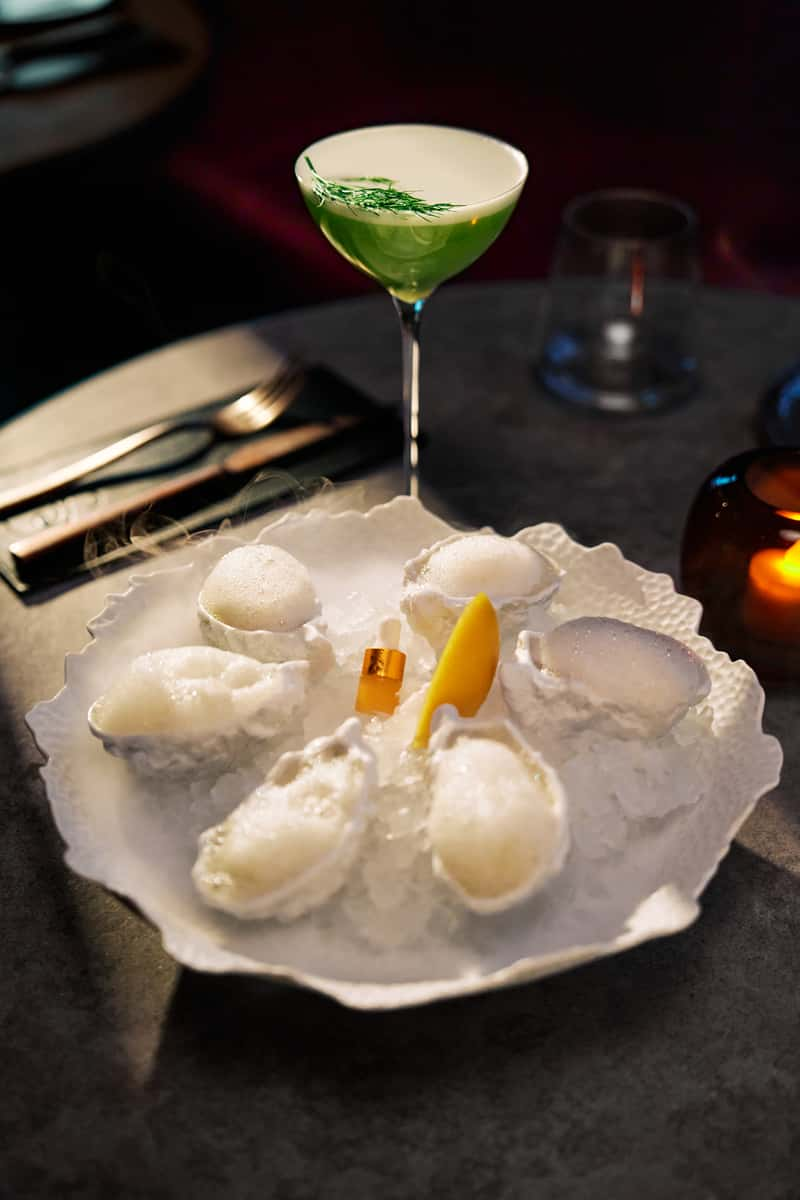
Stubborn Seed's menu reflects a commitment to freshness and quality through its stated philosophy of showcasing every ingredient at its peak. The restaurant's a la carte menu features West Coast Oysters served with ginger and green apple mignonette, citrus foam, and orange habanero hot sauce. Chef Jeremy Ford, a Top Chef Season 13 winner and 2022 James Beard Award Semi-Finalist, brings a multicultural culinary perspective that extends to how accompaniments are built to complement the oyster's natural flavor rather than mask it. One guest noted being welcomed with house oysters and a habanero infusion, underscoring how the kitchen uses bold, layered flavors to frame the raw oyster experience. This approach aligns with the broader fine-dining principle that a quality oyster presentation begins with the freshest possible product and ends with accompaniments that honor it.
What Are the Key Takeaways About What Makes Oysters Fresh and How to Spot Quality?
The key takeaways about what makes oysters fresh center on shell integrity, liquor clarity, aroma, and proper cold-chain handling. Fresh live oysters close when tapped, carry clean ocean-forward scent, and hold clear liquor surrounding plump, firm meat. Sensory cues reveal quality loss, but they cannot confirm microbiological safety, since pathogens may be present without altering appearance, smell, or taste. Sourcing from certified suppliers, verifying shellstock tags, and maintaining refrigeration below 45°F for live oysters are the non-negotiable standards underpinning every quality oyster program. Stubborn Seed reflects this ingredient-focused approach within a fine-dining context in Las Vegas, offering West Coast oysters with creative accompaniments that complement the restaurant's emphasis on quality ingredients.