
Wine Terminology for Beginners: Essential Glossary Guide
Wine Terminology for Beginners: Essential Glossary Guide
Wine terminology is the set of sensory, structural, and regulatory words used to describe how a wine looks, smells, tastes, and reaches your glass. We built this guide around wine categories and label literacy, sensory and tasting vocabulary, vineyard and production concepts, serving and storage practices, and real-world application through fine dining.
Wine types such as red, white, rosé, and sparkling each carry distinct terms for color origin, skin contact, body, and sweetness level; meanwhile, label elements like appellation, grape variety, and vintage year follow specific legal frameworks in the U.S. and EU that tell you exactly what is inside the bottle.
Sensory terms including body, bouquet, finish, tannins, acidity, and structure describe specific sensory qualities rather than vague impressions. Body captures weight on the palate, bouquet names aromas from bottle aging specifically, and structure maps how acidity, sweetness, tannin, and alcohol interact together.
Vineyard and production vocabulary (terroir, vintage, non-vintage, fermentation, oak aging) explains why the same grape variety tastes different across regions like Napa Valley, Bordeaux, and Chianti Classico; and why non-vintage blending is a deliberate craft choice, not a quality shortcut.
Serving and storage terms such as decanting, aeration, and proper temperature ranges directly shape what you taste. Serving a red too warm dulls its intended character, and decanting applies only to specific wines rather than every bottle.
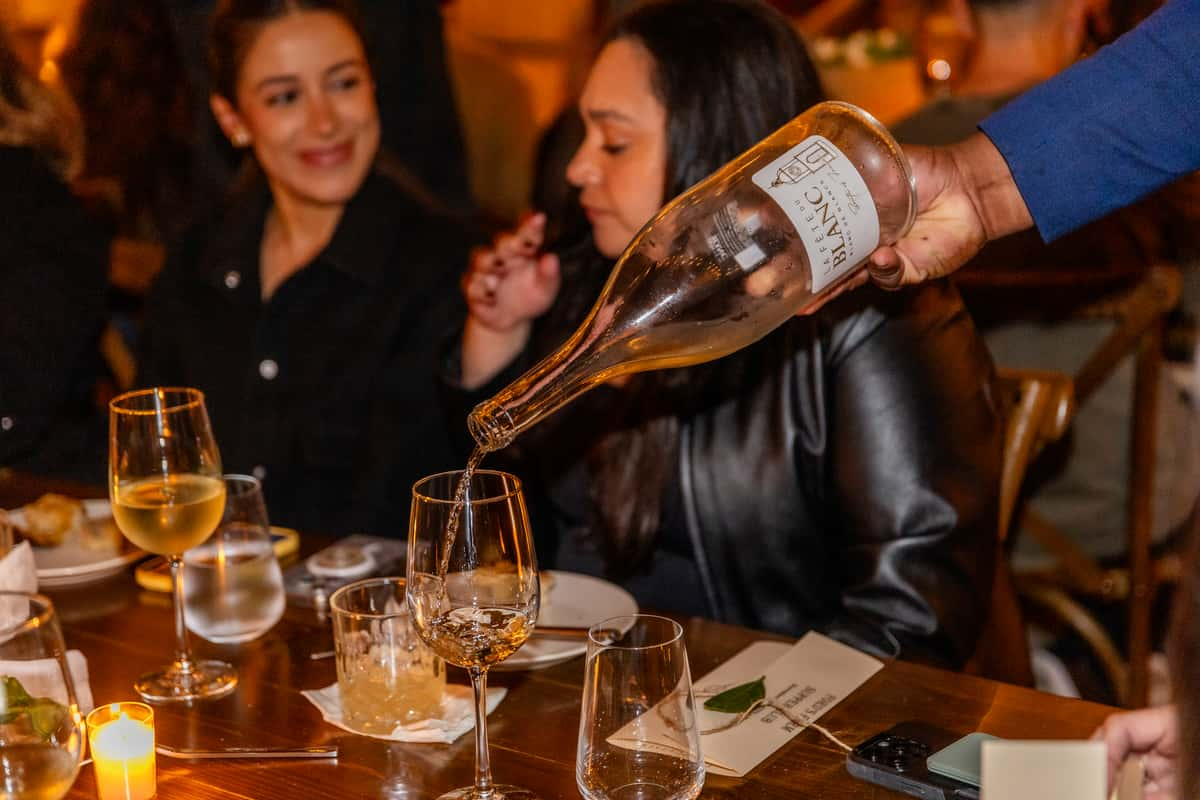
Finally, we connect these terms to practice at Stubborn Seed in Miami, where multi-course tasting menus pair each dish with a wine that makes abstract vocabulary concrete on the palate.
Why Is Learning Basic Wine Terminology Important for Beginners?
Learning basic wine terminology is important for beginners because it transforms an overwhelming subject into a structured, enjoyable experience. The sections below cover how vocabulary reduces confusion, why terminology matters when dining out, and what beginners gain from understanding wine language early.
How Does Wine Vocabulary Reduce Confusion When Choosing Wine?
Wine vocabulary reduces confusion when choosing wine by giving beginners a shared language to identify what they like and communicate it clearly. Terms such as body, acidity, tannin, and sweetness describe specific, measurable qualities rather than vague preferences. When a beginner can say "light-bodied with high acidity" instead of "something refreshing," every recommendation becomes more accurate.
According to peer-reviewed hospitality research published by Cornell University, consumers both desire to know more about wine yet report being overwhelmed and confused by the subject. A focused starter vocabulary of sensory and structural terms cuts through that paralysis, turning a wine list from a wall of unfamiliar names into a navigable menu.
Why Should Beginners Learn Wine Terms Before Visiting a Restaurant?
Beginners should learn wine terms before visiting a restaurant because preparation allows them to engage meaningfully with a sommelier and make confident choices under time pressure. A sommelier coordinates food pairings, facilitates wine education, and answers wine-related questions, as the Court of Master Sommeliers describes the role. Knowing terms like finish, bouquet, and dry versus off-dry helps a guest articulate preferences quickly and understand pairing rationale.
Even basic label literacy, such as recognizing an appellation or vintage year, helps diners evaluate a wine list without relying entirely on price as a quality signal. This preparation is especially valuable in fine dining settings where wine selections are curated to complement multi-course experiences.
What Are the Benefits of Understanding Wine Language Early?
The benefits of understanding wine language early include faster palate development, better purchasing decisions, and deeper enjoyment of food-and-wine pairings. Beginners who learn sensory descriptors, such as red fruit, floral, spice, and oak, build a mental framework that makes each tasting more educational than the last.
Early vocabulary also prevents common misunderstandings. Many beginners confuse dry with tannic, treat corked as meaning pieces of cork in the glass, or assume vintage indicates quality rather than harvest year. Correcting these misconceptions from the start saves frustration and builds genuine confidence. For anyone planning to explore wine through restaurant experiences, classes, or personal tastings, foundational terminology is the single most efficient investment of learning time.
With a working vocabulary in place, the next step is understanding how different wine types are classified and described.
What Are the Most Common Types of Wine and Their Key Descriptions?
The most common types of wine are red, white, rosé, and sparkling. Each type differs in color, grape contact, sweetness level, and effervescence. The sections below explain how these four categories differ in terminology and what wine labels reveal about a bottle's contents.
How Do Red, White, Rosé, and Sparkling Wines Differ in Terms?
Red, white, rosé, and sparkling wines differ in terms of color origin, skin contact, body, and production method. Red wine derives its color from extended contact with grape skins, which also extracts tannins. White wine is pressed with minimal skin contact, typically producing lighter body and higher perceived acidity. Rosé gets its pink hue from brief skin contact, not usually from blending red and white wines together.
Sparkling wine is a distinct category defined by effervescence from endogenous carbon dioxide. According to the International Organisation of Vine and Wine (OIV), sparkling wine must have at least 3.5 bars of pressure at 20°C, with sweetness categories ranging from "Brut" at most 12 g/l sugar to "Sweet" above 50 g/l.
Key terminology distinctions across these four types include:
- Dry describes low residual sugar; it is not the same as tannic.
- Nose refers to a wine's smell when sniffed, while bouquet is reserved for aromas developed through bottle aging.
- Finish measures how long flavors persist after swallowing.
- Vintage identifies the grape harvest year; non-vintage signals blending across multiple harvests to maintain a consistent house style.
What Do Wine Labels Reveal About the Bottle's Contents?
Wine labels reveal the bottle's origin, grape variety, alcohol content, and regulatory compliance. In the United States, the Alcohol and Tobacco Tax and Trade Bureau (TTB) requires labels to display alcohol content, health warning statement, producer name and address, net contents, and sulfite declaration. Appellation of origin becomes mandatory under certain circumstances, while grape variety designations remain optional.
EU labels follow a parallel but distinct framework, requiring the wine product category, PDO or PGI designation, alcoholic strength, provenance, and bottler identification. For sparkling wines, sugar content must also appear on the label.
Practical label-reading tips for beginners:
- Appellation names a legally delimited origin, such as Napa Valley AVA or Bordeaux, not a grape variety.
- Grape variety tells you the dominant grape, such as Cabernet Sauvignon or Chardonnay.
- Alcohol percentage hints at body; higher alcohol generally correlates with fuller-bodied wines.
Labels can feel intimidating at first glance. For most beginners, focusing on just three elements, the grape, the region, and the vintage year, builds enough context to make confident selections at a restaurant or shop.
Understanding wine categories and label terminology gives beginners a practical framework for navigating any wine list with clarity.
Which Terms Describe Wine's Aroma, Body, and Flavor Profiles?
The terms that describe wine's aroma, body, and flavor profiles include body, bouquet, finish, tannins, acidity, sweetness, and structure. Each captures a distinct sensory dimension, from how a wine smells to how it feels and lingers.
How Are "Body," "Bouquet," "Finish," and "Tannins" Defined in Wine?
Body, bouquet, finish, and tannins are defined as distinct sensory properties that professionals use to evaluate wine character.
- Body describes a wine's weight or texture on the palate. Light-bodied wines feel closer to water, while full-bodied wines feel richer and denser. Alcohol level and extract are the primary drivers.
- Bouquet refers specifically to aromas that develop during bottle aging, not grape-derived smells. Professionals use "nose" as a broader term for a wine's overall smell.
- Finish measures the sensory persistence after swallowing. A wine can have a short, medium, or long finish.
- Tannins create a drying, astringent texture in the mouth. Oak aging and grape skin contact both contribute tannin.
For beginners, tasting these elements side by side with contrasting wines is the fastest way to internalize the differences.
What Do "Acidity," "Sweetness," and "Structure" Mean in Wine Tasting?
Acidity, sweetness, and structure mean three interconnected qualities that shape how a wine tastes and feels. Acidity creates a fresh, mouth-watering sensation. Sweetness reflects residual sugar remaining after fermentation. Structure describes the interaction of acidity, sweetness, tannin, alcohol, and body working together.
Balance among these components determines whether a wine feels harmonious or disjointed. According to Bourgogne-Wines, serving temperature directly affects this perception: excessive warmth makes alcohol too prominent, while over-chilling masks aromas. Even a well-structured wine can taste unbalanced at the wrong temperature.
Understanding structure, acidity, and sweetness together builds the foundation for evaluating how production and service terms shape what you taste.
What Are Essential Vineyard and Production Terms to Understand?
Essential vineyard and production terms include terroir, vintage, non-vintage, fermentation, and oak aging. These concepts explain how geography, harvest decisions, and winemaking techniques shape a wine's color, aroma, tannin, and body.
How Does the Term "Terroir" Influence Wine Styles?
The term "terroir" influences wine styles by linking a wine's character to the specific environment and human practices of its production area. According to the Institut national de l'origine et de la qualité (INAO), terroir is "a delimited geographical area in which a human community has built up, over the course of its history, a collective knowledge of production, based on a system of interactions between a physical and biological environment, and a set of human factors."
Terroir encompasses several interacting elements:
- Soil composition and drainage patterns unique to a vineyard site.
- Climate conditions, including temperature range, rainfall, and sunlight exposure.
- Elevation and slope orientation affecting grape ripening.
- Human traditions such as grape selection, pruning, and harvest timing.
Two vineyards growing the same grape variety can produce distinctly different wines because their terroir differs. A Cabernet Sauvignon from Napa Valley, for example, expresses riper fruit profiles than one from Bordeaux, where cooler conditions and gravelly soils steer the wine toward more restrained, structured characteristics. Understanding terroir helps beginners grasp why region-named wines, such as those carrying an appellation or PDO designation, taste the way they do.
What Is the Significance of "Vintage" and "Non-Vintage" in Wine?
The significance of "vintage" and "non-vintage" in wine lies in what each tells you about when grapes were harvested and how the wine was blended. As Decanter explains, "the word vintage refers to the year in which the grapes were harvested," while for certain fortified and sparkling styles, "the aim is to create a consistent house style" through non-vintage blending.
Key distinctions include:
- A vintage wine is made mostly from grapes harvested in a single year.
- A non-vintage wine blends grapes or base wines from multiple years to maintain consistency.
- Vintage Champagne and vintage Port represent exceptions where producers choose to declare a harvest year only in outstanding conditions.
Beginners often mistake vintage for a quality score; it is not. A 2018 vintage simply means most of the grapes were picked in 2018. Whether that year produced excellent or average conditions depends on the region. Non-vintage wines, particularly in Champagne and Port, can be equally prestigious because the winemaker's skill in blending across harvests is what defines the final product.
With vineyard and production vocabulary established, serving and storage terms determine how these wines reach the glass at their best.
How Do Serving and Storage Terms Impact the Enjoyment of Wine?
Serving and storage terms impact the enjoyment of wine by defining how temperature, aeration, and cellaring conditions preserve or enhance a wine's aromas, flavor, and structure. The sections below cover decanting and aeration, then serving temperature and storage guidelines.
What Does It Mean to "Decant" or "Aerate" Wine?
To "decant" wine means to pour it slowly from the bottle into a separate vessel, typically a carafe, to separate the liquid from sediment or to expose it to air. Aeration is the process of introducing oxygen to a wine so its tannins soften and its aromas open up.
According to the Austrian Wine Marketing Board, "rich and full-bodied wines often require agitation or aeration prior to serving" and "are decanted into a carafe, so that the wine has ample room to aerate and allow the aromas to develop."
Not every red wine benefits from decanting. The two primary reasons are:
- Older wines with sediment: Extended bottle aging produces solid particles of sediment; decanting separates them.
- Young, tannic wines: Exposure to air relaxes firm tannins and allows complex aromas to emerge.
Light-bodied reds, most whites, and sparkling wines rarely need decanting. Beginners should treat decanting as a targeted tool rather than a default step.
How Should Different Wines Be Served and Stored for Best Flavor?
Different wines should be served and stored at specific temperatures that balance aroma expression against alcohol perception. Serving too warm makes alcohol overly prominent, while over-chilling masks aromas and fruit character.
General serving temperature guidelines include:
- Sparkling wines: 6 to 10°C (43 to 50°F)
- Light white and rosé wines: 8 to 12°C (46 to 54°F)
- Full-bodied white wines: 10 to 13°C (50 to 55°F)
- Young red wines: 14 to 16°C (57 to 61°F)
- Older red wines: 16 to 17°C (61 to 63°F)
A 2019 review published in PubMed Central found that the ideal storage temperature for both red and white wine is approximately 13°C, which allows maturation while minimizing premature aging; heat accelerates chemical reactions that cause loss of aromatic compounds and off-flavors. Consistent coolness, darkness, and minimal vibration protect a wine's structure over time.
For beginners, "room temperature" is one of the most misunderstood serving terms. It originated in European cellars and castles, not modern climate-controlled homes. In a city like Miami, an un-chilled red can easily reach 25°C or higher, which dulls the very flavors the winemaker intended.
Understanding these terms turns storage and service from guesswork into a repeatable practice that directly shapes what you taste in the glass.
How Can Stubborn Seed's Tasting Menu Experiences Introduce You to Wine Terminology?
Stubborn Seed's tasting menu experiences can introduce you to wine terminology by offering sommelier-curated wine pairings, creating a structured context where sensory vocabulary becomes tangible. The sections below cover how fine dining teaches wine terms and the key beginner takeaways from this guide.
Can a Fine Dining Tasting Menu Experience at Stubborn Seed Help You Understand Wine Terms?
Yes, a fine dining tasting menu experience at Stubborn Seed can help you understand wine terms. A multi-course format can create a natural educational sequence: each pairing can introduce a wine style, names the grape or appellation, and highlights structural elements such as body, acidity, tannin, and finish. As Jancis Robinson's glossary explains, body is "determined chiefly by its alcoholic strength, but also by its extract," while finish describes "the sensory impact of a wine after it has been swallowed."
Stubborn Seed offers both a 6-course and a 9-course tasting menu, giving guests repeated opportunities to compare these characteristics across different wines. With each course, the pairing either mirrors, contrasts, or softens a dominant dish element, making abstract terms like structure and balance concrete on the palate. For beginners, this guided progression is far more effective than memorizing definitions in isolation.
What Are the Key Takeaways About Wine Terminology for Beginners We Covered?
The key takeaways about wine terminology for beginners covered in this guide center on precision: each term has a specific meaning, and common mix-ups can mislead your palate and your purchases.
- Dry describes low residual sugar, not the drying sensation of tannin.
- Bouquet refers specifically to aromas developed during bottle aging, not every smell a wine produces.
- Corked means the wine has TCA cork taint, not that cork fragments fell into the glass.
- Vintage identifies the harvest year, not a quality rating.
- Appellation names a legally delimited origin, not a grape variety.
- Room temperature in wine service means approximately 15 to 18°C, not a warm domestic room.
- "Old World" and "New World" are being revisited in professional education; use these labels cautiously rather than as fixed categories.
These distinctions transform casual drinking into informed appreciation, whether you are reading a label at a shop or exploring Stubborn Seed's wine pairings in Miami.